
Review · OLIVE MILL AND FACTORY TOURS
Visit to olive grove and olive mill with oil tasting and tasting
The most meaningful part of this Oliete outing is that your $22.53 fee supports abandoned olive tree recovery. You walk among centuries-old trees, learn why rural work matters here, then follow the fruit into the mill and onto your plate. I like that the experience connects food with jobs, schools, and life in a small Aragón community.
I also like the warm, question-friendly guiding style reported from Jaime and Raul, plus the simple tasting at the end: two oils, a toast with vegetables roasted over olive-wood prunings, and a drink. The main consideration is transport. You must reach Oliete on your own, and the visit includes outdoor walking, so timing and comfortable shoes matter.
Key points at a glance
- A working rural project: Your visit helps fund the recovery of barren and abandoned olive trees in Oliete.
- Three-part route: Expect an olive grove visit, a mill explanation, and a guided tasting.
- Two oils side by side: You learn to notice differences in aroma, flavor, and quality.
- A local bite included: Finish with preserves and vegetables served on toast, plus one drink.
- Small groups only: The maximum is 10 people, allowing time for questions.
- A strong value at $22.53: The price covers fees and taxes, but not private transportation.
Why this Oliete visit feels different
Many olive oil tours stop at a mill, explain the machinery, and hand you a small glass. This one begins with the bigger question: what happens when old olive trees are left behind?
The project behind the visit works to recover barren olive trees around Oliete. That means the tour is not only about tasting a food product. It is also about keeping agricultural work alive, creating employment, encouraging people to remain in rural Aragón, and helping basic services such as schools continue.
I find that context important. Olive oil can seem like a supermarket item until you see the trees, the work, and the local decisions behind it. Here, the product has a direct link to the future of the village.
The experience has also received regional recognition. It was named Aragón’s best ecotourism experience in 2024, and its oil received the best Bajo Aragón designation in 2020, 2022, and 2024. Those awards do not guarantee that every visitor will prefer the flavor, but they do signal serious attention to quality and local production.
More Olive Grove Walks in Spain
- Visit of the olive grove, olive oil tasting and snack
★ 4.9 · 111 reviews - Jaen: Olive oil tour with the 5 senses, grove and tasing
★ 4.9 · 53 reviews - Córdoba: Visit a family organic olive grove with tasting
★ 5.0 · 30 reviews
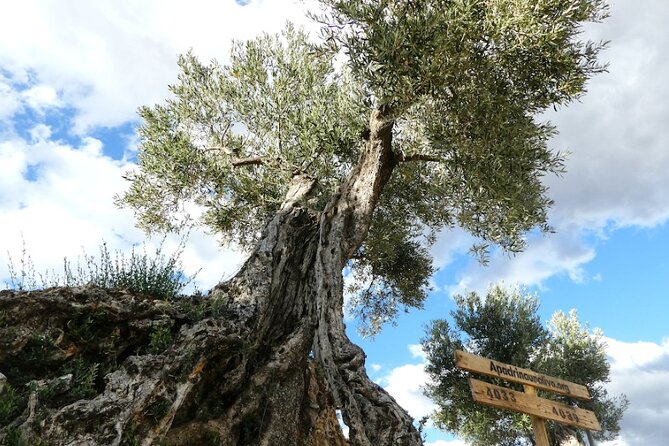
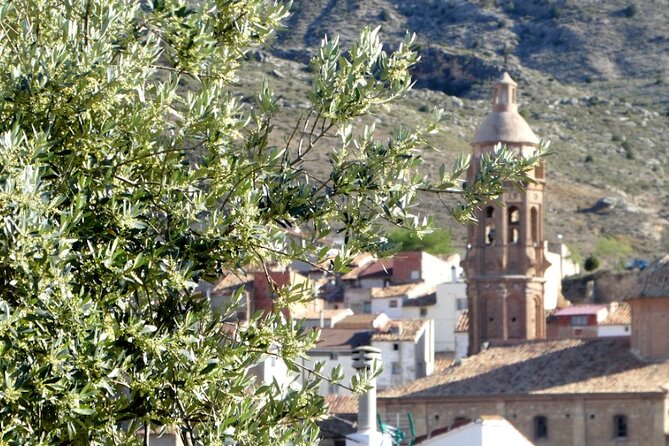
Starting among Oliete’s centuries-old trees
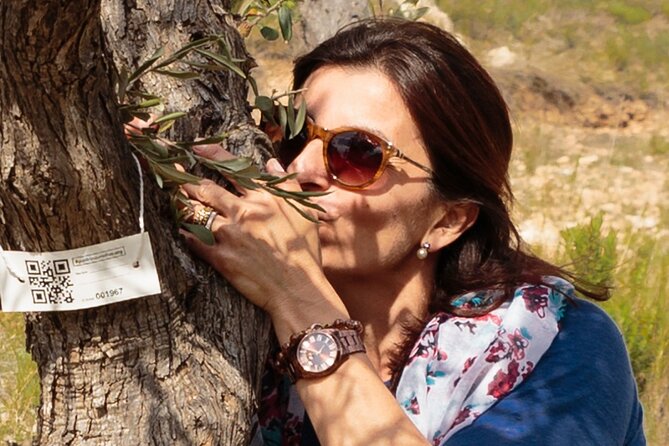
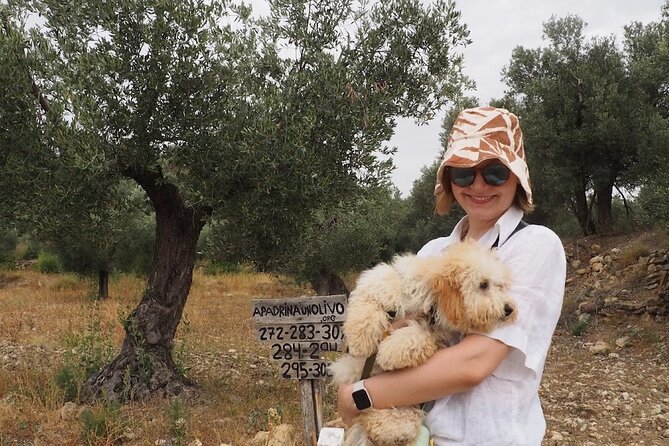
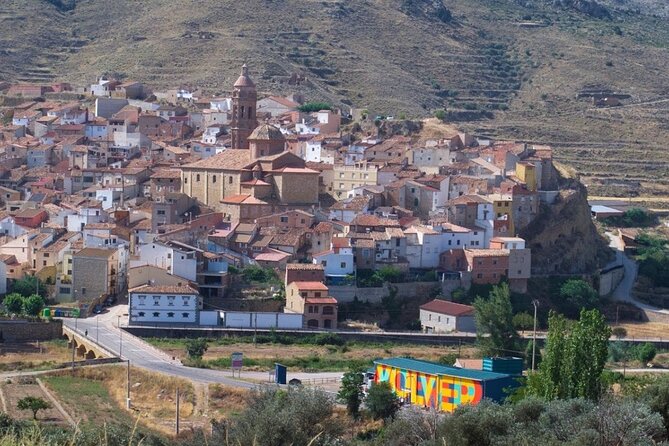
The visit begins at Apadrinaunolivo.org, on Camino de la Algecira in Oliete. From there, you head into the olive grove and learn how an abandoned tree is brought back into production.
This first part gives the rest of the visit a useful foundation. Instead of hearing only about pressing temperatures or storage, you see the tree that supplies the fruit. You learn about its characteristics, the recovery process, and the work involved in collecting olives.
The grove is also where the social purpose becomes easiest to understand. A neglected tree is not just an old plant. It represents lost harvests, less work, and a weaker connection between local people and the land. Restoring it takes patience and regular care.
The setting changes with the season. One account specifically describes spring walks through the recovered groves as especially lovely. You should still expect a rural visit rather than a polished garden tour. Paths and conditions may vary, and the experience is better suited to people who are comfortable walking outdoors.
Guides such as Jaime and Raul add a personal layer to this section. Their explanations cover not only the trees and the project, but also Oliete, the region, local customs, and some agricultural rules. The format encourages questions, so you do not have to know anything about olive growing before arriving.
If you are interested in sponsoring an olive tree, this is a useful introduction to the project. Some people choose to sponsor trees after learning how the recovery effort works. Sponsorship is not listed as part of this $22.53 visit, so ask the team about it separately if that idea interests you.
Following the olives through the mill
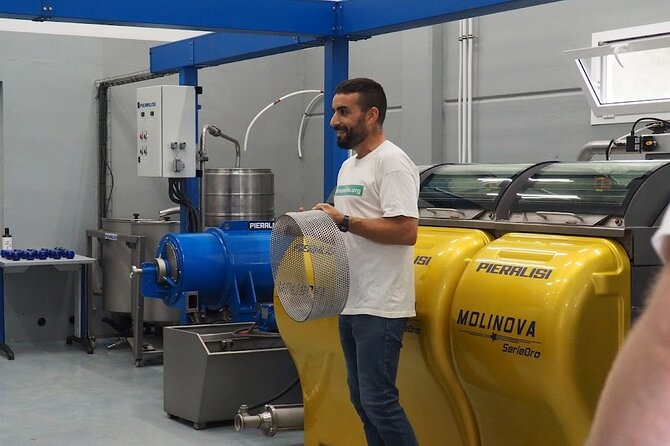
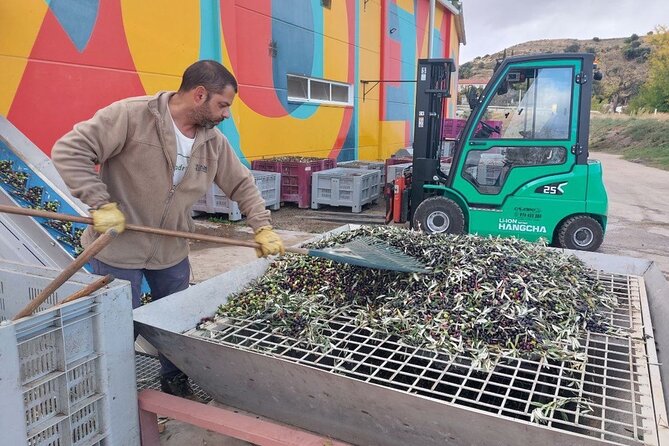
After the grove, the group visits the olive mill. This is the most practical part of the experience, especially if you normally buy extra virgin olive oil without thinking about how it was made.
You learn what happens from the olives’ arrival through grinding and processing, including the equipment and steps used to produce extra virgin olive oil. The explanations focus on how quality is protected, not simply on showing machinery.
That distinction matters. Olive oil quality depends on much more than the name on the bottle. The condition of the fruit, the handling of the olives, the extraction process, and later storage all affect the result. The mill visit helps connect those technical details with what you will taste a few minutes later.
The small group limit of 10 works well here. A mill can be hard to understand when you are standing at the back of a large crowd, but this format leaves room to ask how the process works and why each element matters. Several guides are described as taking time with questions, which suits curious visitors and students particularly well.
The tour has also been adapted for agricultural training groups, so the material can be more than a quick tourist explanation. Still, the precise level of technical detail may depend on the guide and the group. If you are hoping for a highly specialized production lesson, mention that when booking. For most visitors, the standard explanation should be approachable and useful.
Learning to taste two extra virgin oils
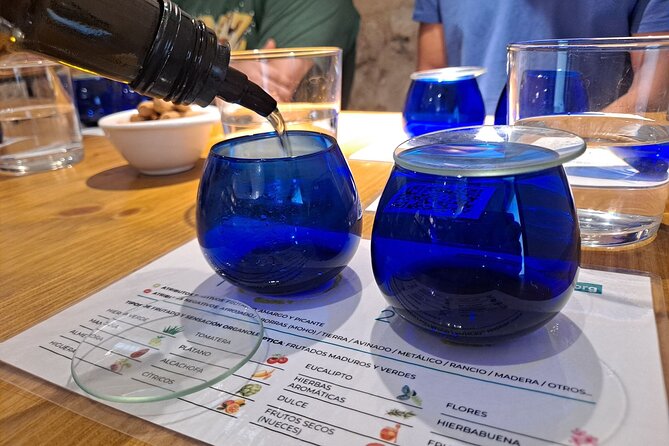
The tasting is not just a snack stop. You sample two oils and learn how to assess their qualities.
For many people, the value here is comparison. Tasting two oils side by side helps you notice that extra virgin olive oil is not one fixed flavor. You may pick up differences in fruitiness, bitterness, and peppery sensations, along with changes in aroma and finish. The guide explains how to approach the tasting rather than asking you to judge it like a wine expert.
This is also where the mill explanation starts to make sense. You can connect the condition of the olives and the production choices with the flavor in the glass. If you cook often, you leave with a better idea of why one oil may suit a salad while another works well with bread or cooked vegetables.
The tour’s oils have won the best Bajo Aragón designation in several recent years, including 2024. That is a useful mark of regional quality, but taste remains personal. I would treat the awards as a reason to pay attention, not as a promise that every palate will choose the same favorite.
The tasting is likely to be most enjoyable if you arrive ready to sample rather than simply consume. Take your time, notice the smell first, and ask about the differences. The guides’ willingness to explain is one of the strongest features of this outing.
More Olive Mill and Factory Tours in Spain
- Guided Tasting Tour in 16th century House and Olive Oil Factory
★ 5.0 · 169 reviews - Visit Oil Mill Museum and Olive Oil Tasting in Ronda
★ 4.5 · 105 reviews - Jaén: Guided Olive Mill Tour with Olive Oil Tasting
★ 4.9 · 74 reviews - Picualia, olive oil mill tour & EVOO tasting
★ 5.0 · 49 reviews
Finishing with a toast and local preserves
The food tasting follows the oil tasting. You receive one toast with the project’s preserves, vegetables roasted using olive-wood pruning and preserved in olive oil, plus one drink per participant.
This is a modest finish, not a full meal. Plan lunch separately if you are hungry, especially since the whole visit lasts about two and a half hours. The toast gives you a practical way to taste the oil with food, though, and it shows how the project uses more than just the oil itself.
The preserved vegetables also connect the mill to the local pantry. Instead of treating the oil as an isolated product, the tasting places it alongside produce from the same rural setting. That makes the final part feel like a small food experience rather than a technical lesson followed by a token sample.
The information provided does not specify the exact preserve selection or drink. You should therefore expect the stated toast and one beverage, not a fixed multi-course menu. Children under five do not receive the included food and drink when admitted free, so families should keep that detail in mind.
There are sometimes opportunities to buy products after the visit. The experience details indicate that purchases can be made, but the price and selection are not specified. If you find an oil or preserve you like, ask about packaging and transport before buying.
Guide style and group size
The strongest personal touch comes from the guides. Jaime is repeatedly associated with the grove, mill, and tasting, while Raul has led visits that cover Oliete, the region, olive growing, and local customs.
You can expect a conversational format rather than a lecture delivered from a script. Questions are welcomed, and the team presents the social project as part of the visit rather than hiding it behind a sales pitch. That makes the experience suitable for people who want to understand how rural development and food production fit together.
The group cap is 10 people. That is small enough for a more direct exchange, though it does not guarantee a private tour. You may share the experience with other people connected to the olive-tree sponsorship project or with visitors who simply want to learn about oil.
A small group also means the pace can feel more personal. If you enjoy asking about farming, food preservation, or the project’s work in Oliete, you should have a better chance to get a thoughtful answer than on a large bus tour.
Price, timing, and practical value
At $22.53 per person, the visit is sensibly priced for roughly two hours and 30 minutes of guided activity, two oil samples, a food tasting, and a drink. All fees and taxes are included.
The value is stronger if you care about the project itself. Part of the admission supports the recovery of abandoned olive trees, employment, rural population, and local services. You are paying for a small food tour, but your money also helps fund work with a wider purpose.
It is less suitable if you are looking only for a large meal or a quick tasting near a major city. The food portion is limited, and you need to travel to Oliete independently. Private transportation is not included.
The activity ends back at the meeting point, which keeps the plan simple once you arrive. Confirmation is provided at booking, and the experience usually fills its places around 18 days ahead, so booking earlier is sensible if your schedule is fixed.
You can cancel for a full refund up to 24 hours before the start time. If the minimum number of participants is not reached and the provider cancels, you are offered another date or experience, or a full refund.
Who should book this olive oil experience
I would recommend it most strongly to people who enjoy food with a human story behind it. It suits couples, small groups, families with older children, food-focused visitors, and anyone curious about how extra virgin olive oil is made.
It is also a good fit for agricultural students or anyone interested in rural development. The team has experience receiving educational groups, and the format leaves room for questions.
You should think twice if you dislike outdoor walking, need private transport included, or want a long sit-down meal. Pets are welcome during the olive grove visit but are not allowed in the tasting area for health reasons. Service animals are allowed.
Most people can take part, and the maximum group size is 10. The activity is not described as difficult, but the information does not give detailed accessibility notes for the grove or mill. If you have specific mobility needs, contact the provider before booking.
Should you book the Oliete olive grove and mill visit?
Book it if you want a small, purposeful experience that combines an olive grove, a working mill, a clear introduction to oil tasting, and a local bite. The best reason to go is not simply the award-winning oil. It is the chance to see how recovering old trees can support work and community life in Oliete.
The $22.53 price is good value for the time and tasting, especially when you include the project’s social purpose. Just arrive with realistic expectations: this is a rural educational visit with a light food tasting, not a full lunch or a transport-inclusive day trip.
If Jaime or Raul leads your group, expect plenty of explanation and a friendly chance to ask questions. Bring sensible footwear, arrange your own route to Camino de la Algecira, and leave room in your plans for buying a bottle or preserve if something catches your taste.
FAQ
Where does the experience begin?
It begins at Apadrinaunolivo.org, Camino de la Algecira, S/N, 44548 Oliete, Teruel, Spain.
How long does the visit last?
The experience lasts approximately 2 hours and 30 minutes.
What happens during the tour?
You visit the olive grove, learn how abandoned olive trees are recovered, tour the olive mill, learn how olives are processed, and taste two oils. You also receive a toast with preserves and one drink.
Is transportation included?
No. Private transportation is not included, so you must make your own way to the meeting point in Oliete.
How many people can join the activity?
The maximum group size is 10 people.
Are pets allowed?
Pets are welcome during the olive grove visit but are not allowed in the tasting area for health reasons. Service animals are allowed.
Can I cancel for a refund?
Yes. You can cancel up to 24 hours before the start time for a full refund. Cancellations or changes made less than 24 hours before the start are not accepted for a refund.
Newest grove reviews around Spain
- Córdoba: Olive Oil Tasting Experience★ 4.4 · 8 reviews
- Cazorla: Olive grove and mill tour★ 5.0 · 2 reviews
- Cazorla: Oleotour – Olive Oil Culture Initiation★ 5.0 · 3 reviews
- Cazorla: Highligts Tour with Olive Oil Tasting★ 5.0 · 2 reviews
- Aires de Jaén: Olive Oil Plantation Tour and Local Meal★ 4.9 · 9 reviews
- Olive Oil Tasting and Culinary Day Trip in Carmona★ 5.0 · 2 reviews
- Oleotourism and olive oil tasting in Seville – Private tour★ 5.0 · 7 reviews
- Cordoba Olive Oil mill, Wine, Passion★ 4.5 · 8 reviews
Olive Mill and Factory Tours, compared.
Knossos-Zeus Cave -Old Traditional Villages-Olive Oil Factory
Read our review →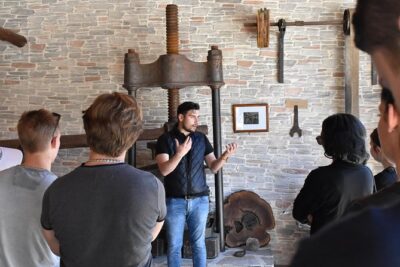
The Governor’s Olive Mill Tour with Olive Oil Tasting
Read our review →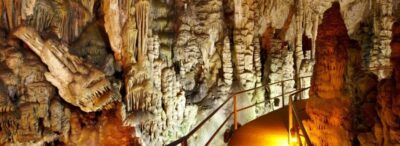
Road-trip to Lasithi, Zeus Cave & Olive Mill Farm
Read our review →
Lassithi, Zeus Cave, Olive Mill Farm & Knossos Combo Tour
Read our review →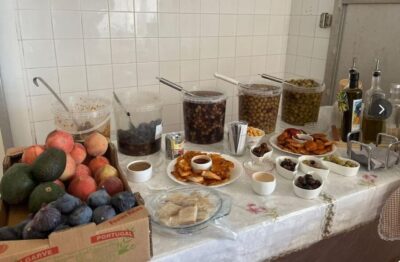
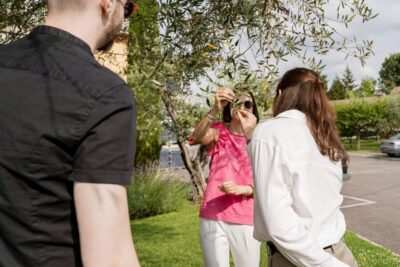
Lake Garda Oil Mill Tour with Olive Oil Tasting
Read our review →Browse the lists this tour appears in