
Review · ORGANIC OLIVE FARMS
Ronda: LA Almazara LA Organic, Olive Oil Museum and Tasting
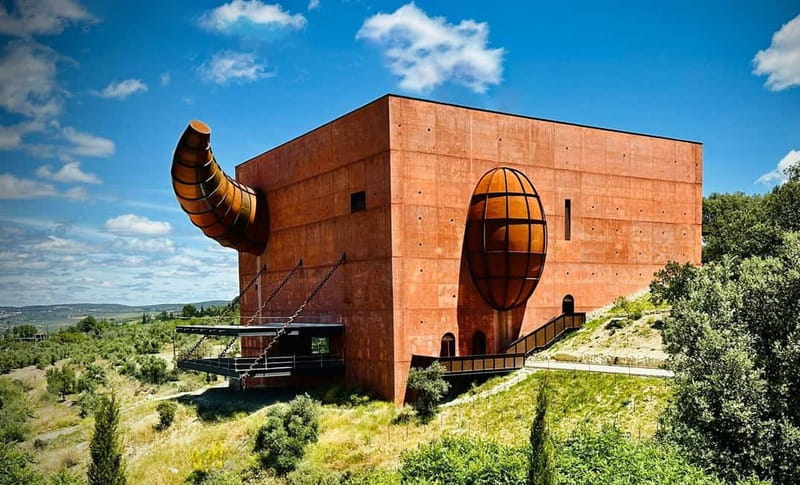
The most unusual part of this Ronda outing is the setting: an olive oil museum designed by Philippe Starck, surrounded by groves, vineyards, vegetables, herbs, citrus, and quince trees. This is not just a quick sample at a farm shop. You get a look at the mill, a walk through the property, and a lesson in how to taste oil properly.
I like two things right away. First, the tour makes a product you may normally treat as a cooking ingredient feel worth your attention. Second, the building, art, and mountain views give the visit more variety than a standard agricultural tour. The main consideration is transport: it is not included, and a taxi from Ronda can add to the cost.
Key points to know before you go
- Philippe Starck architecture: The museum and mill are designed as a creative meeting point for art, farming, and food.
- A real tasting lesson: You learn to notice the difference between mild and intense oils, along with the flavors and aromas in each one.
- A 90-minute visit: The tour combines the museum, mill, farm walk, and tasting without taking up your whole day.
- Award-winning organic oil: The experience includes oil associated with a 2015 award for the best organic oil in the world.
- A scenic stop near Ronda: The property offers rolling vineyards, olive trees, and mountain views, with food and drinks available afterward.
- Bring sensible gear: Comfortable shoes, water, sunglasses, and light clothing will make the outdoor portion easier.
Why this olive oil visit feels different from a standard tasting
Many olive oil tastings are short and shop-based. You stand at a counter, dip bread into a few oils, and leave with a bottle. LA Organic gives you a wider picture. The visit connects the oil to the trees, the soil, the pressing process, the architecture, and the dining table.
That wider setting matters. You are not tasting an anonymous product from a shelf. You are learning why oil tastes different depending on its style and how production choices affect the final bottle. For a first olive oil tasting, this makes the subject easier to understand.
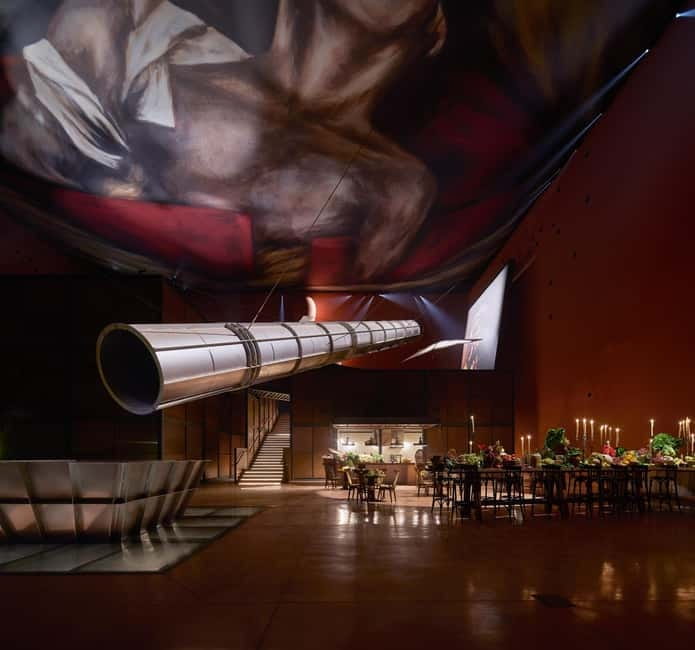
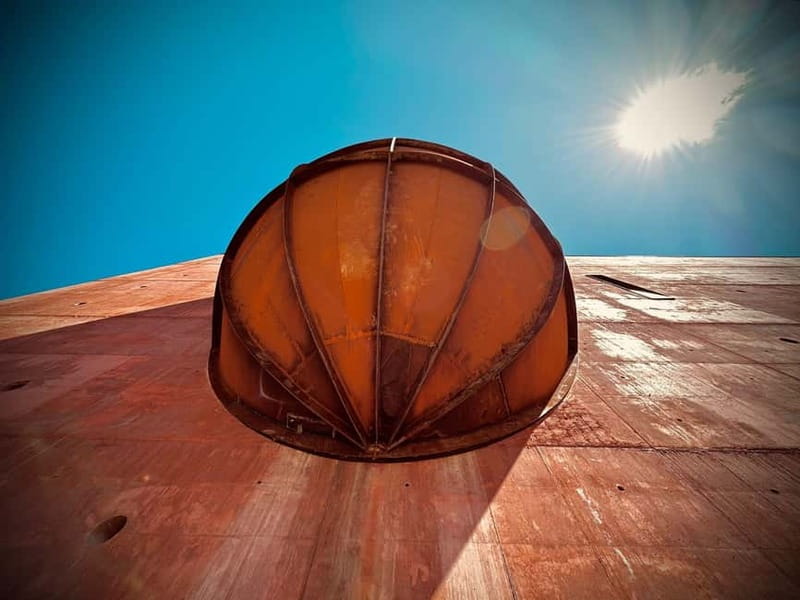
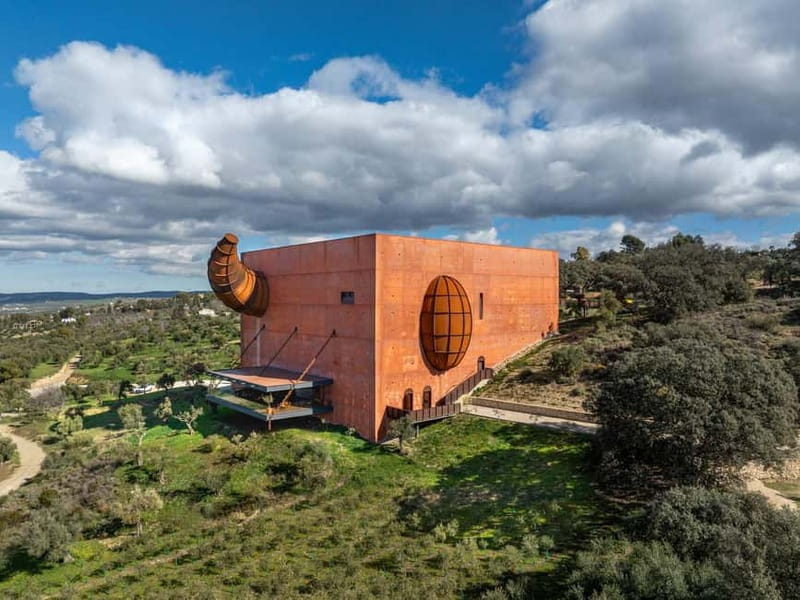
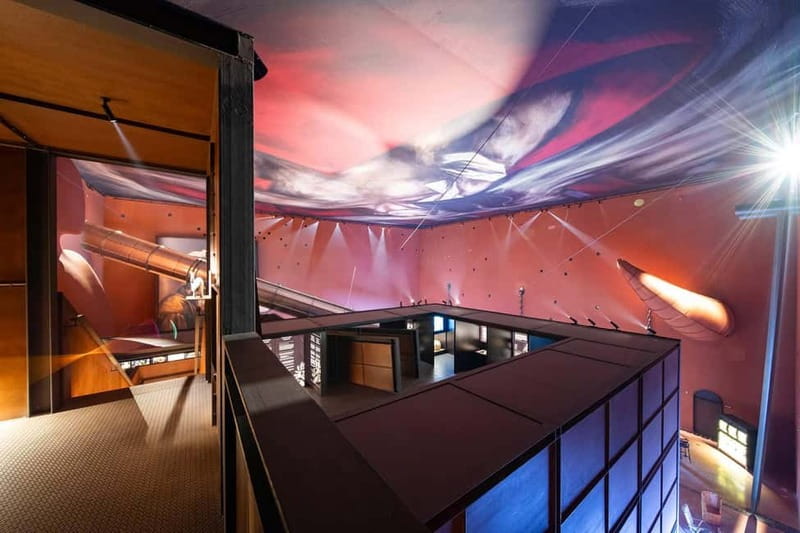
The building is a major part of the appeal. Philippe Starck’s design places art and unusual spaces alongside the mill and tasting rooms. The result is not a traditional museum with rows of old equipment. It is a modern, artistic setting that some people may find more memorable than the farming information itself.
The experience has earned a 4.6 rating from 435 reviews, with strong praise for its guides, architecture, views, and tasting. That does not mean every part will suit everyone. If you want a long technical visit focused only on pressing machinery, 90 minutes may feel brief. If you want a polished cultural stop with a clear introduction to olive oil, the length works well.
More Olive Oil Museums around Spain:
- Visit Oil Mill Museum and Olive Oil Tasting in Ronda
★ 4.5 · 105 reviews - Guided tour of the Museum of Olive Culture Oil Tasting
★ 5.0 · 17 reviews - Split: Klis Fortress GOT and Olive Museum Entry Tickets
★ 4.6 · 283 reviews
Meet the guide at LA Organic Country House
You meet your guide at the LA Organic Country House, not in central Ronda. The property is described as about 10 minutes from town by car in one account, but you should plan your own ride because transportation is not part of the $29 price.
This is the one practical weakness that comes up most clearly. A taxi can cost about 17 EUR each way from Ronda, according to one visitor, so a couple or family should add that expense before judging the value. If you have a rental car, reaching the property is simpler, though the activity details do not provide parking information.
Guides speak English and Spanish. Several guides receive especially warm praise for combining clear explanations with humor and patience. Names connected with the tours include Ursula, Simon, Maria, Jorge, Ali, Andres, and others. You may not have the same guide, but the pattern is clear: the guide matters a great deal here because the experience depends on explanation rather than spectacle alone.
Mixed-language groups are possible. One guide, Simon, spoke consistently in both Spanish and English for a group of more than 12 people. That is useful if you are traveling with friends or family who prefer different languages, though bilingual guiding can naturally make the tour take a little longer.
The museum, art, and the Philippe Starck setting
The museum is the first major stop. It introduces the relationship between olive growing, local products, and the LA Organic project. A short film about the family behind the fields has been part of the visit, followed by an explanation of the property and its ideas.
The museum is also an architectural visit in its own right. You see art woven into the olive oil setting, rather than a simple display of farming tools. The building has attracted people who are interested in design as much as food, and several visitors found the structure worth seeing even before the tasting began.
The timing of your visit may affect what you see. During part of 2024, the site was still preparing for its larger opening, with construction activity and restaurants not yet operating. Later visits describe a functioning restaurant, terrace, gift shop, and tasting area. The project has developed over time, so it is sensible to confirm current restaurant and museum arrangements if those extras matter to your plans.
I would give the building your full attention, but I would not expect a conventional museum packed with historic objects. The appeal is the mix of modern design, art, agricultural purpose, and the unusual way the spaces frame the farm outside.
Walking through the farm and olive groves
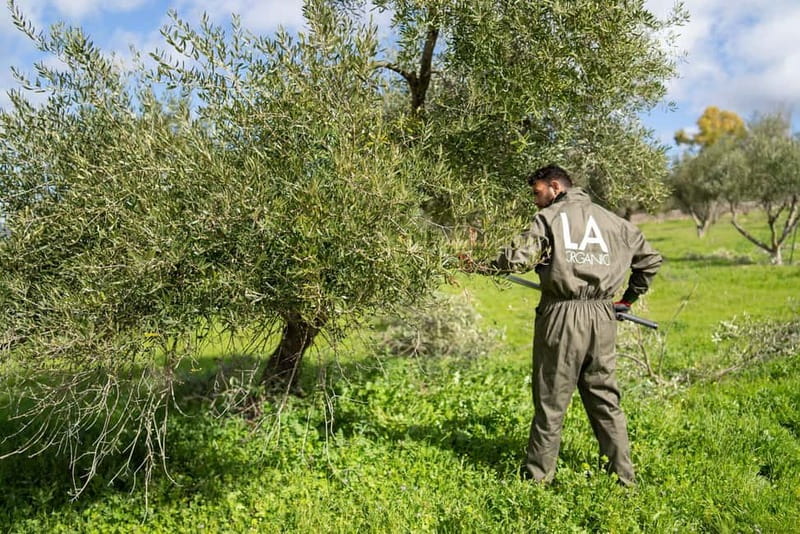
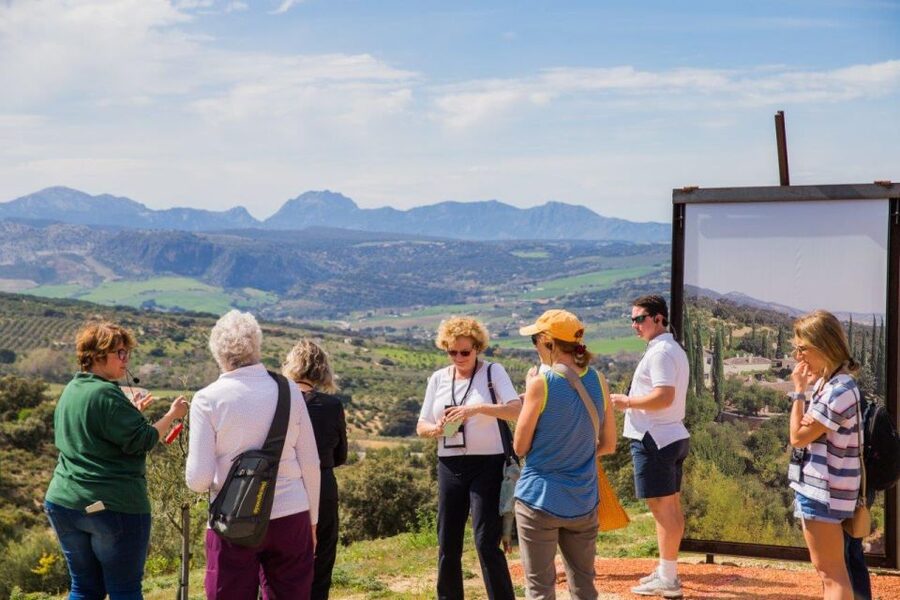
The outdoor section takes you through the property, with olive trees, vegetables, aromatic plants, citrus, and quince. You also get views across vineyards and toward the mountains around Ronda. This is the part that gives the tasting a sense of place.
The walking route is not simply a scenic pause. Your guide uses the grounds to explain olive growing and organic production, including the different types of olive trees and the stages from cultivation to harvest. You begin to see why harvest timing, fruit condition, and handling matter before the oil ever reaches a bottle.
The amount of walking can vary. One description places the walk at roughly 30 minutes, while some people wanted more time on the grounds. If you are mainly interested in farming, you may find the outdoor portion too short. If you have limited time or are combining this visit with Ronda’s old town, the compact format is helpful.
Wear comfortable shoes. Gravel can make the paths difficult for wheelchair users, and the activity is not listed as suitable for wheelchair users. One family managed a shorter route with help from the guide, but the ground remained a real obstacle. This is worth taking seriously rather than assuming that assistance will remove every access problem.
Bring water, sunglasses, and a camera. The outdoor setting is exposed, and the views are part of the visit. Comfortable clothing also makes sense, especially during warm months.
More Organic Olive Farms in Spain:
- Córdoba: Visit a family organic olive grove with tasting
★ 5.0 · 30 reviews - Baeza: Visit to an Organic Olive Grove + Oil Tasting
★ 5.0 · 5 reviews - Organic cooking class with a sommelier in an Olive and wine farm
★ 5.0 · 69 reviews - Balsamic Vinegar, Olive oil and Organic Winery Tour in Assisi with tasting
★ 5.0 · 66 reviews
Seeing how high-end organic oil is made
The mill portion explains how olives are turned into oil. You learn about harvesting, extraction, pressing, and bottling, with the focus on organic production and quality. The details are presented in a way that works for newcomers, so you do not need prior knowledge of olive varieties or milling.
One useful outcome is a better understanding of labels. The tour helps you recognize what to look for when buying olive oil, rather than assuming that an attractive bottle or the phrase extra virgin tells you everything you need to know. That information can save money later, especially if you cook often or want to take oil home.
The visit also gives context to the phrase high-end organic oil. You see that quality is tied to the whole chain, from the grove to extraction and storage. The property’s oil received an award for being the best organic oil in the world in 2015, and the tasting may include oil from a recent pressing, depending on the season.
Do not book this expecting to watch every stage of a full harvest in operation. Harvest dates are not clearly provided, and one repeat visitor had expected to see harvesting but found it had already finished. If seeing the harvest is your main goal, contact the property before booking and ask about current conditions.
Learning to taste olive oil like an expert
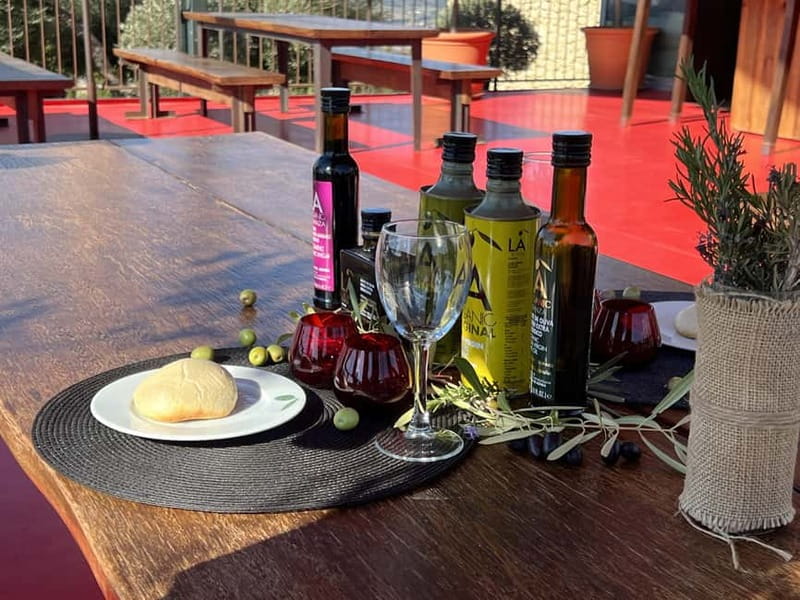
The tasting is the most practical part of the experience. Your guide explains how to identify the bouquet of flavors and aromas in each oil, then helps you compare styles. The key lesson is the difference between mild and intense oil, and which foods may suit each one.
The tasting has included two pre-poured oils and two additional oils on the table, served with bread. Another account describes tasting two oils and wishing for a third comparison, so the exact selection or format may vary. You should think of it as a guided introduction rather than a large tasting flight.
The method is more useful than the number of samples. You learn to pay attention to the smell, fruitiness, bitterness, and peppery finish instead of swallowing quickly and deciding only if you like it. Those sensations can seem surprising at first, particularly if you are used to mild supermarket oil.
I like that the tasting is not only about buying. The shop sells oils and vinegars, and one visitor found the prices reasonable, with no pressure to purchase. You can buy a bottle as a practical souvenir, but the main value is learning how to judge oil when you return home.
The award-winning organic oil gives the tasting a strong focal point. Still, keep your expectations measured. Olive oil is personal, and the most expensive or highly awarded oil may not be the style you want for every dish.
Lunch, wine, and the terrace after the tour
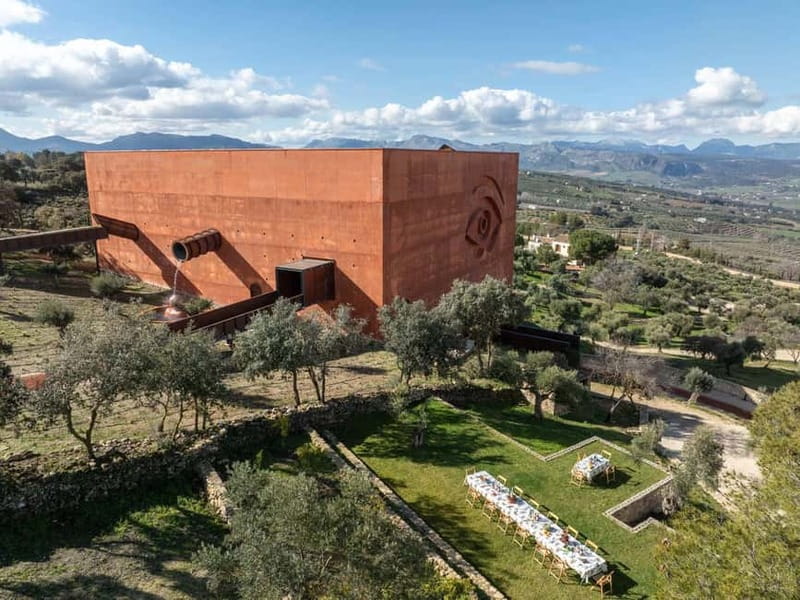
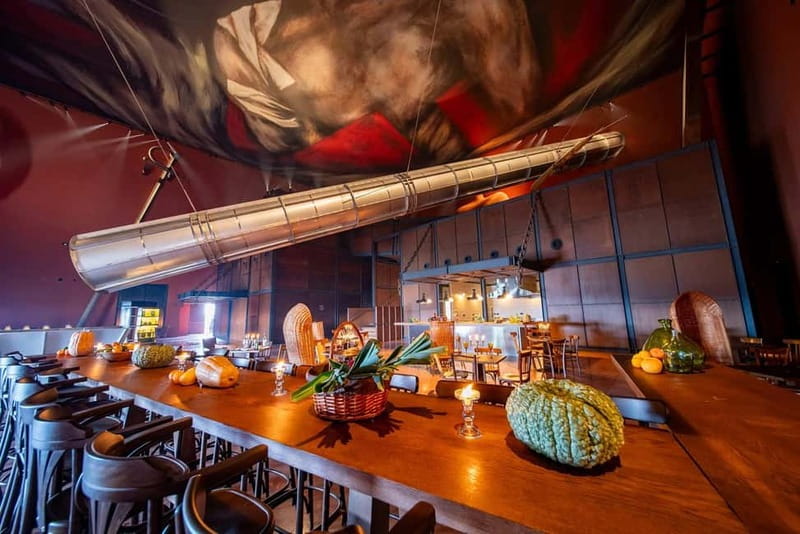
The official visit lasts 1.5 hours, but you can extend the stop with food or drinks if the restaurant is operating. The property has a scenic terrace, including a cantilevered platform, where you may order lunch, tapas, wine, or a tasting menu separately.
This is a smart way to use the outing if you are not rushing back to Ronda. Several visits continued with lunch or drinks after the tasting, and the terrace adds time to enjoy the views instead of leaving as soon as the guide finishes.
Restaurant availability has not always been consistent during the site’s development. At one point both restaurants were closed while construction continued, while later visits describe an excellent restaurant and lunch on the terrace. Check current opening arrangements before building your entire day around a meal.
The extra food is not included in the $29 tour price. That is fair, but you should treat the meal as a separate choice, not part of the basic value calculation.
Is $29 a fair price?
At $29 per person, the tour is good value if you care about at least two of its main elements: olive oil, architecture, art, or scenery. You get a guide, museum visit, mill visit, farm walk, and tasting in 90 minutes. Compared with a simple shop tasting, there is much more here.
The price is less compelling if you add a costly taxi from Ronda and only want to taste several oils. The number of oils is not especially large, and some people would prefer more direct comparison. The setting and instruction are what make the price work, not the quantity of samples.
I would also count the time saved. You can learn the basics of olive growing and oil production without giving up half a day. For a couple already visiting Ronda, the visit fits neatly around sightseeing, provided you allow time and money for transport.
Free cancellation up to 24 hours before the tour and reserve now, pay later booking terms add flexibility. Those policies are useful when your Andalusia schedule is changing, but they do not solve the transport issue.
Who should book this Ronda experience?
I would recommend it most strongly to:
- People who cook with olive oil and want to buy better bottles with more confidence
- Visitors interested in food production and organic farming
- Architecture and design fans who want to see a Philippe Starck project
- Couples looking for a scenic outing close to Ronda
- Anyone who enjoys a guided tasting but does not want a full-day excursion
- Families with older children who can appreciate the farm and food aspects
It may be less suitable if you use a wheelchair, dislike uneven outdoor paths, or want a large, formal tasting. It is also not the best choice if you need included transportation or if your only goal is to see the olive harvest in progress.
The legal drinking age in Spain is 18. The tasting is small, but you should still plan accordingly.
FAQ
Where does the tour meet?
You meet your guide at the LA Organic Country House.
How long does the experience last?
The tour lasts 1.5 hours and includes the museum, mill, farm walk, and olive oil tasting.
What languages are available?
Live tours are available in English and Spanish.
Is transportation from Ronda included?
No. You must arrange and pay for transportation to the LA Organic Country House.
What is included in the price?
The price includes a guide and an olive oil tasting.
What will I see during the visit?
You will see the Philippe Starck-designed museum, the olive oil mill, the farm, olive trees, vegetables, aromatic plants, citrus and quince trees, vineyards, and mountain views.
How many oils will I taste?
The tasting format can vary. It has included two pre-poured oils and two additional oils on the table, while another visit described tasting two oils. Bread is provided with the tasting.
Is the tour suitable for wheelchair users?
It is listed as not suitable for wheelchair users. Gravel on the farm paths can make the outdoor route difficult, although a guide may be able to offer a shorter route.
Can I cancel the booking?
You can cancel up to 24 hours in advance for a full refund. Reserve now and pay later is also available.
Should you book LA Organic?
Book it if you want more than a quick taste. The best parts are the artistic building, the farm setting, the clear tasting lesson, and the chance to connect a bottle of oil with the place and process behind it.
Before booking, check your transport and decide if you want to stay for lunch. If you need a fully accessible route, a large tasting flight, or a guaranteed harvest visit, choose carefully or ask the property first.
For most visitors spending time in Ronda, this is a worthwhile 90-minute side trip. The experience gives you something useful to take home, not just a bottle: a better sense of how good olive oil should smell, taste, and fit into your cooking.
Newest grove reviews around Spain
- Córdoba: Olive Oil Tasting Experience★ 4.4 · 8 reviews
- Cazorla: Oleotour – Olive Oil Culture Initiation★ 5.0 · 3 reviews
- Cazorla: Olive grove and mill tour★ 5.0 · 2 reviews
- Cazorla: Highligts Tour with Olive Oil Tasting★ 5.0 · 2 reviews
- Aires de Jaén: Olive Oil Plantation Tour and Local Meal★ 4.9 · 9 reviews
- Olive Oil Tasting and Culinary Day Trip in Carmona★ 5.0 · 2 reviews
- Oleotourism and olive oil tasting in Seville – Private tour★ 5.0 · 7 reviews
- Cordoba Olive Oil mill, Wine, Passion★ 4.5 · 8 reviews
Organic Olive Farms, compared.
Balsamic Vinegar, Olive oil and Organic Winery Tour in Assisi with tasting
Read our review →
Organic Olive Grove tour & Olive oil tasting & lunch in Kalamata!
Read our review →
Assisi: Organic Balsamic Vinegar, Olive Oil & Wine Tour
Read our review →
Organic Wine and Olive Oil Tasting Experience near Lecce
Read our review →
Organic Olive Oil Farm Tour with Transfer and Tasting
Read our review →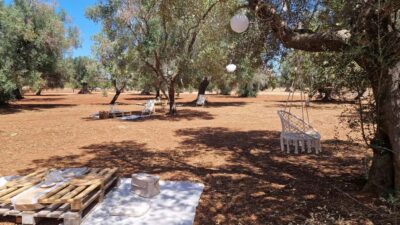
San Vito dei Normani: Organic Picnic in Olive Grove
Read our review →
Browse the lists this tour appears in