
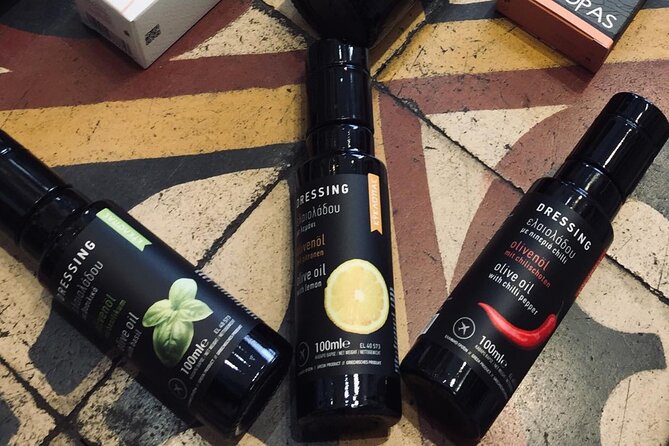
Review · GREECE OLIVE OIL TOURS
Olicatessen Olive Oil Tasting in Thessaloniki
Greek olive oil is far more varied than the bottle on your kitchen shelf may suggest. At Olicatessen, you taste six oils from different parts of Greece and learn to spot the difference between fruity, peppery, grassy, mild, and more assertive styles. The session takes place inside the store, in Thessaloniki’s central Ladadika district.
I like the direct connection to producers, with stories and photographs that give the oils a human face. I also like the calm teaching style reported by people who joined Alex or Elli, including plenty of time for questions. The main consideration is the price: $47 for one hour is fair for a focused tasting, but it may feel high if you only want a quick sample before buying a bottle.
Key points at a glance
- Six oils from across Greece: Compare regional styles and olive varieties in one sitting.
- Alex and Elli lead the session: Both guides explain the tasting in English and Greek, with a friendly, clear approach.
- Ladadika location: The tasting begins and ends at Olicatessen in Thessaloniki’s central dining district.
- Learn the tasting method: Use aroma, texture, and flavor to judge oil instead of relying only on the label.
- A small Greek food finish: The session includes green apple, water, and an extra traditional or modern Greek pairing.
- Good souvenir stop: You can buy the oils you prefer for home, gifts, or cooking memories.
Six Greek oils in one Ladadika sitting
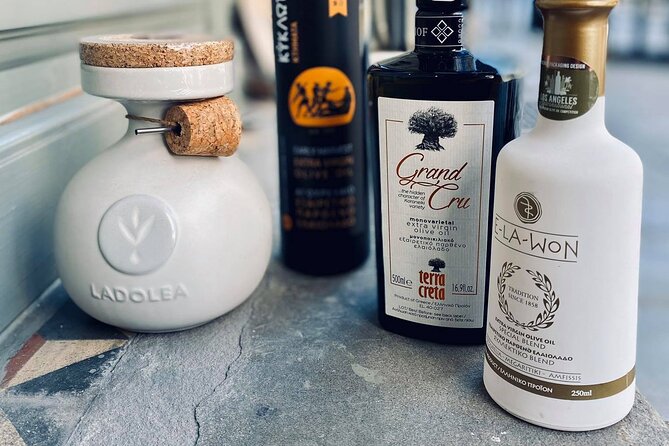
The heart of this experience is a guided tasting of six olive oils from different Greek regions and varieties. That number matters. One or two samples can show you whether you like an oil, but six allow you to compare how place, olive type, and production choices shape the final taste.
You do not simply sip oil and hear a list of product names. The session focuses on the basic sensory tools used to judge it: aroma, texture, and flavor. You may notice fresh green notes in one sample, a softer mouthfeel in another, or a peppery finish that arrives at the back of your throat.
That last sensation can surprise you. Pepperiness is not necessarily a flaw. It can be part of an oil’s character, especially in fresh extra-virgin olive oil. The point of the class is to help you describe what you notice and decide which styles suit your own cooking.
The oils come from different parts of Greece, so you get a wider view than a single regional tasting would offer. I like this approach because Greece is not one olive-growing zone with one standard flavor. Comparing samples side by side makes that clear much faster than reading a label in a shop.
More Olive Oil Tours around Greece:
- Crete: Quad Safari, Olive Mill with Tasting & Ghost Village
★ 4.9 · 1,004 reviews - Knossos-Zeus Cave -Old Traditional Villages-Olive Oil Factory
★ 5.0 · 694 reviews - The Governor’s Olive Mill Tour with Olive Oil Tasting
★ 5.0 · 502 reviews
How the tasting unfolds
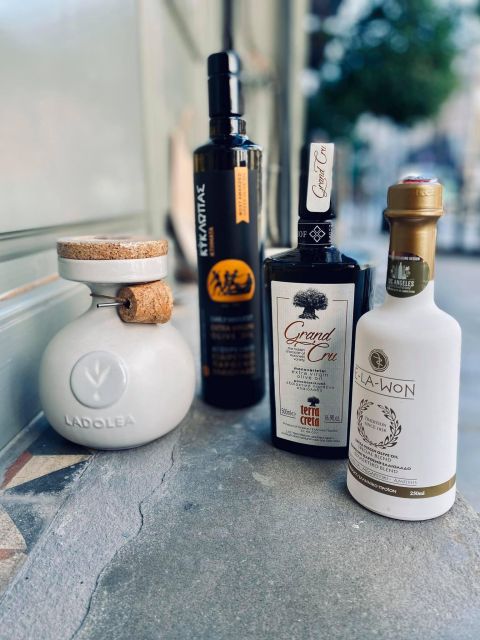
You meet at the Olicatessen store in Ladadika, a central part of Thessaloniki known for food and dining. There is no separate transport section or countryside visit. The experience begins at the store, stays there for the tasting, and finishes back at the same place.
That simple plan suits a one-hour activity. You do not lose time getting to an olive grove or factory, and you can fit the session into a day of sightseeing around central Thessaloniki. It also makes the tasting easy to pair with lunch, dinner, or an evening walk through the district.
During the session, your guide introduces the oils and explains the wider story of Greek olive oil production. Tradition matters here, but so does modern production. You learn how Greek producers continue older methods while also paying attention to quality, careful handling, and the sensory traits that make each oil distinctive.
Alex is one of the named hosts, and the available feedback points to his patient, enthusiastic style. Elli also leads the session and is described as clear and friendly. You should expect an educational hour rather than a formal lecture. Questions are welcome, and the pace appears deliberately unhurried.
That is useful if you arrive with little background. You do not need to know the difference between extra-virgin and other oil grades before you begin. The session is designed for food enthusiasts, but it also works for someone who simply wants to understand why one bottle costs more than another.
What to taste between the oils
Green apple and water are included. These are not random extras. The apple gives you a clean, fresh food note between samples, while water helps clear your palate. Following the guide’s order and using the palate cleanser should make the differences easier to notice.
The tasting also ends with an additional Greek food pairing. The exact item can be traditional or more modern, depending on the selection for the session. Specific tastings have included honey and balsamic vinegar, which gives you a useful contrast after working through the olive oils.
This final bite keeps the hour from feeling too technical. Olive oil is meant to be eaten, not only judged in a small tasting glass. Pairing it with Greek foods shows how a peppery or fruity oil might work at the table, rather than leaving you with abstract tasting notes.
Still, keep your expectations in proportion. The included food is a finishing sample, not a full meal. You should plan another stop in Ladadika if you want lunch or dinner afterward.
Why producer stories add value
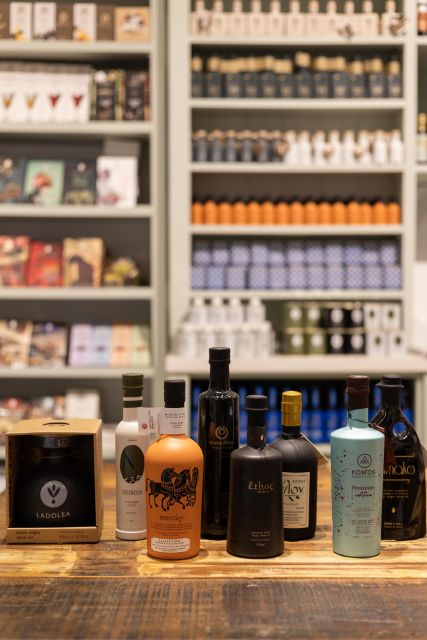
Olicatessen works directly with many producers and uses the tasting to present their products and stories. That changes the experience from a generic retail sample into a closer look at the people behind the bottles.
The guides use photographs of farmers and talk about the producers they work with. This is especially useful when you are deciding what to buy. Instead of choosing an oil only because the bottle looks attractive, you learn something about its origin and the care behind it.
I like this part because Greek food shopping can otherwise become a label-reading exercise. You may see several attractive bottles, but a short explanation of region, variety, and producer gives you a better basis for comparison.
The producer focus also adds a sense of place without taking you out of Thessaloniki. You are tasting oils made around Greece while sitting in the city’s old commercial center. For a visitor who cannot fit an olive farm or rural food tour into the schedule, that is a practical substitute, though it is not the same as seeing production firsthand.
Same groves, a different afternoon:
- From Chania: Olive Oil, Wine, Cheese & Honey Tasting Tour
★ 4.6 · 490 reviews - Crete: Road-trip to Lasithi, Zeus Cave & Olive Mill Farm
★ 4.4 · 451 reviews - Heraklion: Olive Farm Tour with Tasting of Local Delicacies
★ 4.9 · 411 reviews - Lassithi, Zeus Cave, Olive Mill Farm & Knossos Combo Tour
★ 4.6 · 404 reviews
Making sense of aroma, texture, and flavor
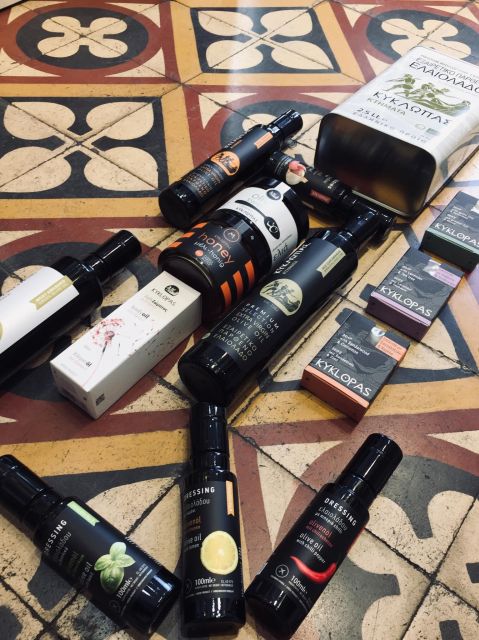
The session teaches organoleptic qualities, a formal term for the sensory features you can detect with your nose and palate. In plain language, you learn to smell the oil, taste it, and describe what it does in your mouth.
Aroma comes first. You may find fresh, grassy, fruity, or other notes. Texture follows, since an oil can feel light, smooth, thick, or lively. Flavor includes the main taste and the finish, including bitterness or peppery heat.
You are not expected to produce expert tasting language. A good guide helps you connect simple impressions to useful choices. If you prefer a gentle oil for bread or baking, you can identify that style. If you want something with more punch for salads or finished dishes, you can look for a stronger profile.
This is the most lasting benefit of the experience. Afterward, you may still forget the names of some olive varieties, but you are more likely to smell and taste an oil before buying it. You can also make a better match between oil and food.
Is $47 a good value for one hour?
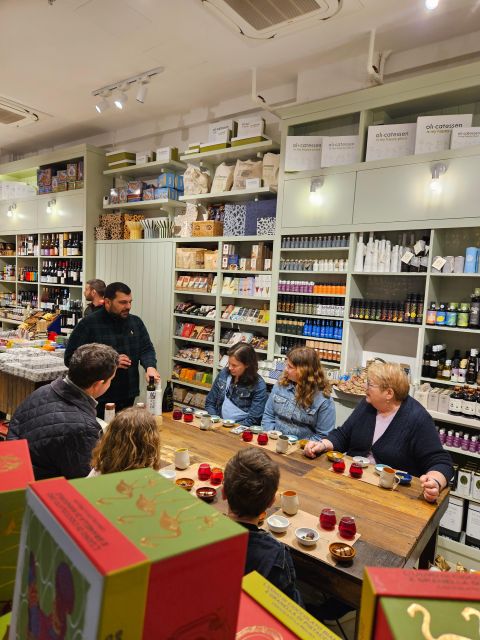
At $47 per person, this is not the cheapest food activity in Thessaloniki. You pay for six tastings, a guided lesson, producer information, the apple and water, and a final Greek pairing. You also receive the convenience of doing it in a central shop rather than arranging a trip outside the city.
The value improves if you enjoy food education or plan to take home a bottle. Several people who joined the session bought their favorite oils afterward, using the tasting to avoid a blind purchase. That can make the activity partly useful as a shopping guide, although any bottles you buy are additional.
The price is harder to justify if you already know olive oil well and only want to sample products. A supermarket or specialty shop might offer a cheaper taste, but it would not give you the same comparison across six oils or the same explanation of how to assess them.
The one-hour length is a strength for most city schedules. It is long enough to cover the basics without taking half a day. At the same time, serious food students may wish for more time, especially if the session prompts detailed questions about harvesting, storage, or production.
Who will enjoy this most
I would recommend this experience to anyone who likes Greek food and wants more than a quick souvenir stop. It is particularly useful for people who cook with olive oil and want to understand why some oils work better for drizzling, dipping, or finishing a dish.
It also suits couples, solo visitors, and small groups looking for a quiet indoor activity. The clear, friendly teaching style reported for Alex and Elli should help beginners feel comfortable. You do not need a trained palate or prior knowledge.
Food-focused visitors will get the most from the producer stories and comparisons. If you are building a Greek pantry at home, tasting before buying is a sensible way to choose. The bottles can also make practical souvenirs, provided you have room to pack them.
The activity may be less appealing if you want a farm visit, a full meal, or a longer cooking lesson. This is a store-based tasting in the city. Its strength is focused comparison, not a broad day in the countryside.
Practical details that affect your choice
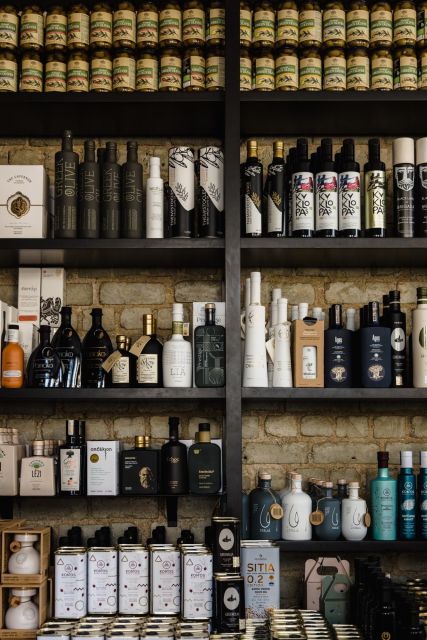
The session lasts one hour and is offered in Greek and English. Check the available start times when booking, since the schedule can shape how easily you fit it around meals and sightseeing.
The meeting point is the Olicatessen store in the Ladadika district, and you return there at the end. Because the start and finish are the same, it is easy to continue exploring central Thessaloniki afterward.
The activity allows free cancellation up to 24 hours before the start for a full refund. You can also reserve and pay later, which helps if your plans are still shifting.
The overall rating is five out of five from 12 reviews, with repeated praise for the hosts’ patience, friendly explanations, and ability to make the subject fun. The strongest pattern is not simply that people liked the oil. It is that they felt they learned how to taste it.
Should you book the Olicatessen tasting?
Book it if you want a compact, well-guided introduction to Greek olive oil and like the idea of comparing six styles before shopping. The central Ladadika setting, English-language guidance, and one-hour format make it easy to add to a Thessaloniki itinerary.
I would be more cautious if $47 feels high for a short tasting or if you are looking for a farm, factory, or full food tour. For everyone else, the session offers a useful skill, a taste of Greek regional variety, and a chance to choose souvenirs with more confidence. Alex or Elli can help you leave with a better palate, not just another bottle.
FAQ
Where does the olive oil tasting take place?
It takes place at the Olicatessen store in the Ladadika district, in the central area of Thessaloniki.
How long does the experience last?
The tasting lasts one hour.
How much does the tasting cost?
The listed price is $47 per person.
How many olive oils will I taste?
You will taste six different olive oils from across Greece.
Which languages are available?
The experience is available in Greek and English, with live guiding in both languages.
Who may lead the tasting?
The named hosts include Alex and Elli. The available session information indicates that either can lead the experience.
What is included besides the olive oil?
Green apple and water are included. The session also finishes with a traditional or innovative Greek food pairing.
Does the tasting include a meal?
No. It includes the olive oil tasting, apple, water, and a small final food pairing, but it is not described as a full meal.
Can I cancel and receive a refund?
Yes. You can cancel up to 24 hours in advance for a full refund. You can also reserve now and pay later.
Newest grove reviews around Greece
- Corinthian olive oil tour & tasting experience★ 5.0 · 4 reviews
- Corfu: Olive Oil & Wine Tastings & Traditional Villages Tour★ 5.0 · 6 reviews
- Corfu: Organic Olive Oil Farm Tour with Transfer and Tasting★ 5.0 · 8 reviews
- Chania: Authentic Crete Villages Tour & Olive Oil Tasting★ 4.5 · 2 reviews
- Chania Olive Tour: 3,000-Year-Old Tree, Museum &Organic Mill★ 5.0 · 5 reviews
- Chania Private Olive Oil Tour: Oil Tasting & Villages Tour★ 4.4 · 9 reviews
- Chania E-Bike Adventure: Culture, Coastline & Olive Tasting★ 5.0 · 2 reviews
- Athens: Cretan Olive Oil Tasting Experience★ 5.0 · 10 reviews
Greece Olive Oil Tours, compared.


Knossos-Zeus Cave -Old Traditional Villages-Olive Oil Factory
Read our review →
The Governor’s Olive Mill Tour with Olive Oil Tasting
Read our review →

Road-trip to Lasithi, Zeus Cave & Olive Mill Farm
Read our review →
Olive Farm Tour with Tasting of Local Delicacies
Read our review →
Lassithi, Zeus Cave, Olive Mill Farm & Knossos Combo Tour
Read our review →
Browse the lists this tour appears in