

Review · SPAIN OLIVE OIL TOURS
Jaén Discover the Secrets of Olive Oil: Tour & Tasting
Jaén produces an extraordinary share of the world’s olive oil, and this 90-minute visit shows you why the province is often called the heart of Spanish olive country. You walk among the trees, follow the olives into a modern mill, and finish with a tasting that teaches you how to judge oil rather than simply pour it over a salad.
I especially like the clear connection between grove and bottle. You see where the olives grow, then learn how machines turn fruit into oil. I also like the tasting lesson, which covers quality grades, uses, market prices, aroma, and flavor. The main consideration is timing: outside harvest season, the machinery may be clean and still rather than running with fresh olives, and one recent visitor tasted two oils instead of the advertised three.
Key points at a glance
- Jaén olive country: See the groves and learn why this Spanish province is central to olive oil production.
- A working modern mill: Follow the production line and see the machinery used to make extra virgin olive oil.
- Three-oil tasting: Compare aroma and flavor while learning how quality classes affect price and use.
- Short, focused visit: The tour lasts about 1.5 hours, making it easy to fit into a day in Jaén.
- Two daily language options: English tours begin at 10:30, while Spanish tours begin at 12:30.
- Restaurant on site: You can add a meal or drink after the tour, though food and drinks are not included.
Why Jaén is the right place to study olive oil
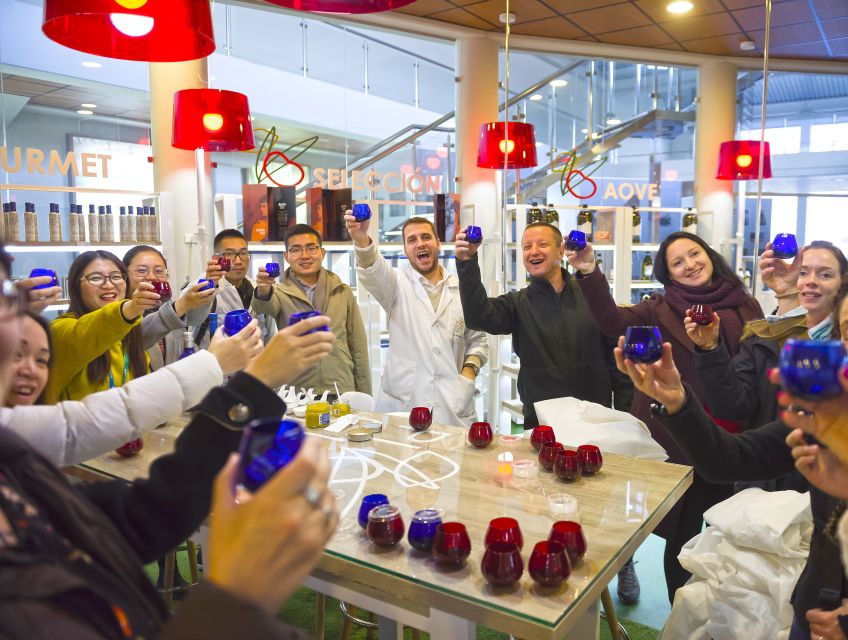
Jaén is not a decorative backdrop added to an olive oil tour. Olive cultivation shapes the province’s economy, food, and countryside. The tour explains that the region produces about half of the world’s olive oil, giving you useful context before you look at a single machine.
That scale matters. Olive oil here is not just a bottle on a restaurant table. It is a major agricultural product, a daily ingredient, and part of the culture of Andalusia. Your guide also explains why olive oil has been described as an intangible heritage, linking the product to farming methods, food traditions, and local knowledge.
The tour begins at Picualia, identified at Exit 299 in the direction of Madrid. You need to make your own way there, since hotel pickup and drop-off are not included. If you are driving through Jaén or arranging a day around the province, the meeting point is practical. If you are staying without a car, check your transport plan before booking rather than assuming a shuttle is provided.
More Olive Oil Tours around Spain:
- Ronda: LA Almazara LA Organic, Olive Oil Museum and Tasting
★ 4.6 · 435 reviews - Guided tour and olive oil tasting in Alhaurin el Grande (Málaga)
★ 5.0 · 200 reviews - Guided Tasting Tour in 16th century House and Olive Oil Factory
★ 5.0 · 169 reviews
Walking through the olive grove
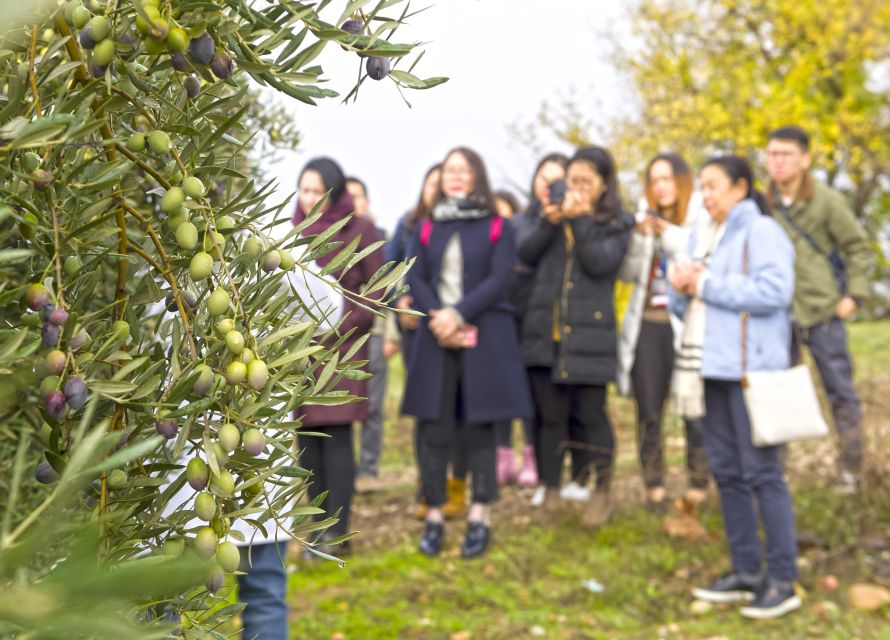
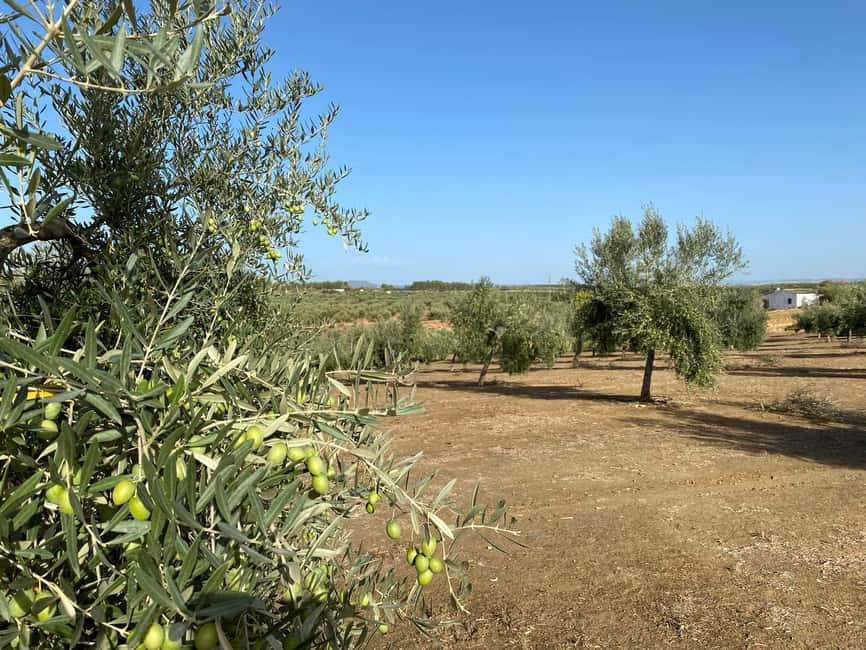
The first part takes you outside, among the olive trees around the mill. This is useful because it gives the production process a starting point. You can see the trees in the Spanish sun and hear how the harvest is organized before the fruit reaches the machinery.
Your guide explains how olives are collected and what happens during harvest. The timing of harvest affects the final oil, so this part helps you understand why producers care about the condition of the fruit and the speed of processing.
There is one seasonal limit to keep in mind. The tour explains the harvesting process, but you may not see workers picking olives or fresh fruit moving through the mill unless you visit during the harvest period. A spring visitor found all areas of the facility accessible to view but did not see the harvest in motion.
The information is still worthwhile outside the picking season, especially if you want a basic understanding of olive farming. Just book this as a production and tasting visit, not as a guaranteed working-harvest spectacle.
Following the olives into the modern mill
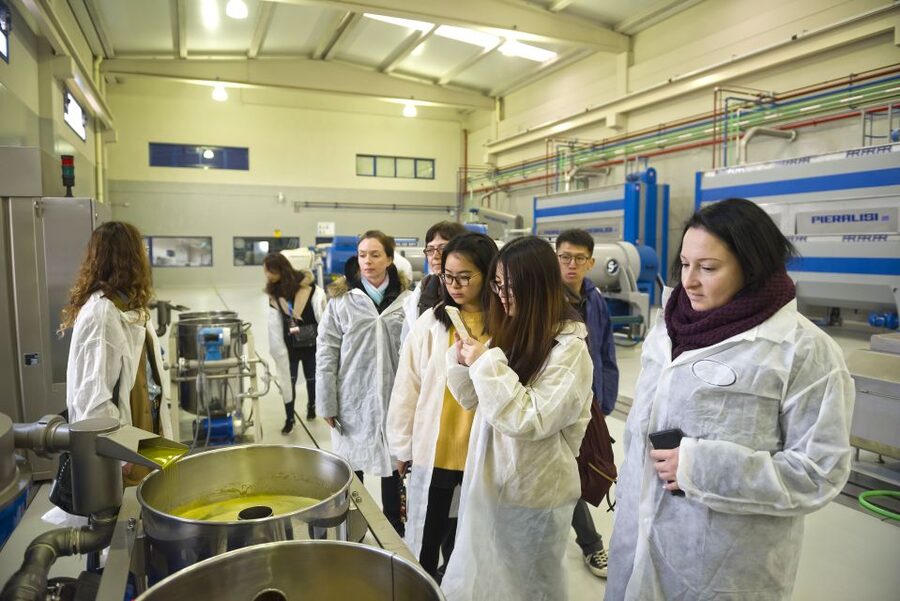
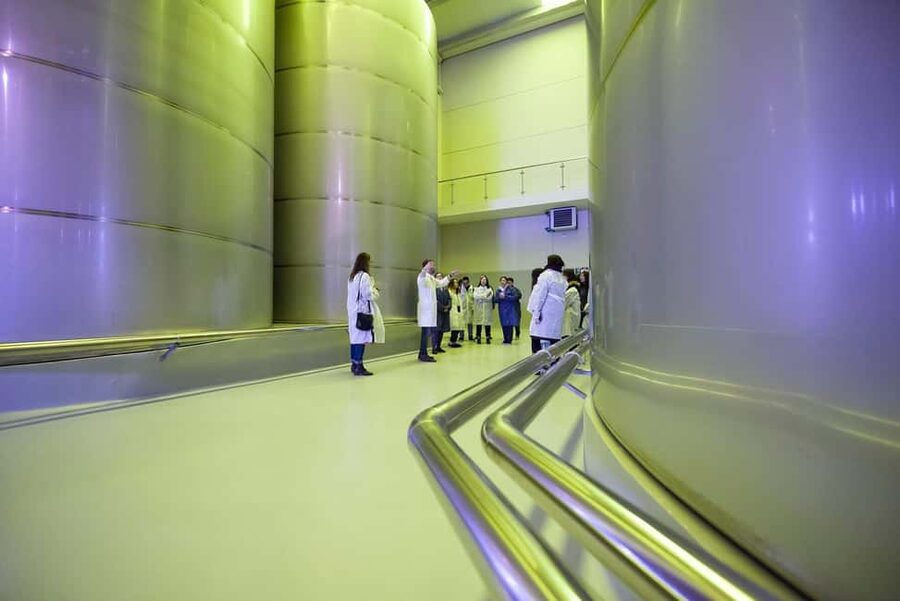
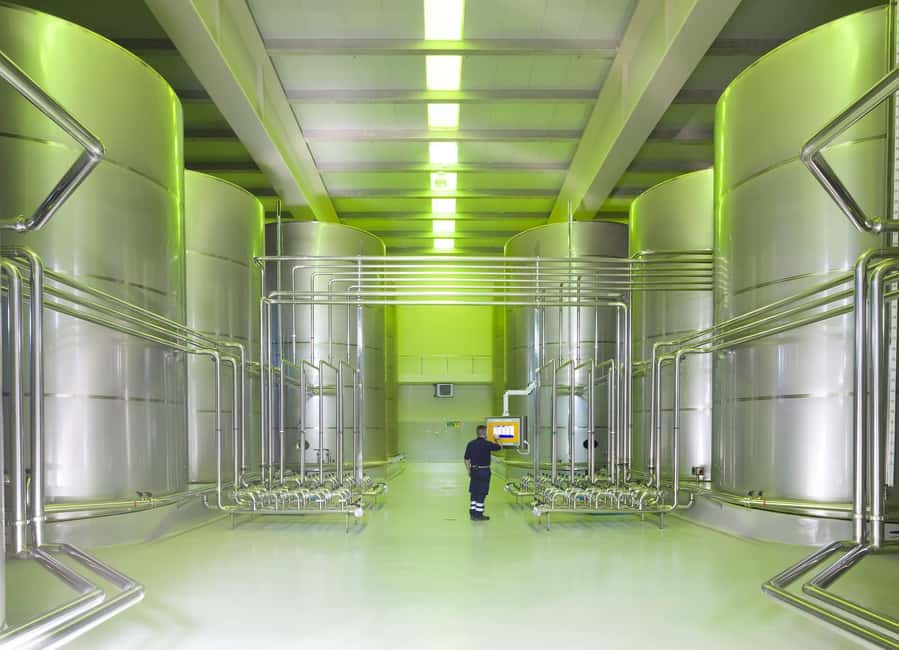
After the grove, you move inside to see how olives become oil. The guide takes you through the path from fruit to finished product and points out the equipment used at each stage. You are not simply shown a polished display. The machinery gives you a sense of the industrial work behind a product that often arrives at your table in a small, elegant bottle.
The explanations cover pressing, separation, and the production of extra virgin olive oil. You also learn how oils are divided into quality classes. That distinction is important, since labels and prices can be confusing when you are standing in a shop comparing bottles.
I like this part because it explains the business as well as the food science. One recent visitor found the discussion of processing, quality categories, and the olive oil trade especially useful. Another came away better prepared to taste and buy oil. You should leave with more practical knowledge than simply knowing that extra virgin is considered the top category.
The machinery may be active during harvest, but it may also be quiet during other months. That does not make the visit pointless. In fact, a still mill can make it easier to listen and see the full production line. If watching live processing is your main goal, ask about current activity before you go.
Learning what the quality labels really mean
Olive oil quality is not only about flavor. The tour explains grades, uses, and market prices, helping you connect production methods with what you pay in a store.
Your guide may compare oils suited to different cooking or serving purposes. The point is not that one oil is always best for every dish. A strong, peppery oil can be excellent on bread or a tomato salad, while a milder style may suit another use. The tasting gives these ideas a practical form.
This lesson can save you money later. If you know what aroma, bitterness, and pepperiness tell you, you can make a better choice instead of paying for a label you do not understand. The visit also gives you a clearer idea of why a high-quality oil costs more than a basic cooking oil.
Do not expect a formal course for professional tasters. This is a friendly introduction, with a guide explaining the ideas in plain terms and making the process interactive. That balance works well for first-time visitors and food lovers who want useful knowledge without a technical lecture.
Same groves, a different afternoon:
- Visit of the olive grove, olive oil tasting and snack
★ 4.9 · 111 reviews - Visit Oil Mill Museum and Olive Oil Tasting in Ronda
★ 4.5 · 105 reviews - Private Tasting of Olive Oil in Córdoba
★ 5.0 · 93 reviews - Olive Oil tasting breakfast & Tour in Cordoba
★ 4.5 · 84 reviews
The three-oil tasting at the end
The tasting is the payoff, but it is also part of the lesson. You sample three extra virgin olive oils and compare their aromas and tastes. The guide helps you pay attention to the differences rather than swallowing each sample as if it were a shot.
You can expect the tasting to focus on the senses: smell first, then flavor and mouthfeel. The aim is to recognize what makes an oil fresh and distinctive. This is where the earlier talk about quality becomes real. You can connect the grove, the harvest, the machinery, and the final product in your glass.
The advertised tasting includes three oils. One recent visitor reported tasting two high-quality oils, so the exact number may vary on the day. It is a small point, but worth knowing if the tasting is your main reason for booking. Ask your guide what is being served if the selection differs from the stated program.
There is no stated pressure to buy, which matters at a mill with a gift shop. You can browse bottles and olive oil products after the tour, but you are free to treat the tasting as an educational stop rather than a sales presentation.
The restaurant and gift shop on site
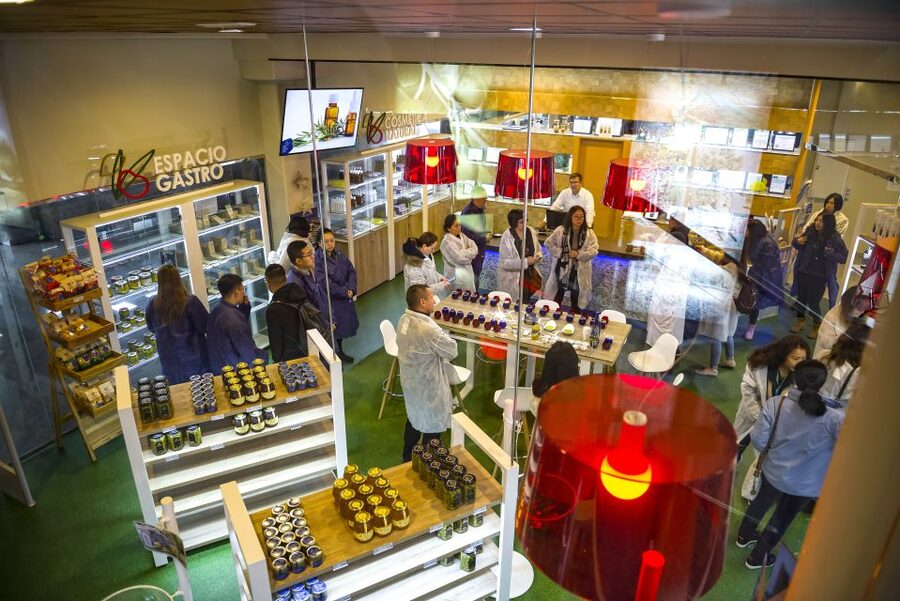
Picualia also has a restaurant on the premises, an unusual convenience for a mill visit. Food and drinks are not part of the $31 ticket, but you can plan to eat or have something to drink after the tour.
The restaurant has been described as Michelin-starred in the supplied information, so diners may see the visit as more than a quick museum-style stop. Still, you should treat the meal as a separate expense and check availability if you want to eat there. The tour itself includes entry, the guide, and the oil tasting only.
The gift shop gives you a chance to buy oil after you have learned how to compare it. That is more useful than shopping before the tour, since you will have some basis for judging the bottles. If you are carrying luggage or flying soon, remember that olive oil is heavy and may need careful packing.
How much value do you get for $31?
At $31 per person, this is a fair price for a 90-minute guided visit that includes the mill, a live guide, the grove walk, and a tasting of extra virgin oils. You are paying for interpretation, not just entry to a building.
The value is strongest if you are curious about food production or planning a wider visit around Jaén. A standard tasting alone could be brief and hard to understand. Here, you first see the trees, then the equipment, then the finished oil. That sequence gives the tasting a clear purpose.
The value is weaker if you expect a full farm day, a meal, or a hands-on harvesting session. Hotel transfers are not included, and food and drinks cost extra. You also need to allow for the drive to the mill and choose the right language time.
For a short stop, the price is sensible. It gives you a local agricultural experience that is difficult to recreate by simply visiting a supermarket or ordering olive oil with lunch.
Choosing the right time and language
The English tour begins at 10:30, and the Spanish tour begins at 12:30. Check availability for the date you want, since the stated times are the regular options provided for this activity.
The language choice affects how much you get from the technical explanations. If you are comfortable in Spanish, the later tour may fit better with your day. If you need English, plan around the morning start rather than expecting several English departures.
The 1.5-hour length is a strength. You get enough time for the grove, mill, explanations, and tasting without giving up an entire day. It also leaves room to visit other Jaén sights or make the restaurant part of a longer stop.
The tour is wheelchair accessible, which is useful information for anyone checking the physical setup in advance. Since the visit includes outdoor areas and a production facility, contact the provider if you need details about the exact route or current access arrangements.
Who will enjoy this olive oil visit?
I would recommend it to food-minded visitors, couples, families with older children, and anyone driving through Andalusia who wants a local experience with a clear beginning and end. You do not need prior knowledge of olive oil. The guide builds the lesson from the tree upward.
It is also a good fit if you enjoy buying regional food to take home. By the end, you have a better sense of quality classes, flavor, and price, so the shop becomes an optional extension of the tour rather than the whole point.
This may not suit you if you want a long walk, a dramatic historic site, or guaranteed activity inside the mill. The focus is agriculture, machinery, tasting, and explanation. The scenery is pleasant, but the real attraction is understanding how olive oil is made.
The experience also works well for people who think they already know olive oil but have never tasted different grades side by side. The guide’s practical approach can change how you smell, taste, and choose a bottle.
Practical booking advice before you go
Reserve ahead if you need the English tour at 10:30 or the Spanish tour at 12:30. The activity allows cancellation up to 24 hours before the visit for a full refund, and you can reserve now and pay later, which gives you some flexibility while planning an Andalusia itinerary.
Drive to the meeting point at Picualia using Exit 299 in the direction of Madrid. There is no hotel pickup or drop-off, so build your own transport into the schedule.
Food and drinks are extra. If you want to eat at the on-site restaurant, plan for additional time and cost rather than trying to squeeze in a meal during the 90-minute tour.
Should you book the Jaén olive oil tour?
Book it if you want a focused, useful introduction to one of Andalusia’s most important products. The combination of grove, mill, quality lesson, and tasting gives you more than a quick sample at a shop. At $31, the visit offers good value for anyone interested in food, farming, or local culture.
Think twice if you need a guaranteed live harvest, hotel transport, or a full meal included. The tour is short, and the mill may be quiet outside harvest season. For most visitors passing through Jaén, though, it is an easy way to understand why this part of Spain takes its olive oil so seriously.
FAQ
Where does the olive oil tour meet?
The meeting point is at Picualia, identified as Picualia Aceite de oliva y Oleoturismo. Take Exit 299 in the direction of Madrid to reach the mill.
How long does the tour last?
The guided experience lasts about 1.5 hours.
What time is the English tour?
The English tour is at 10:30. The Spanish tour is at 12:30.
What is included in the price?
The ticket includes entry to the olive mill, a guide, and a tasting of three extra virgin olive oils.
Is food included?
No. Food and drinks are not included, but the mill has a restaurant on its premises if you would like to eat or drink after the visit.
Is the experience wheelchair accessible?
Yes, the activity is listed as wheelchair accessible.
Newest grove reviews around Spain
- Córdoba: Olive Oil Tasting Experience★ 4.4 · 8 reviews
- Cazorla: Oleotour – Olive Oil Culture Initiation★ 5.0 · 3 reviews
- Cazorla: Olive grove and mill tour★ 5.0 · 2 reviews
- Cazorla: Highligts Tour with Olive Oil Tasting★ 5.0 · 2 reviews
- Aires de Jaén: Olive Oil Plantation Tour and Local Meal★ 4.9 · 9 reviews
- Olive Oil Tasting and Culinary Day Trip in Carmona★ 5.0 · 2 reviews
- Oleotourism and olive oil tasting in Seville – Private tour★ 5.0 · 7 reviews
- Cordoba Olive Oil mill, Wine, Passion★ 4.5 · 8 reviews
Spain Olive Oil Tours, compared.
LA Almazara LA Organic, Olive Oil Museum and Tasting
Read our review →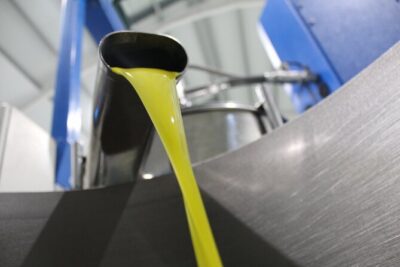
Guided tour and olive oil tasting in Alhaurin el Grande (Málaga)
Read our review →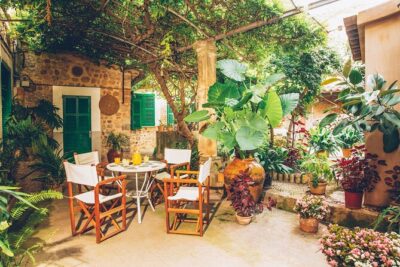
Guided Tasting Tour in 16th century House and Olive Oil Factory
Read our review →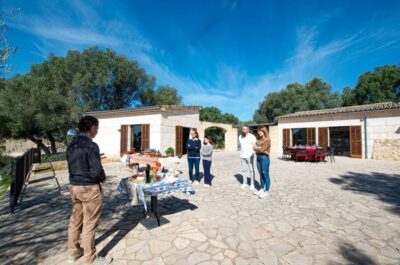
Visit of the olive grove, olive oil tasting and snack
Read our review →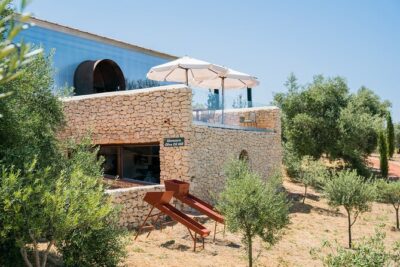
Visit Oil Mill Museum and Olive Oil Tasting in Ronda
Read our review →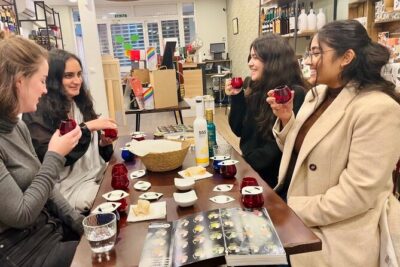
Sóller: Olive Oil Guided Tour and Tasting at Can Det Estate
Read our review →Browse the lists this tour appears in