
Review · SPAIN OLIVE OIL TOURS
Granada: Tasting of Extra Virgin Olive Oils
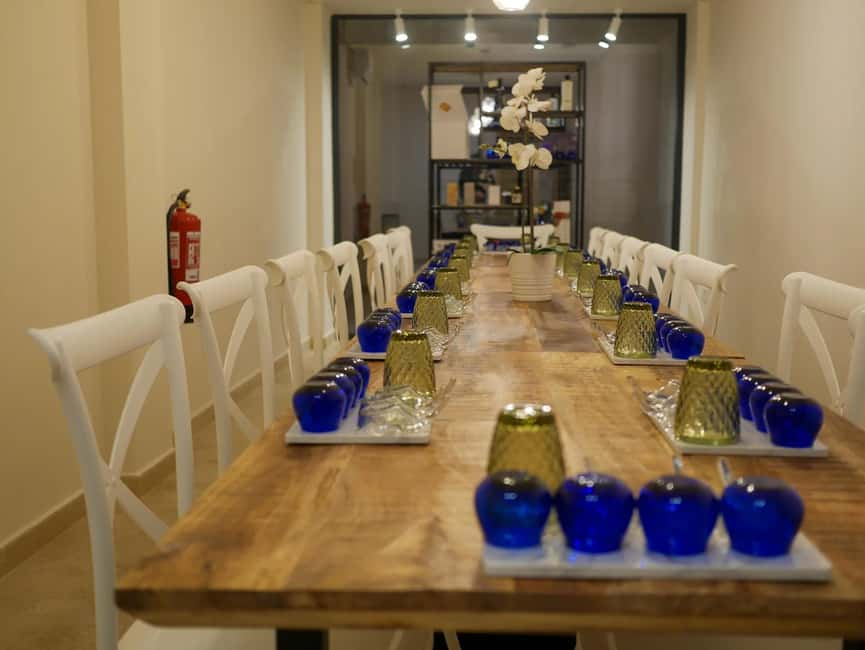
Granada’s olive-oil culture gets a proper introduction in this 90-minute tasting at Molino y Cata. Instead of simply dipping bread into oil, you learn how professionals judge aroma, flavor, bitterness, and the peppery finish, using the same style of glasses found in major competitions.
I especially like the small-scale feel and the chance to learn directly from Mercedes Uceda, a professional taster, and her team. I also like that the tasting goes beyond three oils, adding a flavored olive-oil condiment and snacks so you can see how each oil works with food. The main consideration is simple: this is an indoor tasting, not an olive-grove visit, so you will not see trees, mills, or the production process.
Key points at a glance
- Three carefully selected EVOOs: Taste three highly regarded extra virgin olive oils from different varieties.
- Professional tasting equipment: Use tasting glasses like those used in international olive-oil competitions.
- Personal guidance from Mercedes Uceda: Learn from a professional taster with direct explanations and stories linked to the olive-oil trade.
- More than a straight tasting: Try an olive-oil condiment and pair the oils with snacks before choosing your favorite.
- Central Granada setting: The tasting takes place in a professional room in the historic center.
- Easy 90-minute format: A good fit before dinner, after sightseeing, or between visits to Granada’s major sights.
Why this Granada olive-oil tasting is worth your time
Andalusia is one of the world’s great olive-oil regions, but many visitors experience its oil only as a small dish on a restaurant table. This activity gives you the tools to understand what you are tasting. That makes it more useful than a simple food sample, especially if you plan to buy olive oil during your time in Spain.
The tasting is led by Mercedes Uceda, a professional EVOO taster, with support from her team. That matters because olive oil can be surprisingly hard to describe at first. You may notice green, fruity, bitter, or peppery notes without knowing what they mean. A trained guide can turn those vague impressions into clear comparisons.
I like the fact that the session uses professional tasting glasses. These glasses are not just a decorative touch. Their shape helps concentrate aromas, while their darker appearance keeps you from judging an oil by color alone. Color can be misleading, so professional tasters focus on smell and taste rather than whether an oil looks bright green or golden.
You also get to choose the oil that impresses you most. That small decision gives the tasting a useful finish. You are not simply told which oil is best. You compare the styles and decide which one suits your own palate.
More Olive Oil Tours around Spain:
- Ronda: LA Almazara LA Organic, Olive Oil Museum and Tasting
★ 4.6 · 435 reviews - Guided tour and olive oil tasting in Alhaurin el Grande (Málaga)
★ 5.0 · 200 reviews - Guided Tasting Tour in 16th century House and Olive Oil Factory
★ 5.0 · 169 reviews
Inside the 90-minute tasting room
The activity takes place in Molino y Cata’s professional tasting room in Granada’s historic center. The exact meeting point can vary with the option booked, so I would check the booking details before setting out. The stated coordinates are 37.174949645996094, -3.602652072906494.
The room-based format makes this a practical choice for a city day. You do not need transport into the countryside, and the session fits neatly around visits to the Alhambra, the Albaicín, or a meal in central Granada. The experience lasts about an hour and a half, long enough for explanation and comparison without taking over your day.
You begin by getting introduced to the idea of extra virgin olive oil and the main qualities that separate one oil from another. The point is not simply to identify an oil as good or bad. You learn to notice its aroma, flavor, bitterness, and spicy finish, then consider how those traits relate to the olive variety and the oil’s character.
The session is available in Spanish and English. Some content may be presented in its original language, so if you need every explanation in English, it is sensible to confirm the language option when booking.
Three oils, three different personalities
The heart of the activity is the tasting of three extra virgin olive oils described as among the best in the world. The supplied information does not name the exact oils or varieties used on each date, and that is worth keeping in mind. The selection may change, so you should not book expecting a particular bottle unless it is confirmed in advance.
What you can expect is a guided comparison. The purpose is to show that extra virgin olive oil is not one single flavor. Different varieties can produce oils that feel mild, grassy, fruity, bitter, or strongly peppery. Some may seem gentle at first, while others leave a lively sensation in the throat.
That peppery feeling is not necessarily a flaw. In a quality extra virgin olive oil, bitterness and pungency can signal the presence of desirable olive compounds. The guide helps you separate those positive traits from defects that can result from poor handling or storage.
This is where the professional glasses become useful. You smell each oil before tasting it, then compare the flavors in a more controlled way. You may be encouraged to warm the glass gently in your hand, take short sniffs, and think about what changes after the oil reaches your palate. These are standard tasting habits, though the exact presentation can vary.
The comparison is valuable even if you are not planning to become an olive-oil expert. Afterward, a supermarket shelf in Spain will make more sense. You will have a clearer idea of what kind of oil you like, and you may be less tempted to judge solely by the bottle design or color.
Learning the main olive varieties
One of the stated aims is to explain the most important varieties of extra virgin olive oil. This is a key part of the experience because variety affects an oil’s taste much as grape variety affects wine.
You will compare the oils rather than study a long list of names in isolation. That is the right approach for a short activity. A name becomes easier to remember when you can connect it to a flavor, a level of bitterness, or a peppery finish.
Mercedes Uceda’s professional background adds useful depth here. Her explanations can help connect the tasting to the wider olive-oil industry, and her personal stories about that world give the session a human side. The experience is not only technical. It also gives you a sense of how people who work with olive oil think about the product.
The personal attention is especially valuable if the group is small. One booking had only a single group taking part, allowing the information to be directed closely to those participants. Group size is not specified as a standard feature, so I would not assume every departure will be private. Still, the format appears well suited to questions and direct conversation.
Same groves, a different afternoon:
- Visit of the olive grove, olive oil tasting and snack
★ 4.9 · 111 reviews - Visit Oil Mill Museum and Olive Oil Tasting in Ronda
★ 4.5 · 105 reviews - Private Tasting of Olive Oil in Córdoba
★ 5.0 · 93 reviews - Olive Oil tasting breakfast & Tour in Cordoba
★ 4.5 · 84 reviews
The flavored condiment and food pairings
After the oils themselves, the tasting expands to a condiment flavored with extra virgin olive oil. This is a smart addition because it shifts the focus from judging oil on its own to thinking about how it works in food.
A strong oil can be wonderful in a tasting glass but too forceful for a delicate dish. A softer oil may be easier for everyday cooking, while a more bitter or peppery oil could suit heartier food. Trying a flavored condiment gives you another way to see how the oil can be used beyond a simple drizzle.
The experience finishes with snacks paired with the EVOOs used during the tasting. The available details do not specify the snacks, so you should not expect a particular menu. Think of this part as a practical demonstration rather than a full meal.
I like this approach because it answers the question many visitors have after a tasting: How do I use this at home? Comparing the oils with food can reveal which one you would want for dipping, dressing, or finishing a dish. It also helps prevent the tasting from becoming too abstract.
You should still plan to eat elsewhere if you need lunch or dinner. The activity includes snacks, but it is not described as a meal.
What Mercedes Uceda adds to the experience
The guide is central here. The activity is built around Mercedes Uceda’s expertise as a professional taster, and the feedback supplied about the experience puts strong emphasis on her detailed explanations, personal attention, and connection to the olive-oil industry.
That combination suits this subject. Olive-oil tasting can feel intimidating when you hear formal terms without context. A good guide keeps the language practical and shows you what to notice in the glass. Mercedes and her husband are also described as personable, which suggests the tone is likely to be warm rather than stiff.
I would use the question time well. Ask which styles are best for everyday cooking, which are better as finishing oils, and how to tell a fresh oil from one that has lost its character. Those specific answers may vary with the oils selected, but they can make the session more useful once you leave Granada.
The experience is available in Spanish and English, which opens it to a broad range of visitors. If you are traveling with someone who has little interest in food, the guide’s stories and the hands-on format may help keep the session engaging.
Value, timing, and who should book
A price is not included in the supplied details, so I cannot judge the exact cost against other Granada activities. I can assess the format. For 90 minutes, you receive guided instruction, three tastings, professional glassware, a flavored condiment, and food pairings. If you are curious about Spanish food culture, that is a focused use of your time.
The value is strongest for people who would otherwise buy olive oil without knowing what they are choosing. It is also useful for cooks, food lovers, wine tasters, and anyone who enjoys learning how everyday products are made and judged.
You may find it less appealing if your priority is a rural outing. This experience does not include an olive grove, a farm visit, or a mill tour in the information provided. For those, Molino y Cata offers related experiences involving an olive grove and sensory tasting, which may be a better match if you want to get outside Granada’s center.
The central location also makes the tasting easy to combine with other plans. You could schedule it between sightseeing stops, use it as a calm break from walking, or make it part of an evening focused on Andalusian food. The 90-minute length is long enough to feel substantial but short enough to fit into a busy itinerary.
The activity is wheelchair accessible, another practical advantage for visitors who need step-free access. Since the meeting point may vary by booking option, check the specific details before arrival.
How this compares with a countryside olive-oil visit
Granada offers more than one way to explore EVOO. A guided tasting in the city focuses on your senses and on learning how to compare varieties. An olive-grove experience would add the setting, trees, and production context, but it would likely require more time and may involve transport beyond the center.
Choose this tasting if you want a compact, weather-proof activity with a strong educational focus. You will spend the time smelling, tasting, discussing, and pairing.
Choose a grove-based experience if your main interest is seeing where olives grow and understanding the rural side of production. You could also choose the city tasting first and a countryside visit later if olive oil becomes a major interest during your trip.
This session also differs from Granada’s other popular activities, such as Alhambra visits, Albaicín walks, flamenco shows, and traditional baths. It gives you a quieter, more focused hour and a half. That balance can be welcome after a morning of monuments or steep hill walking.
A few practical tips before you go
Do not wear strong perfume or aftershave if you can avoid it. Aroma is a major part of olive-oil tasting, and heavy scents can make it harder for you and others to judge the oils.
Arrive ready to participate rather than simply watch. Smell each sample, taste it slowly, and compare your impressions. You do not need prior training. The point is to learn through the differences between the oils.
Keep an open mind about bitterness and pungency. A powerful oil may surprise you if you are used to mild supermarket oils. That does not automatically make it better or worse. Your final choice should reflect what you enjoy and how you plan to use it.
If you want to buy oil afterward, ask the guide what to look for on the label and how to store the bottle. Those questions are especially useful because the session is designed to teach you how to tell oils apart, not just to provide a one-time sample.
Cancellation is free up to 24 hours before the activity for a full refund, and you can reserve while paying later. Those terms make it easier to place the tasting into a changing Granada schedule.
Should you book this olive-oil tasting?
Book it if you want a focused Andalusian food experience in central Granada, especially if you enjoy cooking or want to understand why Spanish olive oils taste so different. Mercedes Uceda’s professional guidance, the competition-style glasses, and the chance to compare three oils give the activity more substance than a casual tasting.
Skip it if you are mainly looking for an outdoor olive farm, a full meal, or a tour of the production process. In that case, choose a grove and sensory-tasting option instead.
For most food-minded visitors, this is a smart 90-minute addition to a Granada itinerary. You leave with better tasting skills, a clearer sense of olive varieties, and a favorite oil chosen by your own palate.
FAQ
How long does the olive-oil tasting last?
The activity lasts 1.5 hours, or about 90 minutes.
Where does the tasting take place?
It takes place in a professional tasting room at Molino y Cata in Granada’s historic center. The meeting point may vary depending on the option booked.
Which languages are available?
The live guide is available in Spanish and English. Some content may be shown in its original language.
How many olive oils will I taste?
You will taste three extra virgin olive oils, along with a flavored condiment based on extra virgin olive oil.
Is the activity wheelchair accessible?
Yes, the activity is listed as wheelchair accessible.
Can I cancel for a refund?
Yes. You can cancel up to 24 hours in advance for a full refund. You can also reserve now and pay later.
Newest grove reviews around Spain
- XXI Century Olive Oil Mill Tour★ 5.0 · 3 reviews
- Visit to an olive oil mill and oil tasting with aperitif and food and wine pairing.★ 5.0 · 2 reviews
- Treurer: Tapas Gourmet and Extra Virgin Olive Oil★ 4.7 · 3 reviews
- Olive Oil and Winery Tour from Zaragoza City★ 5.0 · 4 reviews
- Ulldecona: Guided Tour of the Millenary Olive Trees of Arión★ 5.0 · 2 reviews
- Olive Oil Private Full-Day Tour with Tasting in Valencia★ 5.0 · 2 reviews
- Olive Oil Factory from Seville Private Tour★ 5.0 · 2 reviews
- Olive Oil Tasting Experience in Sevilla★ 5.0 · 2 reviews
Spain Olive Oil Tours, compared.
LA Almazara LA Organic, Olive Oil Museum and Tasting
Read our review →
Guided tour and olive oil tasting in Alhaurin el Grande (Málaga)
Read our review →
Guided Tasting Tour in 16th century House and Olive Oil Factory
Read our review →
Visit of the olive grove, olive oil tasting and snack
Read our review →
Visit Oil Mill Museum and Olive Oil Tasting in Ronda
Read our review →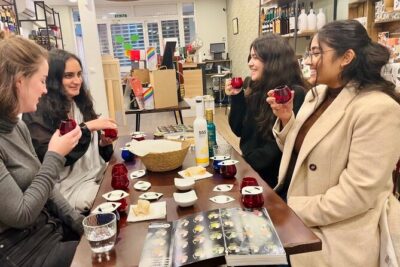
Sóller: Olive Oil Guided Tour and Tasting at Can Det Estate
Read our review →Browse the lists this tour appears in