
Review · GREECE OLIVE OIL TOURS
Best Mykonos Olive Oil Tasting – Learn from a world-famous Expert
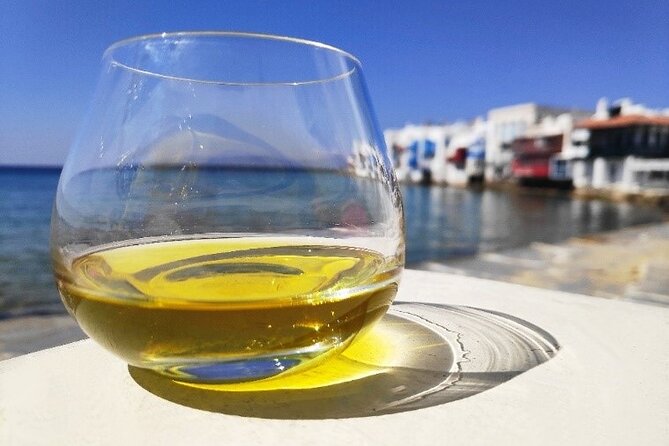
Mykonos is known for beaches, nightlife, and high prices. This experience offers something different: a two-hour lesson in one of Greece’s most important foods, held at a seaside restaurant with views toward the sacred island of Delos. Anita Z. leads the tasting, drawing on her work as an olive oil expert and judge in international competitions.
I like two things right away. First, you taste five extra-virgin olive oils from different parts of Greece rather than sampling one local bottle and calling it a lesson. Second, the food pairings make the subject useful: you try the oils with Greek salad, grilled chicken, Greek yogurt, and orange. The main drawback is the price, $192.22 per person, which is a serious sum for a two-hour activity that does not include lunch or drinks.
Key Points Before You Book
- Five Greek extra-virgin olive oils: Compare oils from across Greece and learn that extra virgin does not always mean every bottle tastes the same.
- Anita Z. leads the workshop: She is an olive oil expert and international competition judge who has offered tastings in Mykonos since 2019.
- Food pairing is part of the lesson: Greek salad, grilled chicken, yogurt, and orange show how oil changes with different foods.
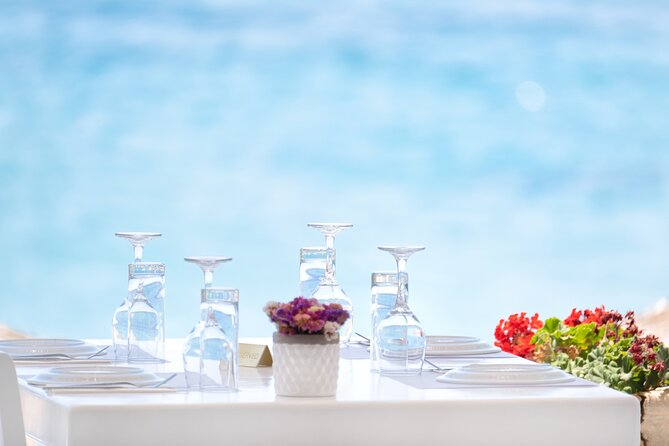
- Seaside setting near Agios Ioannis: The restaurant looks toward Delos, adding a calm coastal setting to what could otherwise be a classroom lesson.
- Small group, up to 15 people: The group size is limited, though it is not a private tasting.
- Useful knowledge for home cooking: The aim is not simply to taste oil, but to help you choose and use it better after you return home.
What Makes This Mykonos Tasting Different
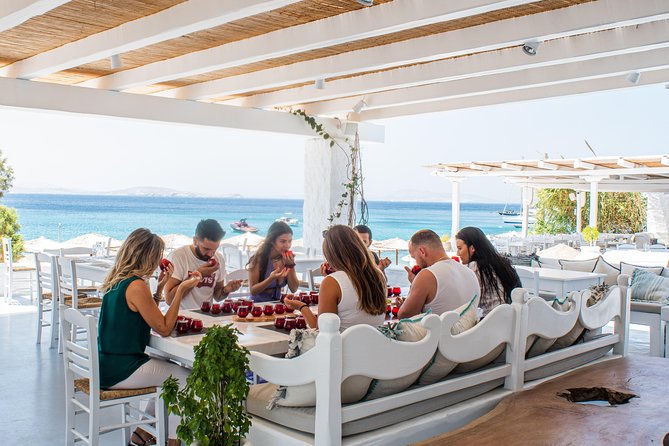
Olive oil is easy to take for granted. It sits beside the stove, gets poured over salad, and becomes part of countless meals without much thought. This workshop asks you to slow down and pay attention to what is actually in the bottle.
That change in attention is the real point of the activity. You learn how to evaluate oil with your senses, compare one sample with another, and think about how an oil works with food. It is practical knowledge, not just a pleasant tasting.
Anita Z. began offering olive oil tastings in Mykonos in 2019. Her role as an international competition judge gives the lesson a more serious foundation than a standard food sampling. You are not simply being handed a few oils and told which one to like. The focus is on how to judge them yourself.
That matters because taste is personal. One person may prefer a peppery oil, while another may like a softer, fruitier style. A good lesson helps you understand those differences instead of treating one bottle as the only correct choice.
More Olive Oil Tours around Greece:
- Crete: Quad Safari, Olive Mill with Tasting & Ghost Village
★ 4.9 · 1,004 reviews - Knossos-Zeus Cave -Old Traditional Villages-Olive Oil Factory
★ 5.0 · 694 reviews - The Governor’s Olive Mill Tour with Olive Oil Tasting
★ 5.0 · 502 reviews
Arriving at Agios Ioannis
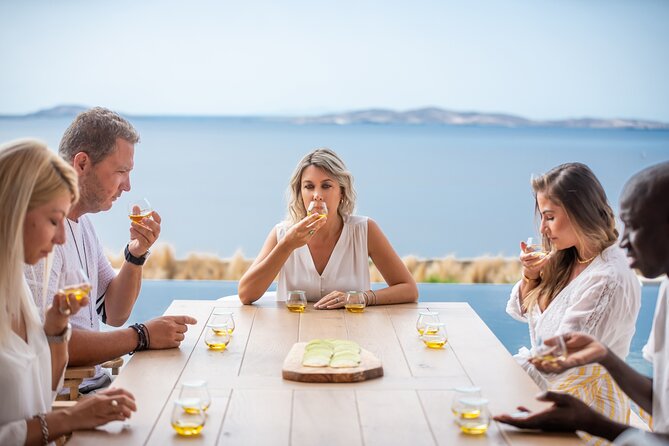
The meeting point is at Paralia Agios Ioannis, on Mykonos. The activity begins and ends at the same location, so you do not need to arrange a separate return point.
The setting is part of the appeal. You are tasting Greek food and Greek olive oil beside the sea, with a view toward Delos. The surroundings give the workshop a relaxed holiday feel, even as Anita explains the more technical side of the subject.
I would plan to arrive with enough time to find the meeting point without rushing. The provided details identify the location, but they do not include hotel pickup or transportation. You should therefore treat this as a meet-on-your-own activity rather than a sightseeing tour with transfers.
The mobile ticket is useful for a phone-based booking, and confirmation is provided at the time of booking. Since the activity is often reserved well in advance, booking early is sensible if your Mykonos dates are fixed. The average advance booking period is 29 days, which suggests that last-minute availability may not always be dependable.
The Five-Oil Tasting
The central part of the workshop is a tasting of five extra-virgin olive oils from different parts of Greece. Five is a good number for comparison. One or two samples would give you too little context, while a much longer list could make the differences harder to remember.
Anita teaches you how to assess the oils. The supplied information does not list the names of the producers, regions, or olive varieties, so do not book this expecting a detailed regional catalog. The value is in learning the process of tasting and evaluating, then applying it to the oils in front of you.
You may notice differences in aroma, flavor, intensity, and finish. The lesson is designed to help you recognize quality rather than simply accept a label or a high price as proof. That is especially useful at home, where bottles can carry impressive packaging without telling you much about the oil inside.
The oils are described as award-winning, but the workshop is not just a medal presentation. The useful question is what you personally notice when you compare them. Anita’s experience judging international competitions gives her a strong base for explaining what separates a well-made oil from a tired or poorly handled one.
The tasting can also change how you use oil. You may decide that a delicate oil works better with one dish, while a stronger oil is better suited to another. You may also become more careful about the oil you buy for everyday cooking.
Food Pairings That Make the Lesson Practical
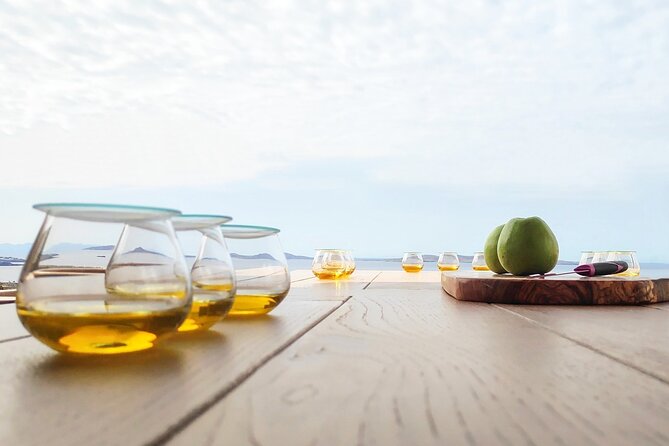
The tasting includes small food portions for pairing. The sample menu includes Greek salad, grilled chicken, Greek yogurt, and orange, served in small bowls.
This is one of the strongest parts of the activity. Tasting oil on its own can be useful, but food shows you how its character changes in a real meal. A peppery oil may seem powerful by itself and then work beautifully with chicken. A fruitier oil may suit yogurt or orange in a completely different way.
Greek salad is an obvious pairing, but an important one. It connects the oil to a familiar Greek dish and lets you consider how the oil interacts with vegetables and other flavors. Grilled chicken gives you a savory comparison. Yogurt and orange move the tasting in a sweeter, lighter direction.
The portions are snacks, not lunch. That distinction matters. You will receive the food needed for the pairing activity, along with water, but lunch, refreshments, and alcoholic drinks are not included. If you arrive hungry, plan to eat before or after the workshop.
I also like that the food is simple. There is no complicated menu to distract you from the oil. Each item gives you a clear way to notice how the flavor changes when the oil meets something else.
Same groves, a different afternoon:
- From Chania: Olive Oil, Wine, Cheese & Honey Tasting Tour
★ 4.6 · 490 reviews - Crete: Road-trip to Lasithi, Zeus Cave & Olive Mill Farm
★ 4.4 · 451 reviews - Heraklion: Olive Farm Tour with Tasting of Local Delicacies
★ 4.9 · 411 reviews - Lassithi, Zeus Cave, Olive Mill Farm & Knossos Combo Tour
★ 4.6 · 404 reviews
Anita Z. as Your Instructor
Anita Z. is the personality at the center of the activity. She is described as an olive oil expert and a judge in international olive oil competitions, and her background is clearly meant to shape the lesson.
The most important quality for this kind of class is the ability to explain technical points in plain language. The feedback provided about the experience repeatedly highlights Anita’s friendly manner, passion, and ability to make the subject engaging. That combination matters because olive oil can sound intimidating when discussed only in specialist terms.
You should expect an educational session rather than a quiet, self-guided tasting. Anita explains how to distinguish quality and invites you to think about what you are sensing. Her role is not just to pour samples but to help you build a method you can use later.
That said, the experience will suit you best if you enjoy taking part. If you want a quick sample, a snack, and a photo by the sea, two hours may feel longer than necessary. If you are curious about food and appreciate a teacher who talks through the details, the time is more likely to feel well spent.
The group maximum is 15 people. That is small enough to feel more personal than a large food tour, but it does not guarantee one-on-one instruction. The exact group size on your date is not specified.
Why the Delos View Adds Value
The view toward Delos gives the tasting a sense of place. You are not sampling Greek products in an anonymous indoor room. You are sitting at a seaside restaurant on Mykonos, looking toward one of the Aegean’s most important sacred islands.
The activity does not include a visit to Delos, and it is not a history tour. Still, the view adds context. You are tasting a food tied closely to Greek agriculture and daily cooking while sitting in the same island world that makes Mykonos such a popular stop.
The sea setting also helps the pace. A two-hour food lesson can feel formal if it takes place in a cramped room. Here, the restaurant setting and coastal view give you room to relax and enjoy the conversation.
Weather may affect how much you appreciate the setting, but no weather policy or indoor arrangement is provided. I would think of the view as an important bonus rather than the main reason to book. The lesson needs to interest you even if you spend less time looking out at the water.
Is $192.22 a Fair Price?

At $192.22 per person, this is not a budget activity. The price covers the two-hour workshop, five extra-virgin olive oils, water, and the food used for the pairings. It does not cover lunch, drinks, or alcohol.
The value depends on what you want from a tasting. If you measure the price by the amount of food, it will seem high. This is not a meal, and the portions are small. You are paying mainly for Anita’s instruction, the structured comparison of five oils, and the chance to learn a skill you can use long after leaving Mykonos.
The setting also forms part of the value. A seaside restaurant overlooking Delos is more memorable than a generic tasting room, especially if you want a calm break from Mykonos beach clubs and nightlife.
I would consider the price reasonable for someone who is genuinely interested in olive oil, cooking, Greek food, or food education. It is harder to justify for someone who simply wants a low-cost activity between beach visits.
The lack of retail sales is worth noting. The supplied feedback includes a wish that the oils tasted during the session had been available for purchase. If you hope to take home a specific bottle, do not assume that you can buy the exact oils at the venue.
Who Will Enjoy This Most?

This workshop is a good match for home cooks who use olive oil every day. The lessons can help you make better choices when shopping and more thoughtful choices when pairing oil with food.
It also suits food-focused visitors who want more than a standard restaurant meal. You get to taste, ask questions, and understand a central ingredient in Greek cooking. Couples and small groups may enjoy it as a relaxed morning or afternoon activity.
The educational focus makes it useful for people who want a lasting takeaway. You may return home and look at your kitchen bottle differently, checking its quality rather than reaching automatically for the cheapest option.
It may not suit you if you dislike strong flavors, have an olive oil allergy, or want a filling meal. The activity is specifically not recommended for people allergic to olive oil. It is also not a broad Mykonos sightseeing tour, so do not expect stops at windmills, beaches, or other island sights.
Most people can participate, and service animals are allowed. No special fitness requirements are listed. The activity ends back at the meeting point, which keeps the logistics simple.
Timing, Group Size, and Cancellation
The workshop lasts approximately two hours. That is long enough for an explanation, five tastings, food pairings, and questions without taking up an entire day on Mykonos.
The maximum group size is 15. I would describe that as small-group rather than private. If the group is full, the session may feel more social and less tailored, but the format should still be more focused than a large food tour.
Free cancellation is available if you cancel at least 24 hours before the local start time. Cancellations made within 24 hours are not refunded, and changes inside that window are not accepted. The experience also requires a minimum number of participants. If that minimum is not met and the activity is canceled, you are offered another date or experience, or a full refund.
That policy gives you some flexibility, but I would still avoid booking it on a day when your island plans are likely to shift. Mykonos schedules can change with ferry plans, weather, and beach time, so place the tasting on a day when you can reach Agios Ioannis reliably.
Book It or Skip It?
Book this experience if you want to understand Greek olive oil instead of simply consuming it. Anita Z.’s competition background, the five-oil comparison, and the food pairings give the session real purpose. The sea view toward Delos makes the setting special, while the small group keeps the class from feeling like a mass-market stop.
Skip it if you are mainly looking for lunch, a cheap tasting, or an activity with more sightseeing. The price is high for the amount of food, and drinks are extra. You also should not count on buying the oils you taste.
For cooks, food lovers, and curious visitors who want one useful skill to take home, I think this is one of the more distinctive ways to spend two hours in Mykonos. You may never look at a bottle of olive oil in quite the same way again.
FAQ
Where does the olive oil tasting take place?
The workshop takes place at a seaside restaurant near Paralia Agios Ioannis in Mykonos, Greece. It offers views toward the island of Delos.
How long does the experience last?
The activity lasts approximately two hours.
How many olive oils will I taste?
You will taste five extra-virgin olive oils from different parts of Greece.
What food is included?
The food pairing includes Greek salad, grilled chicken, Greek yogurt, and orange served in small bowls. Water is also included.
Is lunch included?
No. The included food is for the tasting and pairing activity. Lunch, other refreshments, and alcoholic drinks are not included.
Who leads the workshop?
Anita Z. leads the session. She is an olive oil expert and a judge in international olive oil competitions.
What is the cancellation policy?
You can cancel for a full refund up to 24 hours before the experience start time. Cancellations or changes made less than 24 hours in advance are not accepted for a refund.
Newest grove reviews around Greece
- Corinthian olive oil tour & tasting experience★ 5.0 · 4 reviews
- Corfu: Organic Olive Oil Farm Tour with Transfer and Tasting★ 5.0 · 8 reviews
- Corfu: Olive Oil & Wine Tastings & Traditional Villages Tour★ 5.0 · 6 reviews
- Chania: Authentic Crete Villages Tour & Olive Oil Tasting★ 4.5 · 2 reviews
- Chania Olive Tour: 3,000-Year-Old Tree, Museum &Organic Mill★ 5.0 · 5 reviews
- Chania Private Olive Oil Tour: Oil Tasting & Villages Tour★ 4.4 · 9 reviews
- Chania E-Bike Adventure: Culture, Coastline & Olive Tasting★ 5.0 · 2 reviews
- Athens: Cretan Olive Oil Tasting Experience★ 5.0 · 10 reviews
Greece Olive Oil Tours, compared.

Knossos-Zeus Cave -Old Traditional Villages-Olive Oil Factory
Read our review →
The Governor’s Olive Mill Tour with Olive Oil Tasting
Read our review →

Road-trip to Lasithi, Zeus Cave & Olive Mill Farm
Read our review →
Olive Farm Tour with Tasting of Local Delicacies
Read our review →
Lassithi, Zeus Cave, Olive Mill Farm & Knossos Combo Tour
Read our review →
Browse the lists this tour appears in