
Review · OLIVE FARM VISITS
Traditional Olive Oil Making at Spiridi Olive Oil Farm – Crete
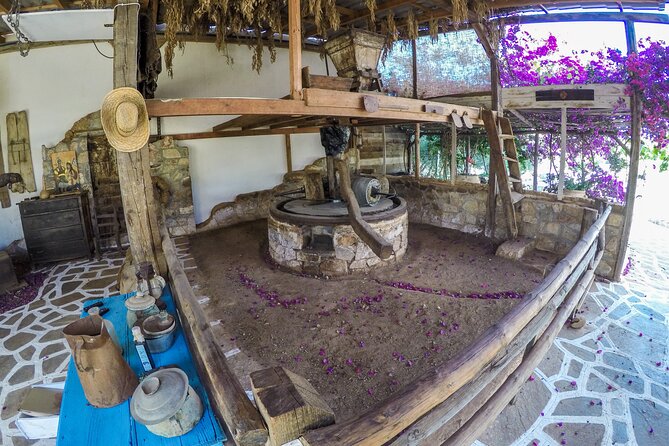
The best part of this Cretan workshop is that you do not just watch olive oil being made. You push the stone mill, load the olive paste into sacks, and work the old wooden press yourself inside a 130-year-old oil factory. Tassos and his team explain each step in English, with plenty of help along the way.
I like the small group limit of 10 people, since everyone gets a real turn at the machinery. I also like the useful souvenir: a 100ml bottle of the family’s extra virgin handmade oil, not a forgettable trinket. The main drawback is simple: at $78.60 per person, this is a short activity, so the value depends on how much you care about hands-on food traditions.
Key points at a glance
- A working lesson, not just a demonstration: You weigh, crush, transfer, and press the olives yourself.
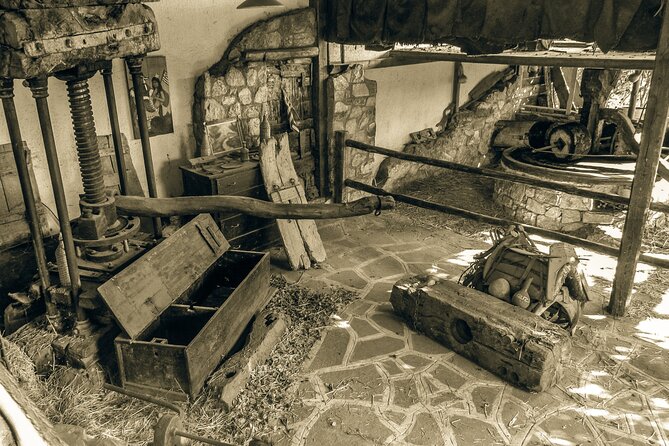
- A 130-year-old setting: The workshop takes place in Spiridi Olive Oil Farm’s historic oil factory.
- A small group format: The maximum of 10 people gives you a better chance to handle the equipment.
- A taste of the finished product: Olive oil tasting comes at the end, along with a 100ml bottle to take home.
- A convenient morning slot: The activity starts at 10:30 a.m. and lasts about 90 minutes.
- Part of a wider farm program: The same farm also offers wine tasting, cheese making, honey activities, cooking, and an electronic tour.
Inside Spiridi’s 130-year-old olive oil factory
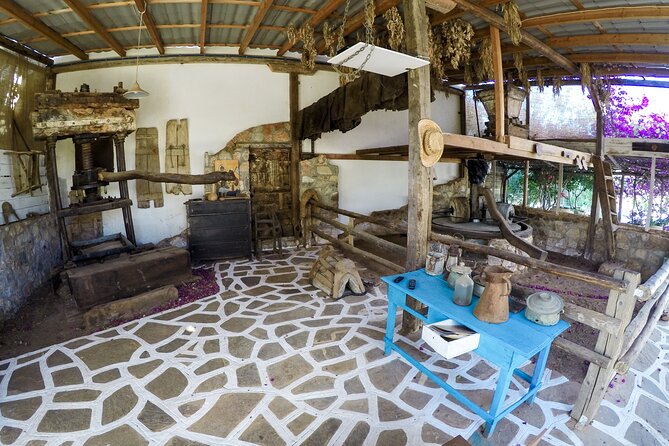
Olive oil is one of those foods you use every day but rarely see made. This workshop fixes that. At Spiridi Olive Oil Farm, the process begins with the olives themselves and follows the old method from start to finish.
You begin by weighing the olives. That small first step matters because it turns the workshop into a real process rather than a staged photo stop. You can see how much fruit goes into the work before the crushing begins.
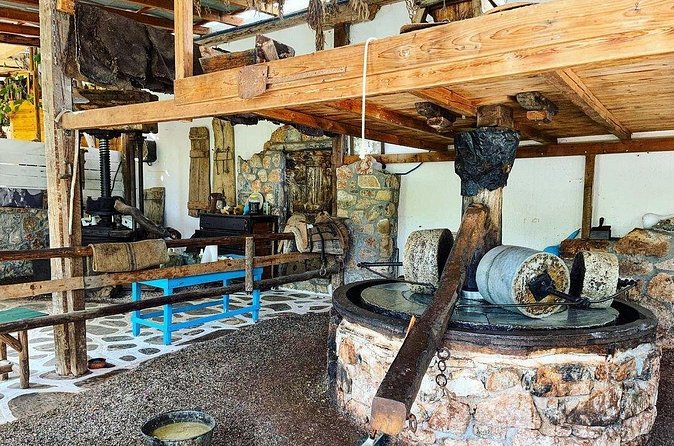
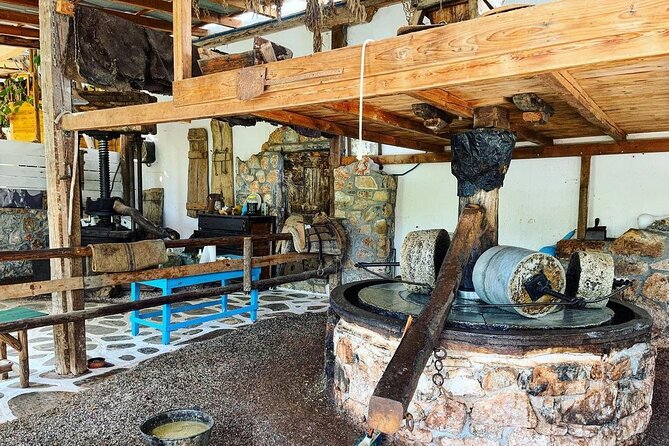
Next comes the stone mill. You push it yourself to crush the olives into a paste. This is the part most likely to please children and anyone who likes a practical activity. It takes effort, but the staff guide you closely, so you are not left guessing how the mechanism works.
The crushed olive paste then goes into large sacks. You help transfer it, which gives you a better sense of how many separate jobs are involved before a bottle of oil reaches a kitchen table. Finally, the sacks go into the manual wooden press, where pressure draws out the oil.
The old equipment is the point. A modern mill may be faster and cleaner, but it would not give you the same connection to the work. Here, you can feel the physical labor behind a staple of Cretan cooking.
More Olive Farm Visits in Greece
- Crete: Road-trip to Lasithi, Zeus Cave & Olive Mill Farm
★ 4.4 · 451 reviews - Moires: Cooking Class and Olive Oil Tasting at a Family Farm
★ 5.0 · 93 reviews - Kleanthi Olive Farm: Guided Tour with Local Delicacies Tasting
★ 5.0 · 51 reviews
Why the hands-on format matters
Many food tours give you a sample and a short explanation. This one asks you to take part. That changes the pace and the lesson.
When you push the stone mill, you understand that olive oil production was once a demanding household task. When you fill the sacks, you see why the process needed several pairs of hands. When you work the wooden press, the finished oil feels less like an abstract product and more like the result of a chain of careful jobs.
I especially like the way this suits mixed-age groups. Children can have a turn with the machinery under supervision, while adults get the broader story of Cretan food traditions. The work is physical but not presented as a test. The family and staff help at each stage.
The small group cap also matters. With no more than 10 people, the activity should feel more like a workshop than a crowd gathered around a guide. Everyone has a better chance to handle the mill, sacks, and press. If you are booking for a family or a group of friends, this is one of the strongest reasons to choose this format.
The olive oil tasting at the finish
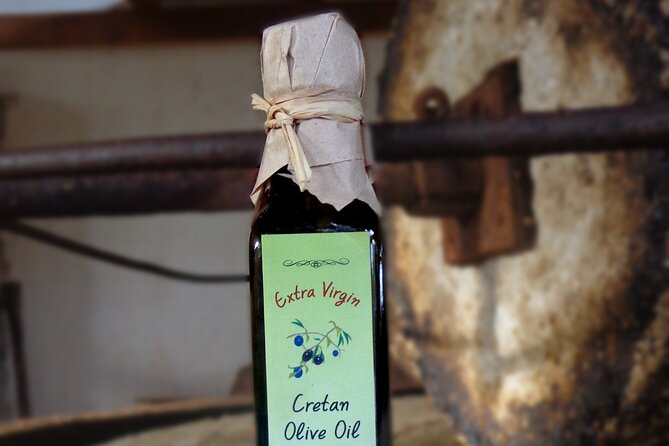
The workshop ends with a tasting of the oil. This is a useful final step because you have just watched the production process. You can connect the taste with the labor and machinery you have seen.
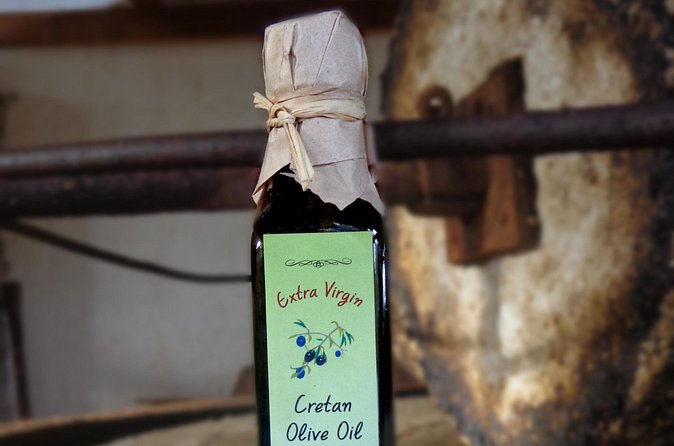
You also receive a 100ml bottle of the family’s extra virgin handmade olive oil. It is small enough to pack easily and large enough to make the experience feel tangible after you leave Crete. Check your luggage rules if you are flying, but the bottle is a practical keepsake rather than a bulky purchase.
The farm has a small shop where you can find additional items to taste and buy. The information provided does not list the full shop range, so I would treat it as an optional extra, not a reason to book the workshop. The included bottle and tasting are already part of the price.
Food and drinks are not included beyond drinking water. If you expect a full meal, cooking lesson, or broad tasting menu, you should know that this particular booking is focused on olive oil production. The farm may offer other food activities, but they are not part of this workshop.
What the 90-minute schedule feels like
The advertised duration is about one hour and 30 minutes. A previous account describes the olive oil demonstration as lasting about one hour, so allow for some variation in the pace. The group size, questions, and time spent at each machine can affect the total.
The 10:30 a.m. start gives you a useful morning activity. You meet at Spiridi Olive Oil Farm, Cretan Olive Oil Farm, Agios Nikolaos 721 00, Greece, and return to the same point when the workshop ends. There is no separate end location to arrange around.
The plan is compact:
- Arrival and introduction to the old factory
- Weighing the olives
- Crushing them with the stone mill
- Moving the paste into large sacks
- Pressing the paste with the manual wooden press
- Tasting the oil
- Receiving the 100ml bottle
The activity is offered in English and includes mobile ticketing. Confirmation arrives at booking. Since the workshop is held at one farm and ends where it starts, the main practical task is getting yourself to the meeting point on time.
One useful local pairing is a short walk downhill afterward toward town and the Archaeological Museum of Agios Nikolaos. That walk is not part of the olive oil activity, so you should plan it separately, but it can help turn the workshop into a fuller morning.
More Olive Farm Visits in Crete:
- Spiridi Olive Oil Farm Tour
★ 4.5 · 22 reviews - Cretan Farm Tour with Cheese-Making, Olive Oil Tasting & Picnic
★ 5.0 · 10 reviews - Sorrento Farm and Food Experience including Olive Oil, Limoncello, Wine tasting
★ 5.0 · 2,524 reviews - Heraklion: Olive Farm Tour with Tasting of Local Delicacies
★ 4.9 · 411 reviews
The people who make the workshop work
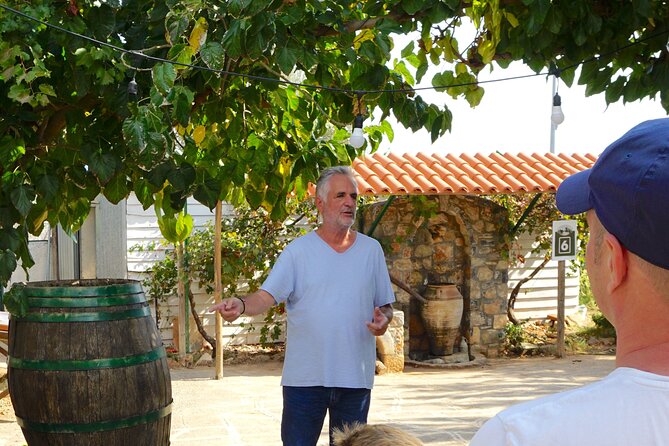
Tassos handles inquiries and bookings, and the farm team leads the hands-on work. The staff provide guidance throughout the process and explain what you are doing as you go.
That matters more here than it would on a simple tasting. Old machinery needs clear instructions, especially when several people are pushing, lifting, or transferring material. The point is to let you take part without turning the workshop into a frustrating struggle.
The farm also offers other activities, including wine tasting, cheese making, honey, cooking, and an electronic tour using provided tablets. Those options show that Spiridi is set up as a broader food and culture venue, not only an olive press. Still, you should confirm exactly what is included if you are interested in adding another activity. The $78.60 price described here covers the olive oil workshop, tasting, water, and 100ml bottle.
Is $78.60 a fair price?
At $78.60 per person, this is not a bargain if you measure value by minutes alone. Ninety minutes is a short outing, and food beyond the olive oil tasting is not included.
I think the price makes more sense if you value three things: direct participation, a small group, and a family-made product to take home. You are paying for access to a historic factory, staff assistance, the use of traditional equipment, the tasting, and the bottle. A larger commercial tour with a quick explanation could cost less, but it would not offer the same chance to operate the mill and press.
The price also works better for people who would otherwise spend money on several separate food experiences. The farm’s wider program includes wine, cheese, honey, and cooking activities, though those are not included here. If you want a full-day food program, ask about those separately rather than assuming they form part of this booking.
For two people, the total approaches $157.20 before any other spending. I would book it for the character of the activity, not because it delivers a long itinerary. If you are mainly looking for a cheap tasting, this is probably more than you need.
Who will enjoy this most
This is a good match for families, couples, food-focused visitors, and anyone curious about how Cretan staples are made. Children can take part in the supervised work, which gives them more to do than simply listen to a talk.
It also suits a small group of friends. The manual equipment creates a shared task, and the tasting gives you something to discuss at the end. The English presentation makes it accessible to international visitors.
I would be more cautious if you have limited mobility or do not want to handle physical equipment. The provided details do not describe the surfaces, seating, or level of accessibility at the factory. Service animals are allowed, but you should contact the farm with any specific access questions before booking.
This is also not the right choice if you want a full meal, a long countryside visit, or a large-scale commercial olive mill. The activity stays focused on the traditional production method.
Practical advice before you go
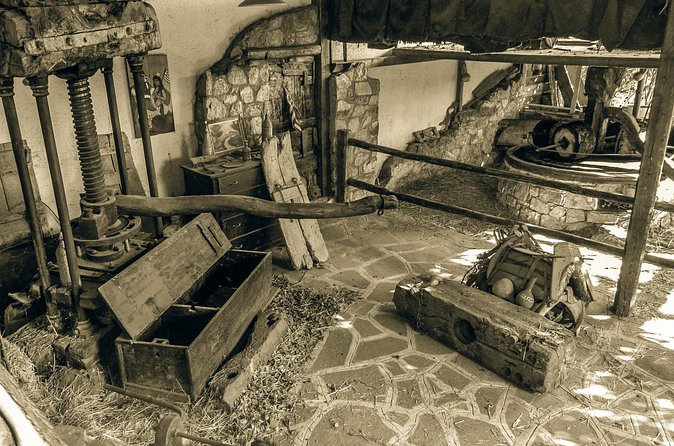
Wear clothes and shoes you do not mind using around olive paste and old machinery. The information does not state that special clothing is supplied, so practical attire is the sensible choice.
Arrive ready to take part rather than simply observe. The workshop depends on group participation, and the main value comes from doing the work. If you are traveling with children, explain that they can have a turn but must follow the staff’s instructions.
The farm provides drinking water. Other food and drinks are not included. Eat beforehand if you need more than a tasting, or plan a separate meal in Agios Nikolaos afterward.
The activity is normally booked about 18 days ahead. That is a useful sign to plan early during busy travel periods, especially since the group is limited to 10 people. You can cancel for a full refund up to 24 hours before the start time. Cancellations or changes inside that window are not refunded or accepted, and the farm may offer another date or a full refund if the minimum number of participants is not reached.
Should you book the olive oil workshop?
I would book this if you want a short, hands-on Cretan food experience with a clear local focus. The stone mill, large sacks, wooden press, tasting, and small bottle create a complete story in about 90 minutes.
I would skip it if your priority is a full meal, a long farm visit, or the lowest possible price. For everyone else, especially families and food-curious visitors staying near Agios Nikolaos, it offers a memorable way to understand olive oil through your own hands rather than through a display case.
FAQ
Where does the olive oil workshop take place?
It takes place at Spiridi Olive Oil Farm, Cretan Olive Oil Farm, Agios Nikolaos 721 00, Greece.
What time does the activity start?
The scheduled start time is 10:30 a.m.
How long does the workshop last?
The activity lasts approximately one hour and 30 minutes, though the hands-on demonstration may take about one hour depending on the pace of the group.
What is included in the price?
The price includes the hands-on olive oil production workshop, staff guidance, access to the 130-year-old factory, an olive oil tasting, drinking water, and a 100ml bottle of the family’s extra virgin handmade olive oil.
Is the activity offered in English?
Yes. The workshop is offered in English.
How many people can join, and can I cancel?
The activity allows a maximum of 10 travelers. You can cancel for a full refund up to 24 hours before the scheduled start time.
Newest grove reviews around Crete
- 1 hour and 30 minutes wines and olive oil tasting in Greece★ 5.0 · 2 reviews
- Crete in a Day: Knossos, Soap Workshops, Olive Oil & Wine Tasting★ 5.0 · 5 reviews
- PRIVATE Workshop ESSENTIAL OILS & OLIVE OIL Factory with TASTING★ 5.0 · 5 reviews
- Full Day Spinalonga Elouda Agios Nikolaos Olive factory Tour★ 4.5 · 5 reviews
- Private Guided Tour to Lasithi Plateau Villages & Olive Oil Mill★ 5.0 · 5 reviews
- Guided Tasting of 3 Extra Virgin Olive Oils at Douloufakis Winery★ 5.0 · 2 reviews
- Shore Escape: Chania, Monastery & Olive Oil Tasting★ 5.0 · 6 reviews
- Olive Oil Tasting in Crete★ 5.0 · 8 reviews
Olive Farm Visits, compared.
Sorrento Farm and Food Experience including Olive Oil, Limoncello, Wine tasting
Read our review →
Road-trip to Lasithi, Zeus Cave & Olive Mill Farm
Read our review →
Olive Farm Tour with Tasting of Local Delicacies
Read our review →
Lassithi, Zeus Cave, Olive Mill Farm & Knossos Combo Tour
Read our review →
Traditional Olive Grove and Dragon Fruit Farm Tour
Read our review →
Moires: Cooking Class and Olive Oil Tasting at a Family Farm
Read our review →
Sóller: Olive Oil Guided Tour and Tasting at Can Det Estate
Read our review →Browse the lists this tour appears in