
Review · OLIVE FARM VISITS
Spiridi Olive Oil Farm Tour
The best part of Spiridi Olive Oil Farm is the chance to see how olive oil fits into everyday Cretan life, not just taste a spoonful in a shop. You move through a traditional olive oil museum and farm displays with a tablet, learning about pressing, storage, carob, and other local products before tasting the results.
I like the hands-on, self-paced format and the generous tasting of olive oil, honey, olives, herbs, raki, and local delicacies. I also like the friendly, family-run feel, with extras such as pottery, cooking, cheese making, and wine activities available at different times.
The main consideration is that the basic visit is fairly short and mostly self-guided. The advertised time is about one hour, although you may spend closer to two hours if you watch every presentation, browse the shop, and take your time at the tasting.
Key points to know before you go
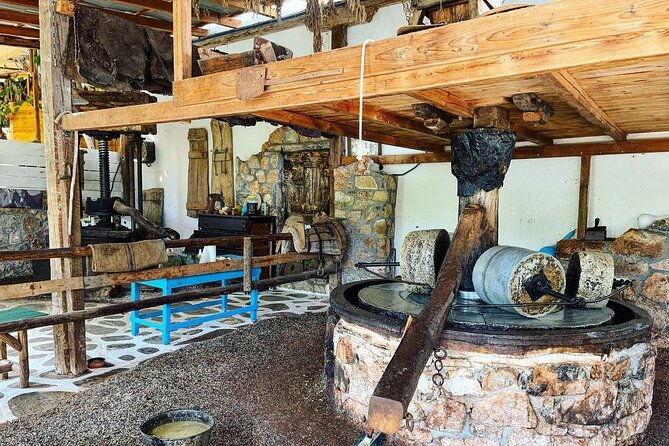
- A traditional olive press anchors the visit: The old equipment helps explain how Cretan olive oil was made before modern production.
- The self-guided tablet adds useful detail: Audio, video, and written information let you move at your own pace in English.
- The tasting is wider than olive oil: Expect honey, olives, herbs, raki, and other local foods.
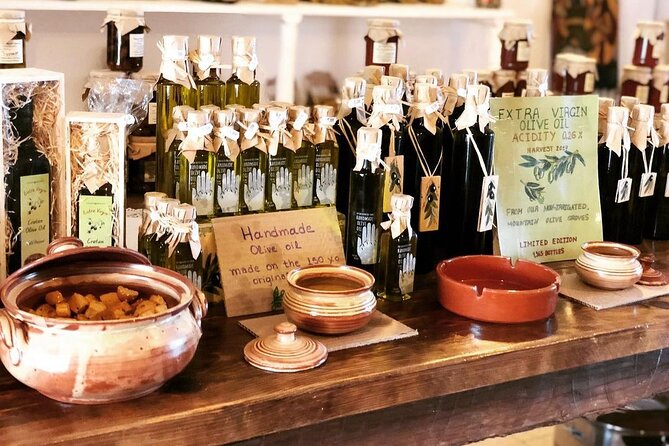
- The shop is part of the experience: You can compare olive oils, honey, pottery, cosmetics, and other products at prices described as reasonable.
- It is close enough to walk from Agios Nikolaos: The farm is listed about a 30-minute walk from the town center, though hotel pickup is not included.
- The basic tour is simple, while workshops add depth: Cheese making, cooking, pottery, wine tasting, and olive oil demonstrations may be booked separately.
A small farm visit with a big Cretan subject
Olive trees are woven into Cretan food, work, and family life. At Spiridi Olive Oil Farm, you get a compact introduction to that world through exhibits, displays, tastings, and local products.
This is not a large industrial mill tour. It is a small family place outside Agios Nikolaos, designed to connect food with the customs behind it. That makes the visit useful early in your Crete trip, when you are still learning why olive oil appears on nearly every table.
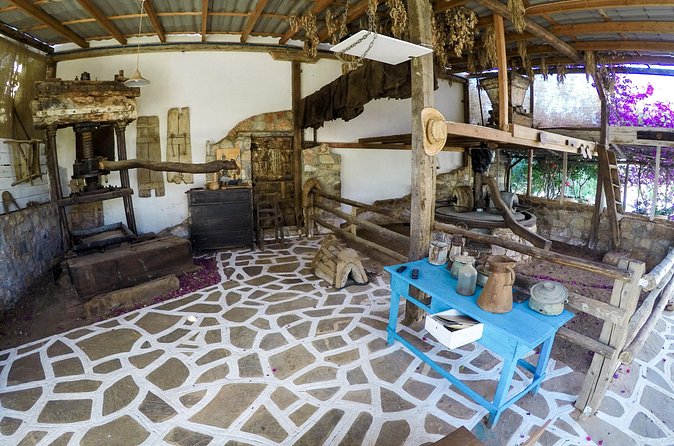
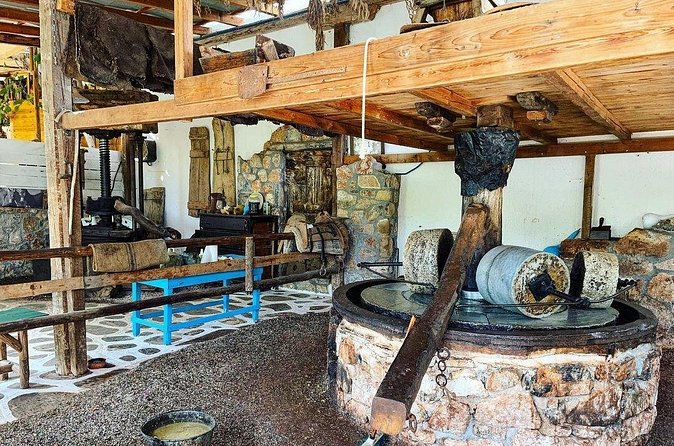
The farm presents ten exhibits, including a traditional olive press. Information boards explain the old methods, while the tablet adds audio, text, and video. If you prefer to read quietly, you can do that. If you want more explanation, use the audio guide and move through the displays at your own speed.
The setting is relaxed rather than formal. One especially memorable detail from the visit accounts is a goat getting loose while Costas chased it. That gives you a fair sense of the place: this is a working family setting with real farm character, not a polished museum where everything stays behind glass.
More Olive Farm Visits in Greece
- Crete: Road-trip to Lasithi, Zeus Cave & Olive Mill Farm
★ 4.4 · 451 reviews - Moires: Cooking Class and Olive Oil Tasting at a Family Farm
★ 5.0 · 93 reviews - Kleanthi Olive Farm: Guided Tour with Local Delicacies Tasting
★ 5.0 · 51 reviews
What you see during the one-hour route
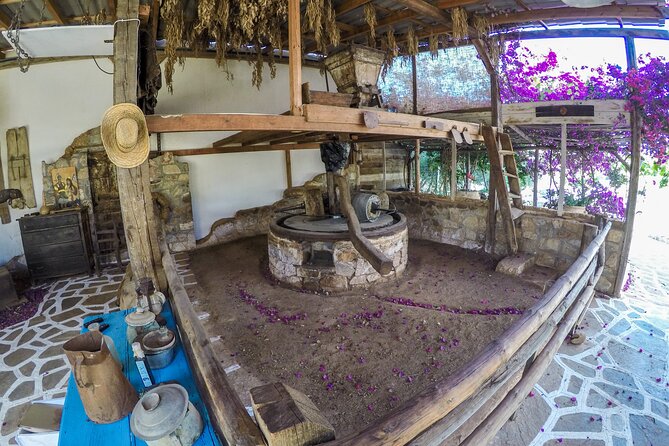
The visit begins at the Spiridi farm, where you receive access to the olive oil museum and the self-guided material. A bottle of chilled water has also been provided during the visit described by one couple, a small but welcome touch in Crete’s warm weather.
You then make your way through the farm exhibits. The traditional press is the main visual draw. It gives the production story a physical anchor, helping you understand the labor and tools behind the oil rather than treating olive oil as an abstract food product.
The displays also cover related products and plant traditions. Carob receives attention, and the farm explains by-products of olive oil production. The exact order may depend on how you walk through the property, since the tour is self-guided rather than a fixed procession led by one person.
The tablet is worth considering. The written information boards are well laid out, but the audio guide adds more background and is described as costing only a small extra amount. If you want the visit to feel more like a lesson than a quick walk around, pay for the audio option when available.
The official duration is about one hour. That is enough for a straightforward visit, especially if you focus on the main displays and tasting. If you stop at all ten exhibits, watch the videos, ask questions, shop, and sample slowly, plan for closer to two hours. The difference matters if you are fitting this between a boat trip, lunch, or a tight sightseeing schedule.
The tasting is the real payoff
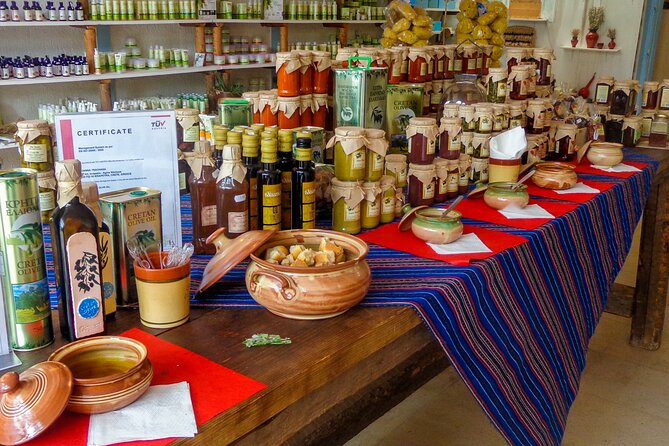
The tasting turns the museum visit into something you can feel and remember. You sample several olive oils, along with olives, honey, herbs, raki, and other local delicacies.
This is useful because olive oil can taste very different from bottle to bottle. You can compare oils instead of simply hearing that Cretan oil is important. Honey and olives broaden the tasting, while raki gives you a taste of a well-known Cretan drink.
The farm also offers local products beyond food. Handmade pottery, olive oil cosmetics, honey, raki, and other items are available in the shop. Some products are made locally, and the shop has been described as reasonably priced compared with stores in Agios Nikolaos.
I would save room in your luggage if you enjoy food shopping. The tasting can help you decide what you actually like before buying a bottle or jar. It also makes the purchase feel connected to the farm visit rather than like a random souvenir stop.
Food and drinks beyond the included tasting are not part of the basic price. Do not arrive expecting a full meal or a long lunch. This is a sampling session, not a restaurant visit.
Why the self-guided setup works
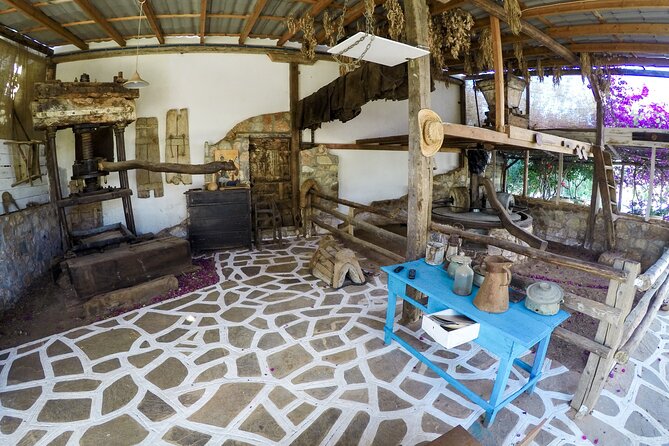
A self-guided tour can sound thin, but here it fits the scale of the farm. You are not rushed from one station to another, and you can spend more time with the displays that interest you.
The tablet provides audio and written information in English. That is helpful for visitors who want more than signs but do not want to join a fixed group. It also lets families move at different speeds, although younger children may find the historical material less engaging than the tasting or pottery area.
There is some trade-off. A live guide can answer questions on the spot and adjust the explanation to your interests. At Spiridi, the basic route depends on the tablet, text panels, and the staff introduction when you arrive. Staff members are available to explain the farm, but the standard visit is not described as a continuous guided tour.
That format suits independent visitors. If you want a more personal lesson, ask about the olive oil production demonstration, cooking class, cheese-making session, wine tasting, or pottery workshop. These activities are separate from the simple museum and tasting visit, and they require their own arrangements.
More Olive Farm Visits in Crete:
- Sorrento Farm and Food Experience including Olive Oil, Limoncello, Wine tasting
★ 5.0 · 2,524 reviews - Heraklion: Olive Farm Tour with Tasting of Local Delicacies
★ 4.9 · 411 reviews - Lassithi, Zeus Cave, Olive Mill Farm & Knossos Combo Tour
★ 4.6 · 404 reviews - Alghero: Wine and Olive Oil Tasting at a Local Farm
★ 4.8 · 294 reviews
More than an olive oil museum
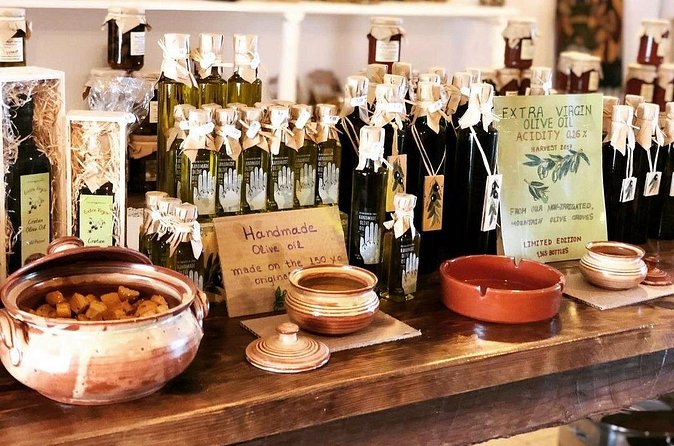
The farm’s wider program is one reason to consider returning or booking a longer activity. You may be able to join a cooking lesson, learn cheese making, attend a pottery workshop, or watch an olive oil production demonstration.
These options matter because olive oil makes more sense when you see how it works in food and daily life. A cooking lesson connects the product to the Cretan table. Cheese making gives you another look at local food traditions. Pottery adds a craft angle and offers something different for companions who are less interested in agriculture.
The basic experience does not include these workshops. The listed admission covers the olive oil museum, the guided self-tour with audio and text, and the tasting. Ask or arrange ahead if a particular workshop is important to you.
The pottery area also adds visual interest even if you do not take a class. You can browse handmade pieces in the shop alongside food and olive oil products. That mix gives the farm more variety than a single-purpose tasting room.
Price, timing, and getting there
At $9.60 per person, the basic visit offers good value if you use the displays and tasting fully. You receive museum access, a self-guided audio and text route, and several samples for less than the cost of many organized food tours.
The value depends on what you expect. If you want a two-hour live tour with transport and a full meal, this is not that experience. If you want a low-cost cultural stop near Agios Nikolaos, it is a sensible choice.
Hotel pickup and drop-off are not included. The meeting point is Spiridi Olive Oil Farm, also identified as Cretan Olive Oil Farm, at Agios Nikolaos 721 00, Greece. From the center of Agios Nikolaos, the walk can take about 30 minutes, with places along the way to stop for a drink or bite.
A taxi or your own transport may be more practical if you are carrying purchases, traveling with small children, or visiting during the hottest part of the day. The activity ends back at the farm, so plan your onward route before you start.
The stated opening period is April 11 through October 31, 2026, Monday through Saturday from 10 a.m. to 5 p.m. Check the operating hours for your date before setting out, especially if you are visiting outside that period. The activity is offered in English, uses a mobile ticket, and can accept a maximum of 40 people.
Who will enjoy Spiridi Olive Oil Farm
I would recommend this for anyone who wants an easy introduction to Cretan food culture without giving up half a day. It works well for couples, families, independent sightseers, and people who enjoy tasting local products before shopping.
It is also a good rainy-day option. The visit has enough indoor information and sampling to provide a pleasant change from beaches and outdoor sightseeing. The farm atmosphere remains informal, which helps if you are tired of formal museums.
Families may appreciate the freedom to move at their own pace. Children can look at the old press, watch the farm activity, and sample familiar foods, though the written history and production details may hold their attention for only part of the hour.
Food lovers will get the most from the visit. You can taste several products, learn how olive oil is made, and compare prices in the shop. The stop is less suitable for someone seeking a major archaeological site, a long country walk, or a full meal.
The basic route is also a reasonable choice for visitors who have limited mobility, since most people can participate and service animals are allowed. Still, the information provided does not give detailed guidance about surfaces, steps, or restroom access, so contact the farm directly if you need those specifics.
Small drawbacks to keep in mind
The farm is outside the center, and transportation is your responsibility. A 30-minute walk may be fine in mild weather, but it can feel longer under the midday sun or after a full day of sightseeing.
The self-guided format will please some people and disappoint others. You get flexibility, but not the continuous storytelling of a private guide. The tablet and boards carry much of the educational work.
The listing gives the experience a one-hour duration, while some people have spent two hours there. That is not a problem, but it means you should not treat the time estimate as exact. Browsing and tasting can stretch the stop.
Finally, the basic ticket does not cover food, drinks beyond the tasting, or the extra workshops. If cheese making or pottery is the reason you are interested, make sure you reserve the correct activity rather than assuming it is part of the $9.60 entry.
Practical booking advice
You receive confirmation at booking, and free cancellation is available up to 24 hours before the start time for a full refund. Changes or cancellations inside that 24-hour window are not accepted for a refund, with cut-off times based on local time.
The farm is booked an average of six days in advance, but one account indicates that the simple self-guided visit may sometimes be available without advance booking. I would still book ahead if you have a fixed schedule, want a workshop, or are visiting during a busy period.
Bring your phone for the mobile ticket, and allow extra time if you plan to shop. Since the tasting is central to the visit, avoid rushing in and out. The farm is small enough that a slow pace makes a noticeable difference.
Should you book Spiridi Olive Oil Farm?
Book it if you want a modestly priced, personal introduction to Cretan olive oil near Agios Nikolaos. The strongest reasons are the traditional press, the clear self-guided material, the broad tasting, and the chance to buy local products at fair prices.
Skip it if you want transport, a full meal, or a long live-guided tour. For the best experience, choose the audio guide, allow up to two hours, and ask about workshops if you want more than the standard tasting.
My call: this is a worthwhile short stop, especially on a flexible day. It gives you useful context for Cretan food and a chance to taste before you buy, without asking for a major time or money commitment.
FAQ
Where is Spiridi Olive Oil Farm?
It is just outside Agios Nikolaos, Greece. The meeting address is Cretan Olive Oil Farm, Agios Nikolaos 721 00, Greece.
How long does the visit take?
The advertised duration is approximately one hour. You may spend closer to two hours if you use all the displays, watch the presentations, taste slowly, and browse the shop.
What is included in the ticket?
The ticket includes access to the olive oil museum, a self-guided tour with audio and text, and tastings of olive oil, honey, raki, and local products.
Is hotel pickup included?
No. Hotel pickup and drop-off are not included. You make your own way to the farm and return from the meeting point when the activity ends.
What can I taste?
The tasting includes olive oil, honey, raki, and local products. The experience also includes samples such as olives, herbs, and local delicacies.
Is the tour guided by a person?
The standard visit is a guided self-tour using audio and text. Staff provide information when you arrive, but the basic activity is not described as a continuous live-guided tour.
Are workshops included?
No. Cooking lessons, cheese making, pottery workshops, wine tastings, and olive oil demonstrations are additional activities rather than part of the basic museum and tasting ticket.
When is the farm open?
For the stated 2026 season, it is open Monday through Saturday from 10 a.m. to 5 p.m., from April 11 through October 31. It is closed on Sundays during that listed period.
Newest grove reviews around Crete
- Olive Oil Food Pairing in Crete★ 5.0 · 4 reviews
- Crete’s Wine and Olives Safari Tour from Chania★ 5.0 · 12 reviews
- Private Tour: Soap, Olive Oil & Lyrarakis Winery with Lunch★ 4.5 · 15 reviews
- Knossos Cave of Zeus and Olive Oil Factory Full Day Private Tour★ 5.0 · 19 reviews
- PRIVATE-Zeus Birthplace-Traditional Villages-Olive Oil Factory★ 5.0 · 23 reviews
- Cretan Delights – Wine, Olive Oil & Cooking Workshop from Chania★ 5.0 · 25 reviews
- Knossos & Lasithi Plateau: Villages, Olive Oil Tour From Elounda★ 5.0 · 26 reviews
- Island Spinalonga, Milatos Cave, Speedboat, OliveTasting★ 4.9 · 29 reviews
Olive Farm Visits, compared.
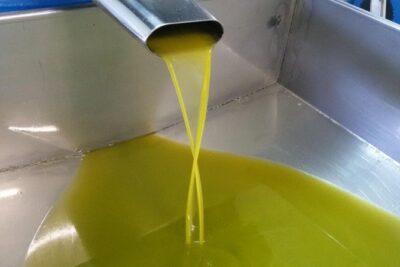
Sorrento Farm and Food Experience including Olive Oil, Limoncello, Wine tasting
Read our review →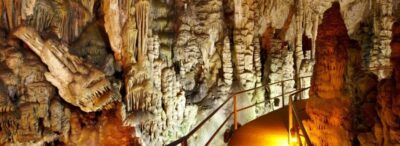
Road-trip to Lasithi, Zeus Cave & Olive Mill Farm
Read our review →
Olive Farm Tour with Tasting of Local Delicacies
Read our review →
Lassithi, Zeus Cave, Olive Mill Farm & Knossos Combo Tour
Read our review →
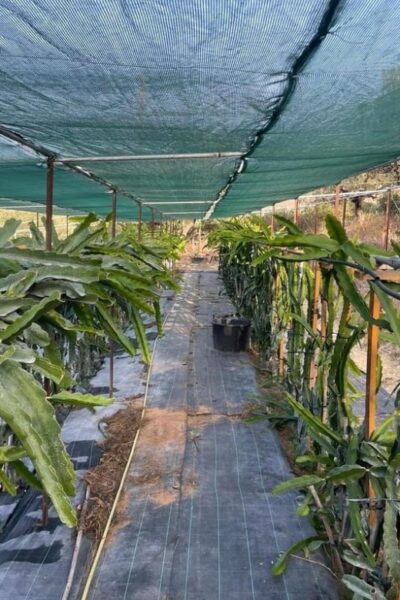
Traditional Olive Grove and Dragon Fruit Farm Tour
Read our review →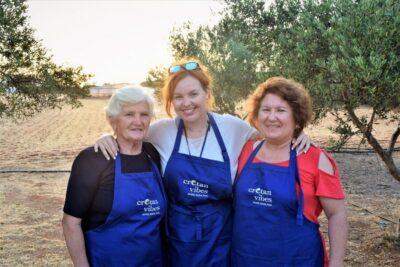
Moires: Cooking Class and Olive Oil Tasting at a Family Farm
Read our review →
Sóller: Olive Oil Guided Tour and Tasting at Can Det Estate
Read our review →Browse the lists this tour appears in