
Review · OLIVE OIL AND HONEY TASTINGS
Small-Group Honey & Extra Virgin Olive Oil Tasting Tour in Crete
Cretan honey is the star here, with eight different varieties served alongside family-produced extra virgin olive oil. The visit also connects those flavors to real work: beekeeping, olive harvesting, pressing, and a family tradition that reaches back to 1920.
I like the small maximum of 10 people and the short one-hour format. I also like the generous tasting, which can feel closer to a light meal than a token sample. The main caution is that the tasting may receive less explanation if a larger group arrives at the same time.
Key points to know before booking
- Eight honeys in one sitting: You compare several flavors instead of tasting only one standard product.
- A family-run working producer: The visit covers the family’s olive trees, cold-pressed oil, bee hives, and production methods.
- A generous local spread: Bread, cheese, tomatoes, olives, and yogurt may accompany the honey and oil.
- Small group, short schedule: The group is capped at 10 people, and the visit lasts about an hour.
- A rural setting near Pervolakia: The drive and views are part of the appeal, though transport to the meeting point is not included.
- A practical souvenir stop: You can buy the honey and olive oil you taste, with prices described as reasonable.
A one-hour taste of working Crete
At Idiosmos Extra Virgin Olive Oil and Honey Tour & Taste, the point is not simply to sample local food. You get a quick look at two products that shape everyday Cretan cooking: honey and olive oil.
The family’s story begins in 1920, and the tour explains how that tradition continues today. You are introduced to the process of extracting extra virgin olive oil, from the family’s own olive trees, and to the work involved in keeping bees and producing honey in Greece.
That makes the visit more useful than a shop tasting. You learn what is behind the bottle and jar before you decide what you like. For me, that small connection between production and flavor is the best reason to book.
The visit is offered in English and lasts roughly one hour. That is long enough to include a presentation and a proper tasting, but short enough to fit between sightseeing stops, a beach outing, or a busy day in western Crete.
More Olive Oil and Honey Tastings in Crete:
- From Chania: Olive Oil, Wine, Cheese & Honey Tasting Tour
★ 4.6 · 490 reviews - Wine, Olive Oil, and Honey Tour with Winemaker
★ 5.0 · 55 reviews - Butterfly Valley & Wine, Olive Oil, Honey Tasting Tour (Small Group)
★ 4.5 · 114 reviews
Reaching Idiosmos in Pervolakia
The meeting point is Idiosmos in Pervolakia, listed at Pervolakia 734 00, Greece. The tour begins and ends there, so you need to arrange your own way to the property.
No transfer from a hotel, cruise port, or airport is included in the information provided. If you are arriving from a port or another town, check the route before booking. One party hired a taxi for the journey from the port, and the drive took close to an hour. That same trip offered fine views and an informal introduction to local crops along the way, but the taxi cost was separate.
The setting is part of the pleasure. The property is described as being among olive groves and countryside, with attractive views on the approach. You should treat the drive as part of the outing, not as a quick stop beside a main road.
Since the experience depends on good weather, allow a little flexibility in your schedule. If poor weather causes a cancellation, you are offered another date or a full refund. The same applies if the minimum number needed to run the activity is not reached.
What the production visit covers
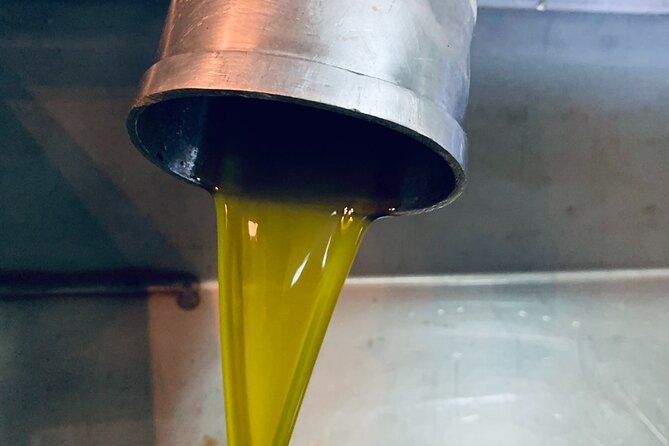
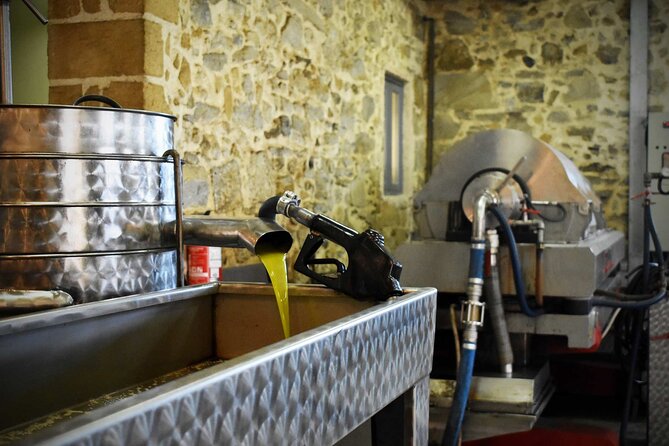
The first part explains olive oil production and beekeeping. You learn how the family extracts its cold-pressed extra virgin olive oil and how the family’s own olive trees supply the fruit.
The olive oil portion gives the tasting some useful context. Instead of treating oil as a generic dip for bread, you can think about the path from olive tree to finished bottle. The visit covers olive harvesting and olive processing, as well as the family’s own production.
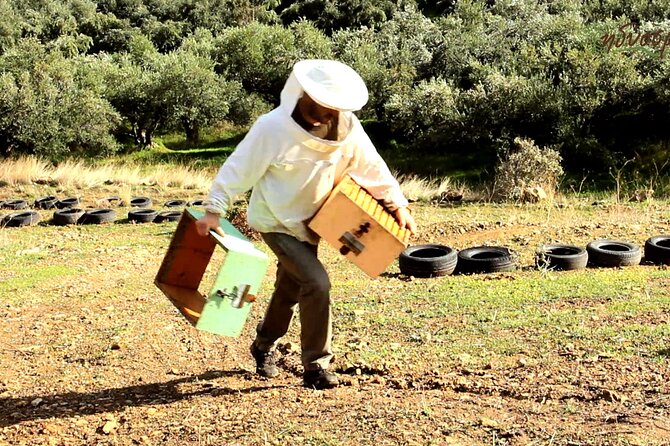
You also learn about bee hives and beekeeping in Greece. The presentation is meant to be accessible rather than technical, with room for questions. Hosts named Mariana, Marianna, and Nancy are associated with the experience details, and the strongest descriptions point to a warm, funny, engaging style of guiding.
A short film adds another layer by showing work away from the main site. You can expect a mix of spoken explanation, on-site production details, and visual material. The tour is not just a talk followed by a shop visit.
The hands-on element is modest but useful. The experience description refers to touch and hands-on moments, so you may have a chance to engage with parts of the process rather than only watch from a distance. This is an educational visit, not a full beekeeping workshop, and there is no promise of handling active bee hives.
The honey tasting: eight flavors to compare
The tasting is the main event for many people. You sample eight types of honey, which gives you a chance to compare differences in color, smell, sweetness, and finish.
That variety matters. A single spoonful tells you that a producer makes honey. Eight samples show you how much the flavor can change from one type to another. The experience also encourages you to use your senses: smell the products, taste them slowly, and think about the herbs, flowers, and olive groves associated with the Cretan countryside.
The tasting may be presented with bread, local cheese, tomatoes, olives, and yogurt. The exact spread can vary, but the food is more substantial than a few samples on a tiny plate. One account described a full charcuterie-style board, while others noted bread, cheese, tomatoes, olives, and yogurt.
This pairing is especially helpful if you do not usually eat honey on its own. Try it with bread first, then with cheese or yogurt. The same honey can taste quite different when matched with a salty or creamy food.
You can also expect time to sample at your own pace. In the best version of the visit, the guide explains each product and suggests pairings before giving you room to taste. There is one important qualification: if a larger group arrives, the tasting may become less personal, and you may be left with the food but little explanation.
More Olive Oil Tours around Crete:
- Crete: Quad Safari, Olive Mill with Tasting & Ghost Village
★ 4.9 · 1,004 reviews - Crete: Road-trip to Lasithi, Zeus Cave & Olive Mill Farm
★ 4.4 · 451 reviews - From Chania: Wine and Olive Oil Tasting Tour with Snacks
★ 4.8 · 354 reviews - The Terra Creta Olive Oil Experience Tour
★ 4.7 · 344 reviews
The olive oil tasting and local pairings
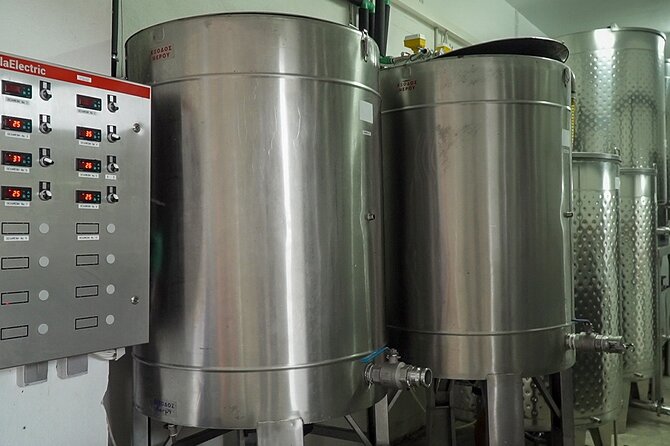
The olive oil is served as a product in its own right, not merely as an accessory to the honey. You are introduced to family-made, cold-pressed extra virgin olive oil produced from the owners’ olive trees.
Bread is the natural partner, but the other foods on the table help you understand how the oil works in a Cretan meal. Cheese, tomatoes, olives, and yogurt provide different textures and levels of salt and acidity.
I like this part because it turns a familiar ingredient into something worth paying attention to. You can consider aroma, pepperiness, fruitiness, and the way the oil changes a simple piece of bread. The visit also explains extraction, so the tasting has a clear connection to the production process you have just heard about.
The tour does not promise a formal professional oil-tasting lesson. If you want technical instruction about acidity levels, harvest dates, or laboratory certification, those details are not specified. The emphasis is on family production, flavor, and practical appreciation.
A family business with a story reaching to 1920
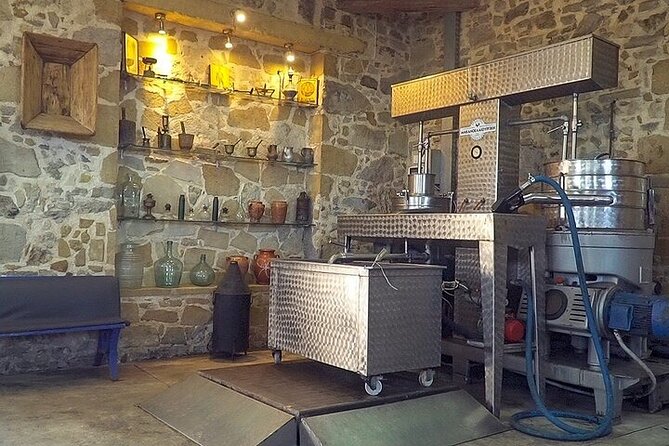
The family connection gives the visit a personal scale. You are not touring a large commercial facility with a polished corporate presentation. You are visiting a boutique producer that ties its honey and oil to its own trees, its own production, and a family tradition dating from 1920.
That does not mean every moment will be perfectly staged. The experience can feel informal, which is part of its charm and also part of its uncertainty. The quality of the visit depends on the guide available and on how many people arrive at the tasting.
The guides are repeatedly described as friendly, humorous, and eager to answer questions. The tone appears relaxed rather than solemn. That is good news if you enjoy learning through conversation and stories instead of a long lecture.
English is the operating language, so you should be comfortable following an English-language explanation. The available information does not list other tour languages.
How the small group affects the experience
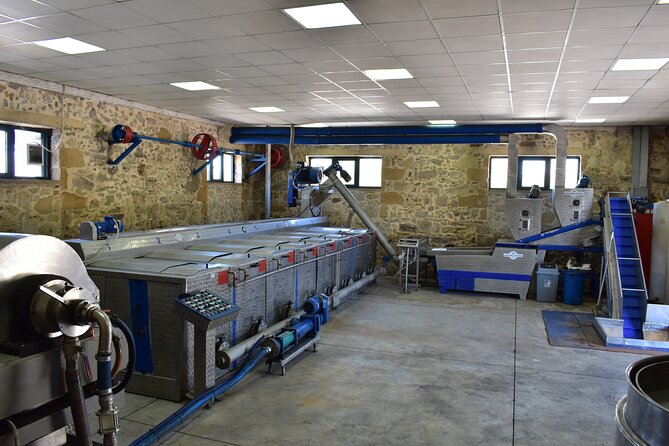
The activity accepts a maximum of 10 people. That is a useful limit for a hands-on food visit, especially when everyone needs a place at the tasting table.
A small group gives you a better chance to ask about bee keeping, olive harvesting, production methods, or the products in front of you. It also makes it easier to hear the guide and see the demonstration.
Still, small group does not always mean private. A larger party can arrive at the same time, and one account describes the tasting becoming less guided when that happened. If personal attention matters greatly to you, book at a quieter time if possible and be prepared for the final tasting to be more self-directed.
The one-hour length keeps the experience focused. You will not spend half a day here, but you also will not get a full agricultural workday. I see the short format as a strength for most visitors, especially if you are building a day around Chania, nearby villages, beaches, or other Cretan sights.
Is $18.10 good value?
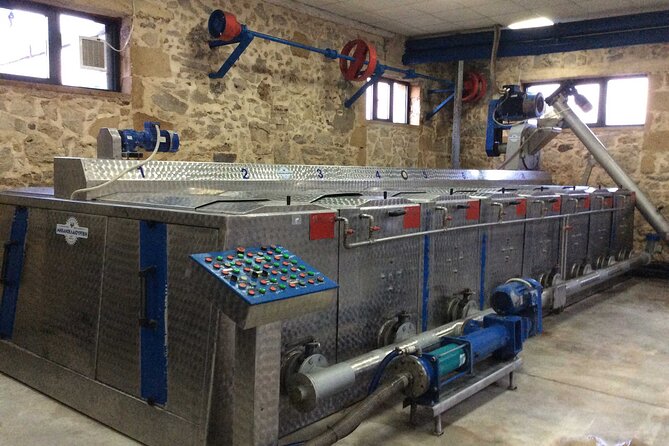
At $18.10 per person, this is a strong value if you treat it as both a short cultural visit and a food tasting. The price includes the production explanation, the story of the family business, the presentation about beekeeping, and the sampling of honey and olive oil.
The food spread makes the price more attractive. Bread, cheese, tomatoes, olives, and yogurt turn the final part into a proper snack, and possibly a light meal depending on how much you eat.
You also have the option to buy products for home. That is not required, and the setting is described as relaxed rather than pushy. Several accounts describe buying honey or olive oil after tasting them, with prices considered reasonable.
Value depends on your priorities. If you want a long farm tour, extensive time with active hives, or a full olive harvest demonstration, one hour may feel brief. If you want a low-cost taste of Cretan food production with a rural setting and no commitment to a full-day excursion, the price is easy to justify.
Who should book this experience?
I would recommend it to food lovers, families, couples, and anyone curious about the everyday ingredients of Cretan cooking. Teenagers can enjoy the variety of honey and the food on the table, while adults get a useful introduction to olive oil production and beekeeping.
It also suits people with a tight schedule. One hour leaves room for another stop, and the tour begins and ends at the same location.
The setting and drive may appeal to you if you prefer small rural producers to large commercial attractions. It is also a good place to shop for edible gifts because honey and olive oil travel more easily than many fresh Cretan foods.
I would be more cautious if you do not have a car or a clear taxi plan. The meeting point is not presented as a central urban location, and transport is not included. I would also be cautious if you expect a highly structured tasting in which a guide explains every item from start to finish. Most of the time that seems to happen, but the tasting can become less personal when groups overlap.
Free cancellation is available until 24 hours before the start time. Changes or cancellations inside that window are not accepted for a refund, so keep the weather requirement and your transport plans in mind.
Should you book the Idiosmos tasting?
Book it if you want a short, affordable, food-centered stop that connects what you taste with how Cretan families produce it. The eight honeys, family olive oil, local pairings, countryside setting, and friendly guiding create a fuller experience than the low price suggests.
I would especially choose it if you are already in the area and can reach Pervolakia without trouble. You get a story stretching back to 1920, an introduction to Greek beekeeping, a look at olive oil production, and enough food to make the visit feel worthwhile.
Skip it if you need hotel transport, a long agricultural tour, or a fully private tasting. For everyone else, this is a smart way to spend an hour and bring a little of Crete’s table home with you.
FAQ
Where does the honey and olive oil tour take place?
The tour takes place at Idiosmos Extra Virgin Olive Oil and Honey Tour & Taste in Pervolakia, Greece, at Pervolakia 734 00.
How long does the experience last?
The visit lasts approximately one hour.
What is the price?
The listed price is $18.10 per person.
How many people can join the tour?
The activity has a maximum of 10 travelers.
What language is the tour offered in?
The tour is offered in English.
What products will I taste?
You can taste eight different types of honey and extra virgin olive oil produced by the family.
What food is served with the tasting?
The tasting may include bread, cheese, tomatoes, olives, and yogurt. These foods are used to pair with the honey and olive oil.
Does the tour include transportation?
The meeting point is at Idiosmos, and the information provided does not include transportation to or from the site.
Can I buy honey and olive oil after the tour?
Yes. The producer sells the honey and olive oil presented during the visit, along with other products.
Can I cancel for a full refund?
You can cancel up to 24 hours before the experience start time for a full refund. Cancellations or changes made less than 24 hours before the start time are not accepted for a refund.
Newest grove reviews around Crete
- Olive Oil Food Pairing in Crete★ 5.0 · 4 reviews
- Crete’s Wine and Olives Safari Tour from Chania★ 5.0 · 12 reviews
- Private Tour: Soap, Olive Oil & Lyrarakis Winery with Lunch★ 4.5 · 15 reviews
- Knossos Cave of Zeus and Olive Oil Factory Full Day Private Tour★ 5.0 · 19 reviews
- PRIVATE-Zeus Birthplace-Traditional Villages-Olive Oil Factory★ 5.0 · 23 reviews
- Spiridi Olive Oil Farm Tour★ 4.5 · 22 reviews
- Cretan Delights – Wine, Olive Oil & Cooking Workshop from Chania★ 5.0 · 25 reviews
- Knossos & Lasithi Plateau: Villages, Olive Oil Tour From Elounda★ 5.0 · 26 reviews
Olive Oil and Honey Tastings, compared.
Katakolon Small Group Tour: Olympic site, Honey/Olive Oil Tasting
Read our review →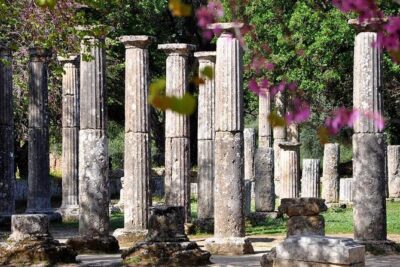
Olympia Shore Ex: Olympic site, Honey Farm & Olive Oil Tasting
Read our review →

Kefalonia: Private Olive Oil, Honey & Wine Tasting Experience
Read our review →
Island Round Tour With Wine Olive Oil, Honey Tasting
Read our review →Browse the lists this tour appears in