
Review · OLIVE SOAP WORKSHOPS
Soap and Olive Oil Experience
The most unusual part of this Sicilian outing is its subject: soap-making across 5,000 years of human history. In a restored 19th-century building near Sciacca, you move from ancient methods and chemistry to a hands-on workshop, then finish with olive oil tasting and an aperitivo under the trees. I like the mix of practical science and local culture, and I like that you leave with a small soap bar you helped prepare.
I also like the setting, with original stonework, high ceilings, olive trees, and countryside views. Guide Alessandro brings a warm, personal interest to the subject and connects soap and olives with sustainable agriculture and local folklore. The main consideration is transport: you must reach Via Cartabubbo on your own, since hotel pickup and drop-off are not included.
Key points at a glance
- A soap museum in a restored 19th-century building: See original stonework and high ceilings in a countryside setting near Sciacca.
- A 5,000-year story: Learn how soap-making developed across different cultures before taking part in a modern workshop.
- Your own small soap bar: The laboratory session gives you something practical to do, not just something to watch.
- Extra virgin olive oil tasting: Learn how local oil is assessed before sampling it with Sicilian olives and snacks.
- A relaxed aperitivo under olive trees: The food and drinks provide a gentle finish rather than another formal museum stop.
- Private, English-language experience: Only your group participates, with a total duration of about two hours.
Why a soap museum belongs on your Sicily itinerary
Sicily is full of famous food, churches, ruins, and coastlines. A soap museum offers a different way to understand the island. It connects household life, farming, chemistry, trade, and tradition in one small experience.
The museum occupies an old restored building in the Sicilian countryside near Sciacca. You can expect high ceilings, original stonework, olive trees, and views across the surrounding area. The setting matters because this is not a polished city attraction separated from local life. The building and its surroundings help place the subject in a working rural context.
I like experiences that explain ordinary objects. Soap is something you use every day, yet its production involves plant oils, chemical reactions, scent, texture, and preservation. Here, the subject becomes a useful doorway into science and cultural history.
The visit is also a good alternative to the standard winery stop. You still learn about local agriculture and taste a regional product, but the main focus is soap rather than wine. That makes this a sensible choice if you have already visited vineyards or simply want something less predictable.
More Olive Soap Workshops around Italy:
- Crete: Olive Oil, Soap, Wine, Raki – Flavorful Culinary Journey
★ 5.0 · 119 reviews - Private Tour: Soap, Olive Oil & Lyrarakis Winery with Lunch
★ 4.5 · 15 reviews - Soap Workshop, Olive Oil, Lyrarakis Winery and Lunch at Peza
★ 4.1 · 7 reviews
Following soap through 5,000 years
The museum tour covers the history of soap-making from its discovery to the products used today. The emphasis is not only on Sicily. You learn how different cultures made and used soap, with the guide explaining the changes in methods and materials over time.
That long time span gives the visit useful context. Soap is not presented as a modern bathroom product alone. You see it as a basic technology that changed with local resources, knowledge, and need.
The science matters here. Soap-making involves chemistry and technical steps, so you should expect more than a folklore talk. The tour looks at how ingredients work together and why the finished product behaves as it does. The available information does not provide a detailed list of every material or historical display, so the exact depth of each explanation can depend on the guide and your questions.
Alessandro is the named guide associated with the experience. The strongest personal detail available about his approach is his enthusiasm for soap, olives, sustainable agriculture, and local folklore. That combination should suit you if you enjoy asking questions and connecting a craft to the wider life of a region.
This is a private activity, so only your group participates. That can make a difference in a small museum and laboratory. You do not have to keep pace with a large crowd, and you can focus on the parts that interest you most. At the same time, a private format does not mean a long private tour. The complete experience lasts about two hours.
Making a small soap bar in the laboratory
The workshop is the most hands-on part of the visit. After learning how soap developed, you prepare your own little soap bar in the museum laboratory.
I consider this a real benefit for families, curious adults, and anyone who learns better by doing. The workshop gives the history a practical endpoint. Instead of only hearing how soap is made, you take part in a simple version of the process and leave with a small result of your own work.
The activity is not described as a full professional soap-making course. You should book it as a guided introduction rather than technical training for starting a business. The supplied details also do not specify the exact workshop ingredients, the curing process, or how long your soap needs before use. If those points matter to you, ask Alessandro during the visit.
The laboratory session also breaks up the museum explanation. Two hours can pass quickly when the schedule combines a tour, a workshop, a tasting, and food. You get enough variety to avoid a lecture-heavy visit, though anyone looking for a long, detailed laboratory class may find the workshop fairly brief.
Understanding Sicilian olive oil by tasting it
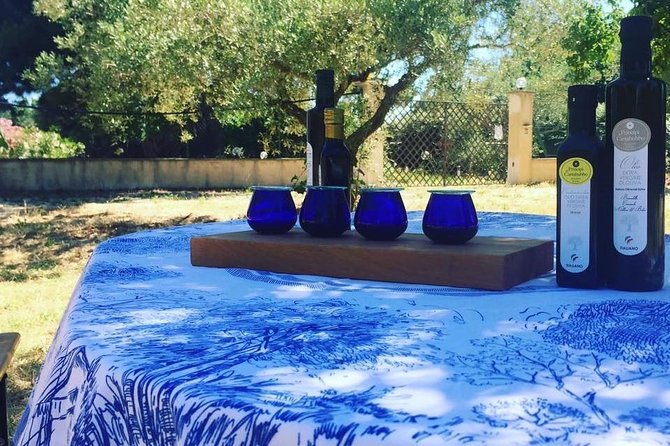
After the soap-making session, the focus shifts to extra virgin olive oil. You take part in a class on tasting local oil, learning to assess it rather than simply pouring it over bread and calling it good.
That distinction is useful. Olive oil tasting asks you to pay attention to qualities that are easy to miss when oil is mixed into a dish. The experience connects the oil to the olive trees around the building and to the agricultural traditions of the area.
The tour includes Sicilian olives as a starter, with different varieties served with special Sicilian herbs. Snacks and alcoholic beverages are included, along with a light aperitivo. This gives you a taste of the region without turning the activity into a full meal.
You should not book this expecting a large lunch. The wording points to a light spread, not a restaurant service or a long food tour. If you have specific dietary requirements, provide them when booking. That is especially important because the food component includes olives, snacks, and alcoholic drinks, but no full dietary menu is provided.
The oil tasting also adds value to the price. At $45.76 per person, you are paying for a guided museum visit, a workshop, an educational tasting, food, and drinks. For a two-hour activity, that is a reasonable package if you appreciate small-group teaching and local food. It is less compelling if you only want a quick olive oil sample or a simple aperitivo.
More Olive Oil Tours around Italy:
- Sorrento Farm and Food Experience including Olive Oil, Limoncello, Wine tasting
★ 5.0 · 2,524 reviews - Olive oil tasting in Sorrento
★ 5.0 · 434 reviews - Sorrento: Lemon, Olive Oil and Wine Tasting Tour with Lunch
★ 5.0 · 300 reviews - Alghero: Wine and Olive Oil Tasting at a Local Farm
★ 4.8 · 294 reviews
Aperitivo beneath the olive trees
The final part takes place under the olive trees, with a light aperitivo and views across the countryside. This is where the experience slows down. After the history, chemistry, workshop, and tasting, you have time to enjoy the setting.
The aperitivo is more than a snack break because it ties the whole visit together. Soap and olive oil are both linked to the same agricultural world, especially when olive trees surround the museum. You get a direct sense of how a local ingredient can become both a food product and a material for traditional crafts.
The roof is also mentioned as a possible place for the aperitivo, with the view described as a memorable part of the day. The exact seating location may depend on the arrangement during your visit, so think of the rooftop and the olive trees as part of the setting rather than a guaranteed formal terrace service.
I like this kind of ending because it leaves room for conversation. You can ask about sustainable agriculture, local traditions, or soap-making while enjoying olives and drinks. Alessandro’s interest in the wider culture of the area is likely to be most useful here, when there is time to move beyond the basic tour script.
The setting near Sciacca
The meeting point is Via Cartabubbo, 30, 92019 Sciacca AG, Italy. The activity begins and ends there, and no hotel pickup or return transportation is provided.
That detail deserves attention before you book. You need to plan your own route to the museum and back. The tour information does not provide a shuttle, public transport directions, parking information, or a transfer option. If you are staying in Sciacca, check the route and travel time before choosing a start time.
The countryside setting is a strength once you arrive. You get olive trees, open views, and a restored building with original architectural details instead of an attraction designed only for quick sightseeing. The tradeoff is that rural experiences often require more planning than a city-center museum.
The mobile ticket is practical, and confirmation is provided at booking. The experience is offered in English, so English-speaking visitors can follow the historical and scientific explanations without arranging a separate interpreter.
Who will enjoy this two-hour experience
I would recommend this tour to you if you like local crafts, food traditions, and small museums. It is also a good fit if you have already seen Sicily’s major archaeological and religious sites and want an activity with a different subject.
Families may appreciate the soap-making workshop, particularly children who enjoy practical tasks. The information provided does not state a minimum age, child pricing, or specific arrangements for young children, so check those points before booking for a family group.
Food-focused visitors will enjoy the olive oil tasting and Sicilian olives. Still, keep your expectations in line with the format. This is not a cooking class, a vineyard tour, or a full meal. The food supports the experience rather than taking it over.
Couples and small private groups may like the quiet pace and countryside setting. Since only your group takes part, the visit can feel more personal than a standard group excursion. Solo visitors should note that the price is listed per person and the experience is private, but the supplied details do not explain whether a minimum group size applies.
You may want to skip it if your schedule is extremely tight or if reaching the countryside meeting point is difficult. You may also prefer a different activity if your main goal is a long technical workshop, a substantial lunch, or a broad olive-farm tour.
Price, booking, and timing
The price is $45.76 per person, and the average booking point is 23 days before the experience. That advance pattern suggests you should reserve ahead if your Sicily dates are fixed, especially because the activity is private and offered in English.
The two-hour duration is well judged for a compact cultural stop. You receive several distinct parts without committing half a day: museum history, soap-making, olive oil tasting, and aperitivo. Allow extra time around the scheduled activity for reaching Via Cartabubbo, since transport is not included.
You can cancel for a full refund if you do so at least 24 hours before the local start time. Cancellations or changes made less than 24 hours ahead are not refunded or accepted. This is fairly flexible, but only if you watch the local cut-off time.
Should you book the Soap and Olive Oil Experience?
Book it if you want a personal, hands-on look at Sicilian rural culture rather than another major monument or winery. The restored building, unusual soap theme, private format, and homemade soap bar give the visit a clear identity. The olive oil tasting and aperitivo add food and conversation without making the tour feel like a standard tasting session.
The main question is logistics. You must get to the Sciacca meeting point yourself, and the food is a light aperitivo rather than a full meal. If those limits work for you, $45.76 buys a well-rounded two-hour experience with history, science, craft, local agriculture, and a pleasant outdoor finish.
FAQ
Where does the Soap and Olive Oil Experience take place?
It takes place at Via Cartabubbo, 30, 92019 Sciacca AG, Italy, in the Sicilian countryside near Sciacca.
How long does the experience last?
The experience lasts approximately two hours.
Is transportation included?
No. Hotel pickup and drop-off are not included, and transportation to and from the attractions is not provided.
Does the activity take place in a private group?
Yes. This is a private tour or activity, and only your group participates.
Is the experience offered in English?
Yes. English is one of the available languages.
What happens during the soap-making workshop?
You take part in a workshop in the museum laboratory and prepare your own small soap bar.
What food and drinks are included?
The experience includes Sicilian olives with special Sicilian herbs, snacks, a light aperitivo, and alcoholic beverages.
Can I cancel for a full refund?
Yes. You can cancel at least 24 hours before the local start time for a full refund. Cancellations or changes made less than 24 hours before the start are not refunded or accepted.
Newest grove reviews around Italy
- Buti: Olive Oil Ancient Mill Tour and Tasting Experience★ 5.0 · 2 reviews
- Cagliari: Wine and Olive oil Experience + Oil Mill Museum★ 5.0 · 2 reviews
- Bevagna: Olive Oil Mill Tour with Guided Tasting★ 5.0 · 6 reviews
- Bari: narrated extra virgin olive oil tasting with aperitif★ 4.5 · 3 reviews
- Olive Mill Tour and Tasting in the Verona Countryside★ 5.0 · 9 reviews
- Private wine, Extra Virgin Olive Oils & Cheese Tasting★ 4.0 · 12 reviews
- San Gimignano: Winery Visit with Picnic in Olive Grove★ 5.0 · 3 reviews
- Olive Oil Tasting & Mill Guided Visit in Perugia★ 4.9 · 12 reviews
Olive Soap Workshops, compared.

Olive Oil, Soap, Wine, Raki – Flavorful Culinary Journey
Read our review →
Private Tour: Soap, Olive Oil & Lyrarakis Winery with Lunch
Read our review →
Soap Workshop, Olive Oil, Lyrarakis Winery and Lunch at Peza
Read our review →
Afternoon: Tour Soap, Olive Oil, Wine Stories of Peza Valley
Read our review →Browse the lists this tour appears in