
Review · OLIVE GROVE WALKS
Ostuni: Masseria tour among thousand-year-old olive trees with oil tasting
Some of Puglia’s olive trees are older than many of the buildings you will visit in Italy. At Masseria Rienzo, you walk among trees estimated at up to 3,000 years old, then enter an underground cave where olive oil was made long before modern machinery. I like the way this tour connects living farmland with the people who have cared for it across generations. I also like that you see both the old mill and a working modern one, rather than hearing only a general talk about olive oil.
The main consideration is the tasting. It is informative and delicious, but brief: you taste three oils with friselline rather than sit down to a full meal. The farm is also outside Ostuni, so plan on arriving by car or taxi instead of trying to walk from town or a train station.
Key points at a glance
- Ancient trees: Walk among olive trees believed to be 1,000 to 3,000 years old.
- An underground mill: See a cave oil mill connected with more than 2,000 years of production on the site.
- Old and new together: Compare historic pressing methods with a modern mill that can process olives in about half an hour.
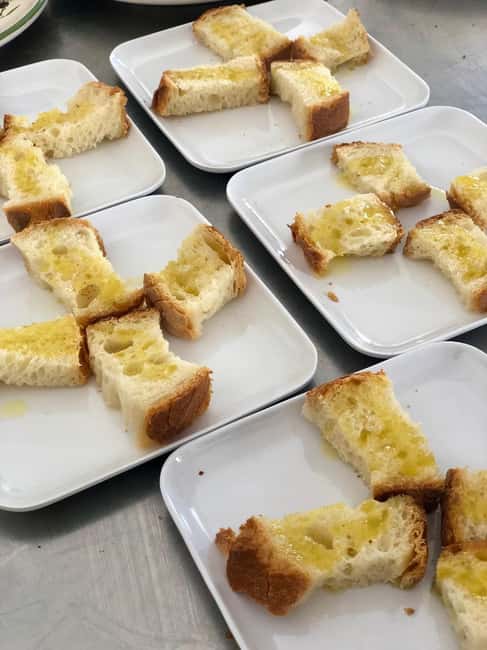
- Three oils to taste: Learn to notice differences in aroma, flavor, and quality with a guided tasting.
- Family-run setting: Guides such as Julia and Chiara explain the farm’s work and family story in English or Italian.
- Good short outing: The visit takes about 1.5 hours and costs $33 per person, with cancellation available up to 24 hours before the tour.
Why the ancient olive grove is the real opening act
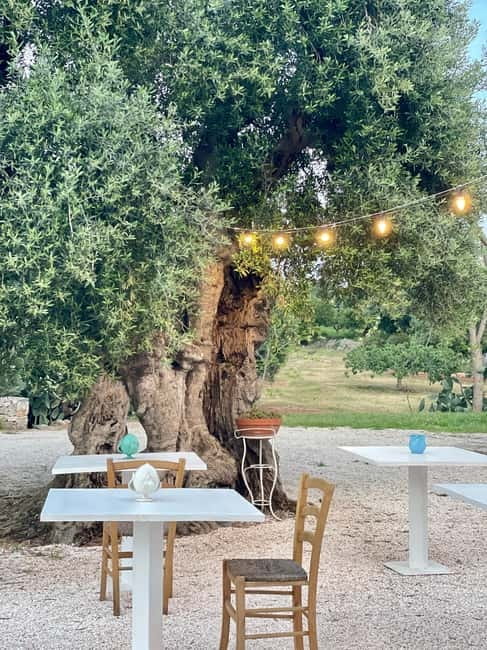
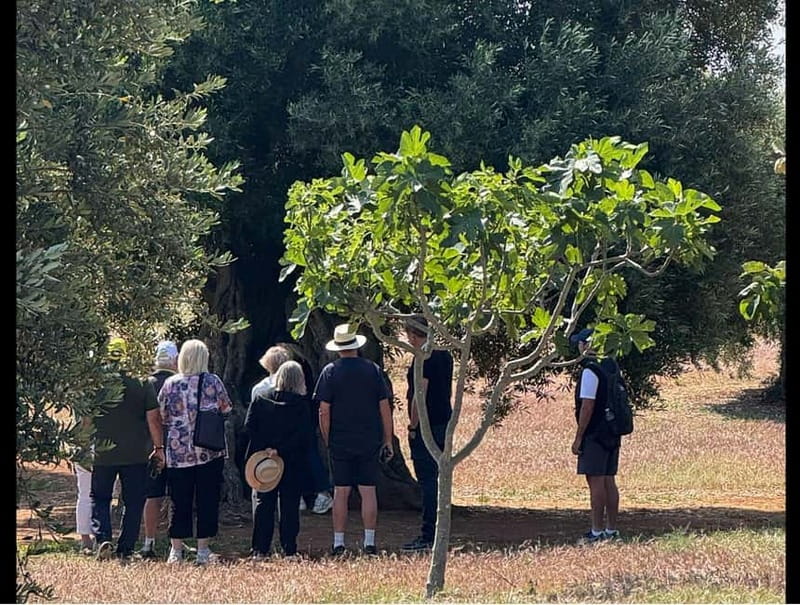
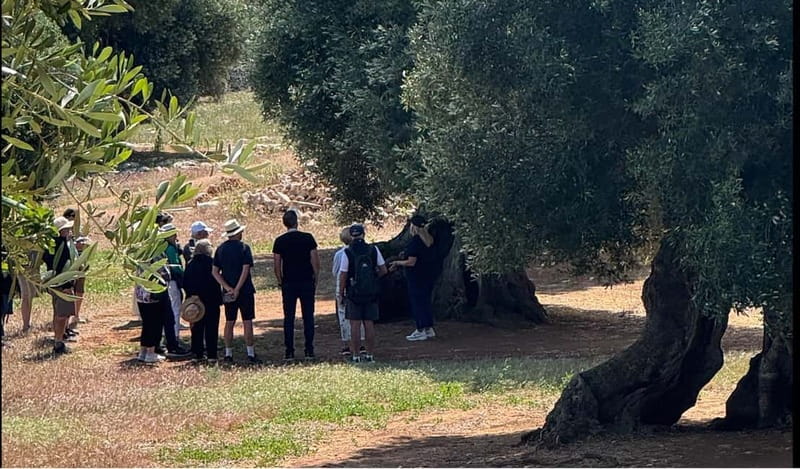
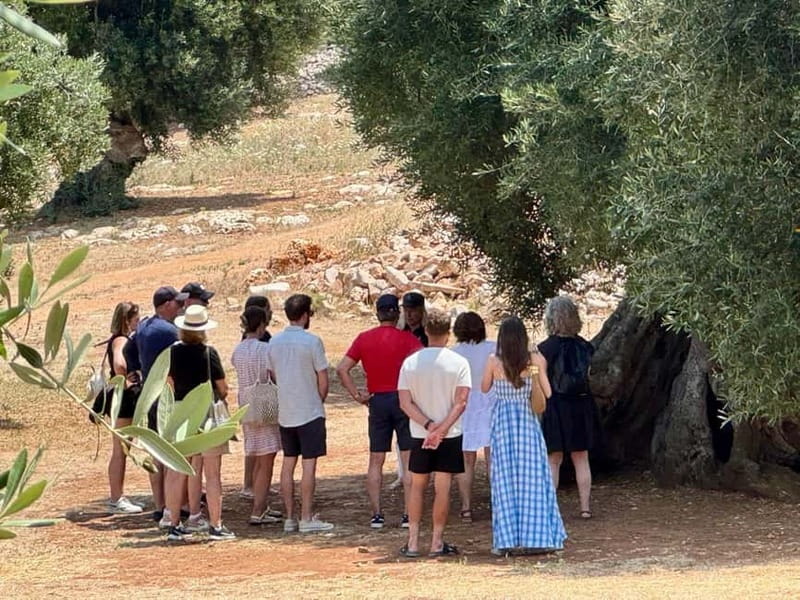
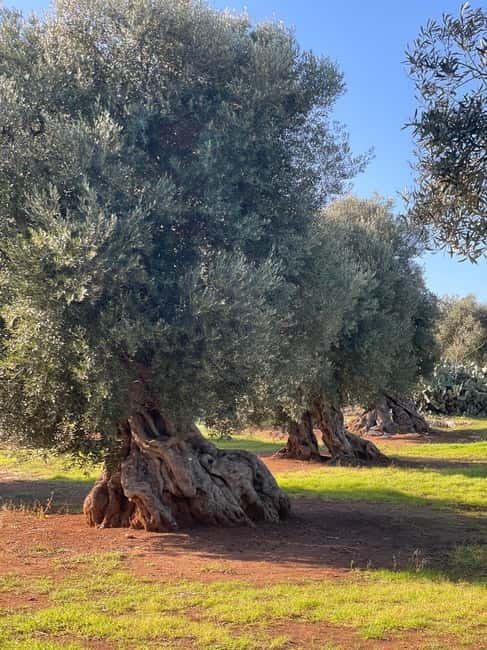
The first part of the visit takes you into the olive grove around Masseria Rienzo. This is not a quick photo stop beside a single old tree. You walk among a working collection of ancient olive trees, some described as roughly 1,000 years old and others as old as 2,000 or even 3,000 years.
That age changes the way you look at the farm. These trees are broad, twisted, and shaped by centuries of growth. Their trunks can look almost sculpted, with hollows and folds that make each one feel individual. You are not just looking at an agricultural product. You are seeing a crop that has helped shape daily life and local work in Puglia for a very long time.
I especially like this part for visitors who want more than a standard food tasting. The grove gives you a physical sense of time. You can touch a tree that was growing long before modern Italy existed, then hear how its fruit still contributes to oil production today.
The guide also explains the farm’s present-day challenges. One important issue is the bacterial disease affecting olive trees in Italy. That adds useful context to the beauty of the grove. The old trees are impressive, but they are not simply permanent monuments. They need care, and the future of olive farming is not guaranteed.
Guides from the family, including Julia and Chiara, have been praised for explaining this connection between land, family work, and olive oil in clear English. Julia appears often as the guide, and her presentation is described as warm, personal, and easy to follow. The tone is less like a formal museum lecture and more like being shown around a family farm by someone who takes real responsibility for it.
More Olive Grove Walks in Italy
- Balestrate: Olive Grove Tour with Wines & Olive Oil Tasting
★ 5.0 · 241 reviews - Bologna: Olive Grove and Vineyard Tour with Product Tastings
★ 4.8 · 109 reviews - Balestrate Olive Grove Tour: Wine and Olive Oil Tasting
★ 5.0 · 105 reviews
Inside the underground cave oil mill
The most unusual stop is the old underground mill. The cave was used for olive oil production in the past, and the site is associated with more than 2,000 years of oil-making. Some descriptions also refer to it as a continuously inhabited cave, which gives the space an importance beyond its machinery.
You learn how people once worked with the olives using methods that depended on manual labor, stone, and pressing equipment. The cave helps you picture the difficult conditions behind an ingredient that now appears in a small bottle on a supermarket shelf.
This is where the tour has real value for history-minded visitors. Puglia’s olive oil tradition can sound abstract when described only through dates and farming terms. Standing below ground in the old pressing space makes it concrete. You can see where production took place and understand why oil-making was such a major part of local life.
The cave may not be comfortable for everyone. The tour description does not provide details about steps, surfaces, or accessibility, so anyone with mobility concerns should check directly before booking. The setting is also more about atmosphere and historical understanding than a polished display. You are visiting an old production space, not a modern museum installation.
That roughness is part of its appeal. The cave gives the visit a sense of place that a recreated exhibit could not match. It also provides a clear contrast with the next stop, the modern mill.
The modern mill and the speed of today’s production
After seeing the old cave mill, you move to the modern olive oil mill at the farm. Here, technology and current production methods replace the slow, labor-heavy process of the past.
The modern system can produce oil from the olives in about half an hour, a striking contrast with the long process implied by the old underground mill. Your guide explains how modern equipment handles the fruit and helps the farm produce extra virgin olive oil on a practical working scale.
I like this side-by-side comparison because it avoids treating tradition as automatically better. The old mill shows the endurance of local methods and the effort once required. The new mill shows how a family farm can keep producing oil while using faster, more controlled equipment.
You may not see the machinery operating during every visit. The supplied details describe a tour of the modern mill, but they do not promise a live harvest or a full working demonstration. If you visit outside the olive harvest, expect explanation and equipment rather than a complete production cycle.
The farm also produces other products, and the tour may touch on additional fruit and vegetables grown on the property. The main focus remains olive oil, though, so you should not book this expecting a broad farm-to-table meal or a full agricultural tour.
A tasting that teaches you what extra virgin means
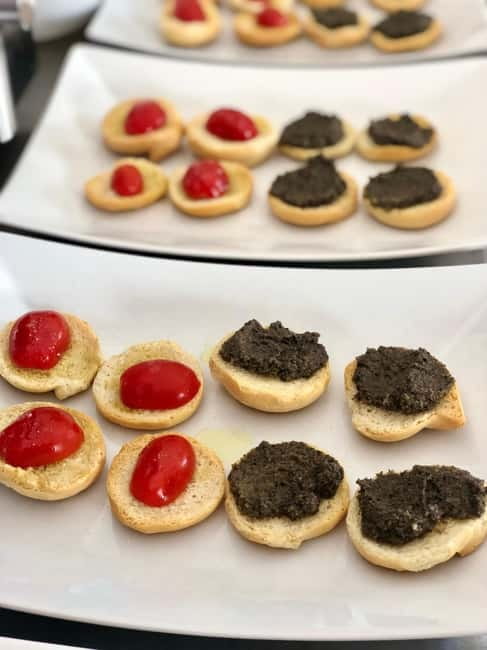
The tasting follows the farm and mill visits. You sample three types of oil, served with friselline, a crisp Puglian bread product, plus water.
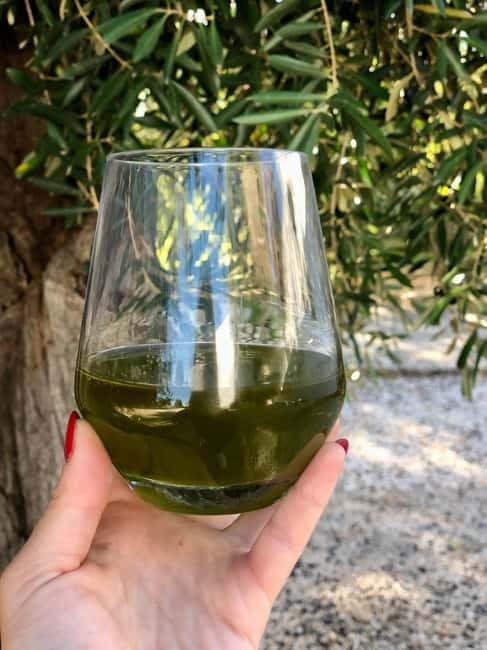
The useful part is not simply getting to eat olive oil. Your guide helps you pay attention to the oil’s smell, taste, and finish. You begin to notice that extra virgin olive oil is not one uniform flavor. It can be fresh, grassy, fruity, peppery, or bitter, with differences connected to the olives and the way the oil is made.
For many people, this may be the first time they taste several oils side by side with an explanation of what to notice. That makes the tasting more useful than a sales counter sample. You leave with a better idea of why a quality oil can taste very different from a bland cooking oil.
Still, keep the scale in mind. The tasting is a short part of a 1.5-hour experience, and the food is limited to friselline and water. One less enthusiastic assessment found the tasting too small compared with longer food-focused tours, describing it as a small amount of oil on a thin piece of bread. If you want a substantial lunch, schedule one separately in Ostuni.
The farm sells its own oils after the tasting. Several visitors found the prices reasonable compared with buying similar quality at home, particularly in the United Kingdom. Buying is optional, but the tasting gives you a fair basis for deciding. You may find yourself considering tins or bottles as gifts, especially since olive oil is easier to use than many fragile food souvenirs.
Do not count on every flavor being available. One visitor specifically found that the lemon oil was sold out. The farm’s main tasting still includes three oils, but specialty products can change with supply.
Same groves, a different afternoon:
- Sorrento Farm and Food Experience including Olive Oil, Limoncello, Wine tasting
★ 5.0 · 2,524 reviews - Olive oil tasting in Sorrento
★ 5.0 · 434 reviews - Sorrento: Lemon, Olive Oil and Wine Tasting Tour with Lunch
★ 5.0 · 300 reviews - Alghero: Wine and Olive Oil Tasting at a Local Farm
★ 4.8 · 294 reviews
What $33 buys you
At $33 per person, this is good value if you are interested in both Puglia’s agricultural culture and its food. The price includes the guided walk through the ancient grove, the underground cave mill, the modern mill, and the tasting of three oils with friselline and water.
The comparison that matters is not simply tour length. In 90 minutes, you get several distinct parts: a walk outdoors, a historical site, a look at current production, and a guided food lesson. The ancient trees and cave would be worthwhile for many people even without the tasting, while the oil sampling gives the visit a practical finish.
The value is strongest for couples, families with older children, and anyone driving around Puglia. It is also a useful short stop during an Ostuni day, since you do not need to give up an entire afternoon.
The price is less compelling if you want an extended meal, hands-on harvesting, or a long technical class. This is an introduction, not a full-day farm workshop. The tasting is brief, and the tour moves at a steady pace.
There is also a small timing point to keep in mind. One visitor found that the experience often ran 10 to 15 minutes beyond the advertised time and suggested allowing closer to 1 hour and 45 minutes. That is not a major issue, but do not schedule a tight restaurant reservation immediately afterward.
Getting there from Ostuni
Masseria Rienzo is near Ostuni, but it is not presented as an easy walk from the town center or station. You should plan to arrive by car or taxi.
This matters more than it might seem. One person specifically wished for transport from the train station and considered walking there unsafe despite the distance not being great. The tour makes the most sense as part of a road trip through Puglia, when you can combine it with Ostuni, nearby villages, or other countryside stops.
The starting and ending point is Masseria Rienzo, so you return to the farm after the guided visit. Check the available start times when booking, then allow extra time for the drive and for the tour’s occasional overrun.
The setting is rural and the main outdoor portion depends on conditions. Several people enjoyed good weather during their visit, while the walk among the trees will naturally be more pleasant in mild conditions than in strong heat or rain. Comfortable shoes and sun protection are sensible choices, though the supplied information does not specify a dress code.
Who will enjoy this farm visit most
I would choose this tour for you if you want to understand why olive oil matters in Puglia rather than simply buy a bottle in a shop. It works especially well for:
- People interested in food and regional farming
- Visitors on a Puglia road trip
- History fans who enjoy old working sites
- Couples looking for a short cultural outing
- Families who can manage an outdoor walk and cave visit
- Anyone who wants to learn how to taste extra virgin olive oil
The tour is also a good fit if you prefer a family-run setting. Julia and the other guides explain the farm’s story directly, and the presentation appears to change slightly depending on the guide and questions from the group.
You may want a different experience if your priority is a long meal, a large food spread, or a hands-on activity. The visit is mainly guided observation and tasting. It gives you insight, but it does not promise olive picking, pressing your own oil, or a full lunch.
English and Italian are available. Some material may be presented in its original language, so ask questions if a technical point is unclear. The English guiding has been praised as clear, but individual explanations can vary by guide and group.
Booking flexibility and practical planning
The tour lasts about 1.5 hours, with starting times dependent on availability. You can cancel up to 24 hours before the experience for a full refund, and you can reserve now and pay later. Those terms are useful if your Puglia route is still shifting.
The overall rating is 4.8 from 261 reviews, with especially strong praise for the ancient trees, the cave mill, the family guides, and the quality of the oil. The few reservations are practical rather than serious: the tasting can feel short, the tour may run a little late, and reaching the farm without a car can be awkward.
I would allow at least two hours from the start of the tour until your next fixed plan. If you want to buy oil, add a little time afterward rather than rushing away as soon as the tasting ends.
Should you book the Masseria Rienzo tour?
Yes, if you have a car or can arrange a taxi and want a focused introduction to Puglia’s olive oil culture. The combination of ancient living trees, an underground mill, and modern production gives the visit more substance than a simple tasting.
Book it with realistic expectations. You will not receive a full meal or an all-day farm experience, and the tasting is compact. But for $33, you get a well-shaped visit that links nature, local history, family farming, and food in a little under two hours.
I would make this a strong choice during an Ostuni stay, particularly for a road trip itinerary. The old cave and the trees are the details you are unlikely to forget, while the oil tasting gives you something useful to take home, either in your suitcase or in the way you judge the next bottle you buy.
FAQ
Where does the tour begin and end?
The tour begins and ends at Masseria Rienzo near Ostuni in Puglia.
How long does the experience last?
The stated duration is 1.5 hours. You should allow extra time because the tour may occasionally run 10 to 15 minutes longer.
What languages are available?
The live guide is available in Italian and English. Some content may be shown in its original language.
How much does the tour cost?
The listed price is $33 per person.
What oils will I taste?
You will taste three types of olive oil produced on the farm.
Is food included?
Yes. The tasting includes friselline and water. It is not described as a full meal.
Do I visit an old olive oil mill?
Yes. The tour includes a guided visit to an underground cave oil mill connected with ancient olive oil production.
Do I also see a modern mill?
Yes. The tour includes a guided visit to a modern olive oil mill where current production methods are explained.
Can I cancel the booking?
You can cancel up to 24 hours in advance for a full refund. You can also reserve now and pay later.
Newest grove reviews around Italy
- Buti: Olive Oil Ancient Mill Tour and Tasting Experience★ 5.0 · 2 reviews
- Cagliari: Wine and Olive oil Experience + Oil Mill Museum★ 5.0 · 2 reviews
- Bari: narrated extra virgin olive oil tasting with aperitif★ 4.5 · 3 reviews
- Bevagna: Olive Oil Mill Tour with Guided Tasting★ 5.0 · 6 reviews
- Olive Mill Tour and Tasting in the Verona Countryside★ 5.0 · 9 reviews
- San Gimignano: Winery Visit with Picnic in Olive Grove★ 5.0 · 3 reviews
- Soap and Olive Oil Experience★ 5.0 · 8 reviews
- Puglia Olive Oil Tasting Experience with Olive Grove Walk★ 4.5 · 10 reviews
Olive Grove Walks, compared.
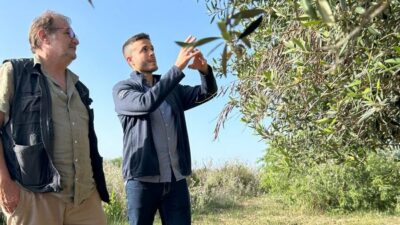
Olive Grove Tour with Wines & Olive Oil Tasting
Read our review →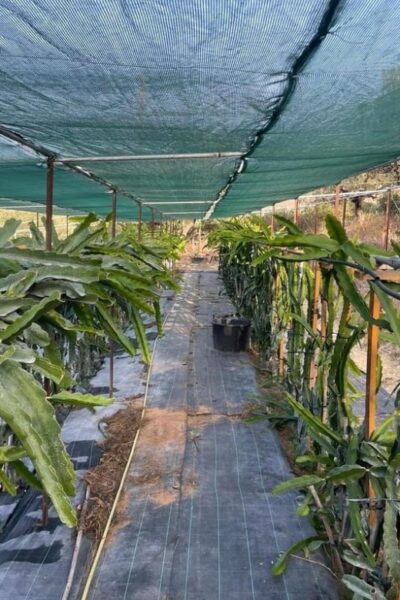
Traditional Olive Grove and Dragon Fruit Farm Tour
Read our review →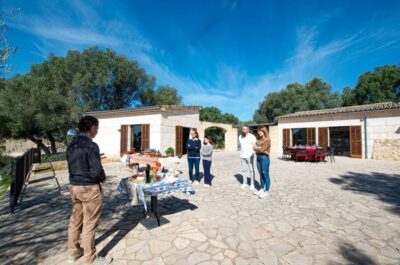
Visit of the olive grove, olive oil tasting and snack
Read our review →
Bologna: Olive Grove and Vineyard Tour with Product Tastings
Read our review →
Balestrate Olive Grove Tour: Wine and Olive Oil Tasting
Read our review →
Guided tours of the olive grove with oil tasting.
Read our review →
Organic Olive Grove tour & Olive oil tasting & lunch in Kalamata!
Read our review →
Jaen: Olive oil tour with the 5 senses, grove and tasing
Read our review →Browse the lists this tour appears in