
Review · OLIVE MILL AND FACTORY TOURS
Olive Oil Mill Tour & EVO Oils Tasting – Sarteano, Tuscany
The best part of this Sarteano experience is its close look at real Tuscan olive-oil making, not a polished food show built for tour buses. You’ll see traditional machines, learn how the mill works, and finish by comparing the family’s own extra virgin oils.
I like the small, personal feel, and I like that the tasting teaches you to notice fragrance, flavor, and quality instead of simply pouring oil into a dish. The main drawback is that English explanations may feel rushed or hard to follow at times, especially when the guide is translating on the spot.
Key points
- Family story since the 1960s: Fausta Tistarelli and her family continue a long local oil-making tradition.
- Three oils to compare: The tasting gives you a practical way to notice differences between oils made by the mill.
- Harvest-season atmosphere: From mid-October to mid-December, the mill may smell of fresh new oil and feel especially lively.
- A compact 45-minute visit: This fits easily into a day of exploring Sarteano and the surrounding Tuscan countryside.
- Wine included: The tasting comes with water and Montepulciano red wine, adding a simple local touch.
- English and wheelchair access: Tours are offered in Italian or English, and the mill is wheelchair accessible.
A family olive mill with roots in Sarteano
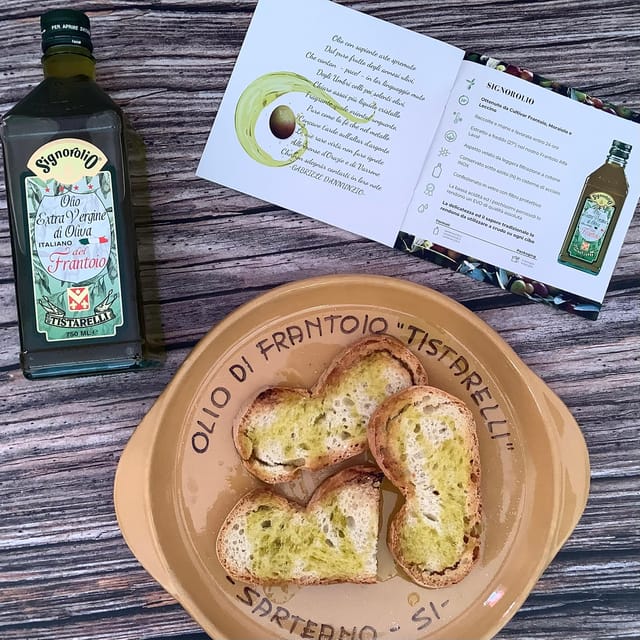
Frantoio Tistarelli offers a short, focused introduction to one of Tuscany’s most important foods. The Tistarelli family has produced extra virgin olive oil since the 1960s, and the mill remains a family operation led by Fausta Tistarelli and her relatives.
That family connection shapes the visit. You are not simply hearing a general explanation of olive oil from a guide who could be discussing any mill in Italy. The story centers on this particular place, its traditional equipment, and the family’s effort to keep old methods connected to newer ideas.
I find that useful because olive oil can seem simple until you learn how much depends on the fruit, timing, milling, storage, and tasting. A good oil is not just a cooking ingredient. It has a smell, a texture, and a flavor that tell you something about how it was made.
The meeting point is the mill shop, so you begin and end in the same practical place. The shop carries the oils and other products tasted during the visit, but there is no pressure in the information provided to buy anything.
More Olive Mill and Factory Tours in Italy
- Bardolino: Lake Garda Oil Mill Tour with Olive Oil Tasting
★ 4.9 · 205 reviews - Lecce to Galatina E-Bike: Olive Mill & Wine Tasting + Taxi back
★ 5.0 · 54 reviews - Olive Oil Tour Visit to the oil mill and olive oil tasting
★ 5.0 · 53 reviews
What happens during the 45-minute visit
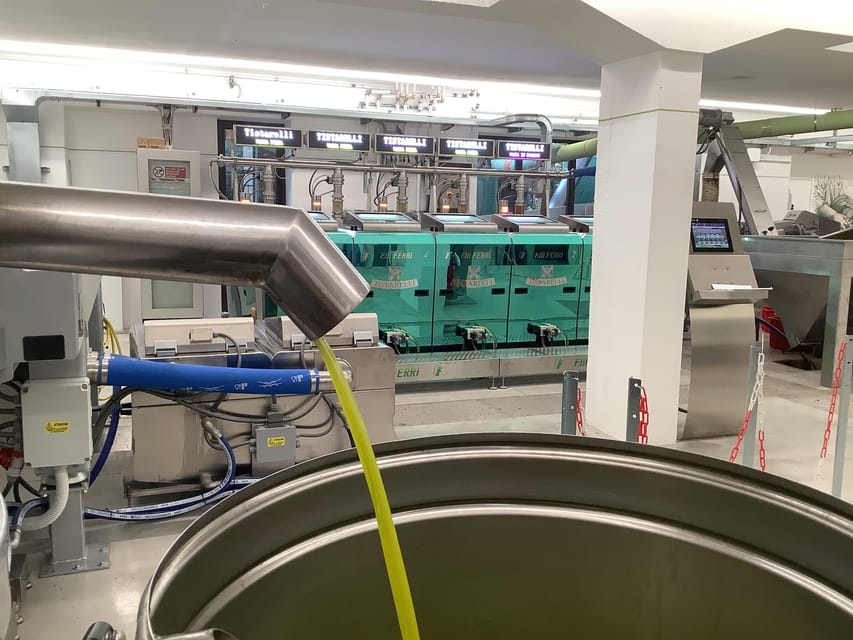
The experience is built around two parts: a guided tour of the mill and a guided tasting. At 45 minutes, it is brisk rather than sprawling, which makes it a good fit if you have only part of a day in Sarteano.
The tour starts with the history of the oil mill and the Tistarelli family’s work. You’ll learn how the business began in the 1960s and how the family continues production today. This opening gives the machinery some meaning. Instead of seeing a collection of metal equipment, you can connect it to generations of local work.
You then move through the mill and learn about the milling process. The visit includes traditional machines, so you get a sense of the older tools and methods that shaped olive-oil production in the area. The available information does not promise that every machine will be running during your visit, and that matters.
If you go outside the harvest period, the mill may be quiet. That can make the visit feel more like a museum-style explanation than a working production stop. If you want to see the process in its most active form, aim for the harvest season, from mid-October through mid-December.
During that period, the air can carry the scent of newly made oil, and the mill takes on the seasonal energy of olive growers bringing in their fruit. The machinery and the explanation make more sense when you can connect them with the current harvest.
One useful detail comes from a visit in October: the equipment was not yet in use because the harvest was due to begin around October 20. If you book close to that date, ask whether milling will be underway. A few days can make a real difference to the mood and sights inside the mill.
Learning how olives become extra virgin oil
The guide explains the milling process and the steps that turn olives into oil. The supplied information does not give a full technical sequence, so you should expect a clear introduction rather than a specialist course in extraction.
That is probably the right level for most people. You’ll come away with a better idea of why harvest timing matters, why the mill’s equipment matters, and why the finished oil can have different smells and tastes.
The traditional machines add an important physical link to the past. In Tuscany, olive oil is tied to family farms, seasonal labor, and local food habits. Seeing the equipment helps you understand that this is not an abstract product made somewhere far away. It comes from a chain of work that begins with olives and ends with a bottle in the shop.
The guide may use display plaques and a video presentation to fill in details. Those materials are especially helpful if spoken English is difficult to follow. I would pay attention to the written material and save questions for the end, since the pace can be quick.
English tours are available, but the quality of the explanation may depend on which family member leads the visit. Some sessions are described as warm and well explained, while one English-language visit felt rushed and difficult to understand. That is a fair reason to keep expectations realistic: this is a small family mill, not a large visitor center with a full multilingual staff.
The tasting: three oils, water, and Montepulciano
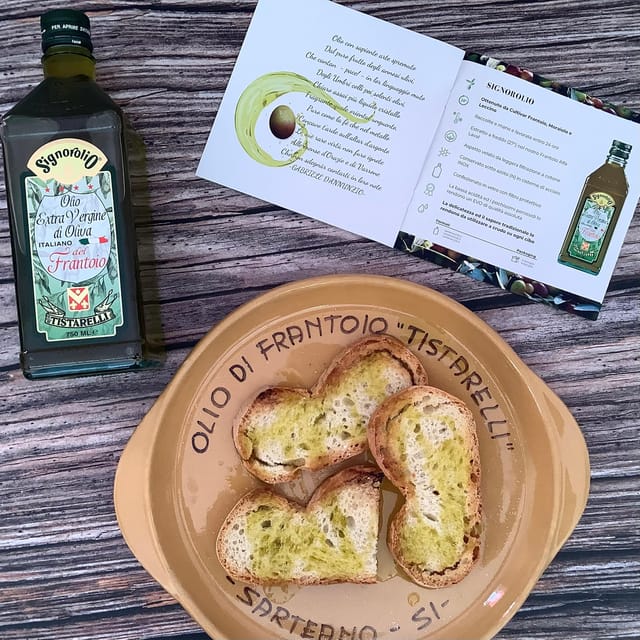
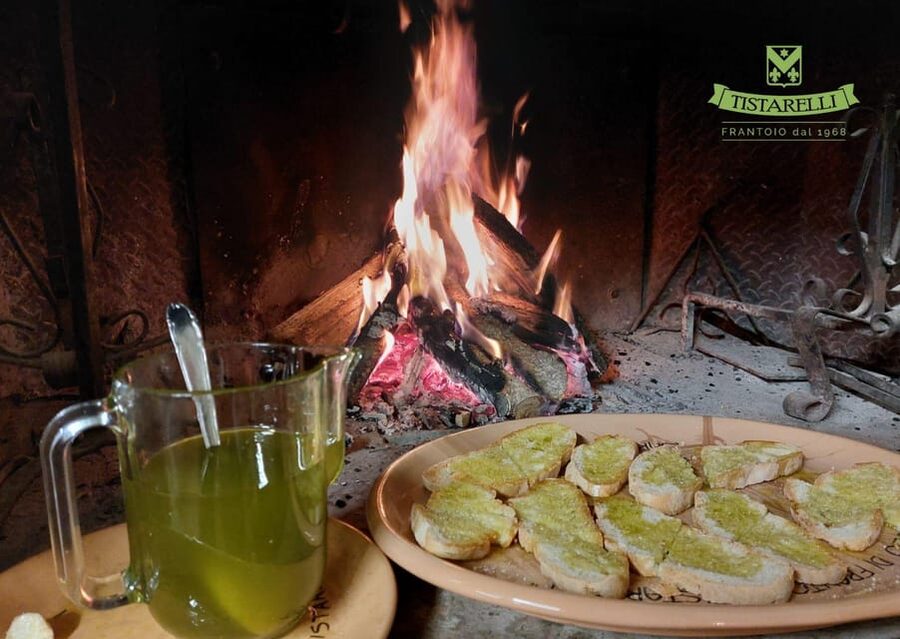
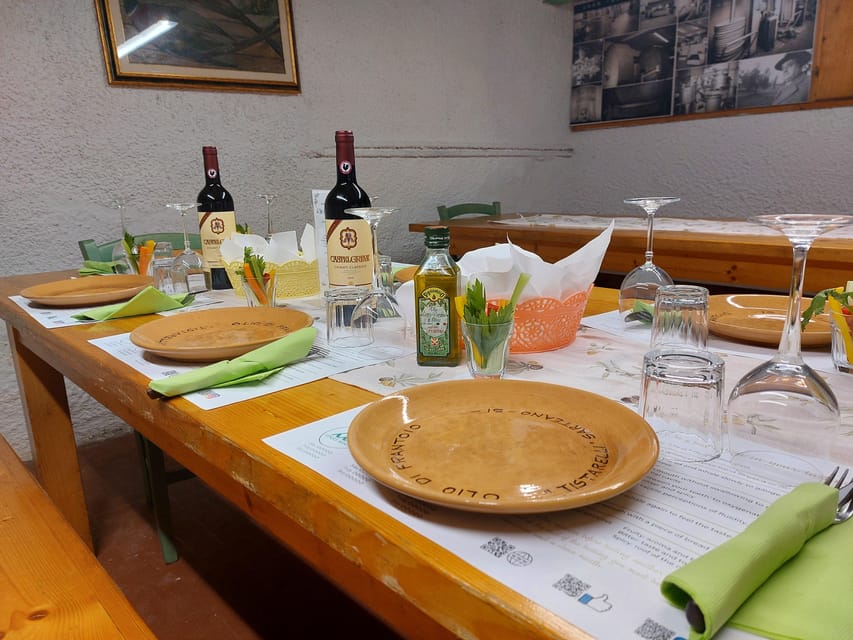
The tasting is the part that turns the visit from a machinery tour into a food experience. You’ll taste the mill’s extra virgin oils and learn to identify their fragrances and flavors.
Several visitors have sampled three different oils produced by the mill. That comparison is valuable because one oil by itself can be hard to judge. With several oils side by side, you can notice which seems more fragrant, which has a stronger taste, and which feels more suited to your own cooking.
The guide’s aim is to help you recognize the oil’s distinctive traits. You may be asked to pay attention to aroma before tasting, then notice how the oil feels and develops in your mouth. The point is not to memorize a list of fancy terms. It is to build a basic habit of tasting with attention.
Water is included, helping you reset your palate between samples. Montepulciano red wine is also served, giving the tasting a pleasant Tuscan touch. The wine is not described as a separate winery experience, so think of it as a small accompaniment rather than a second tasting tour.
I like this format because it gives the price real value. You are not just paying for a look around the mill and a sample at the end. You are getting a guided way to compare products, understand what you are tasting, and decide what you genuinely like.
The oils and other tasted products are available in the shop afterward. Buying is optional, but this is one of those experiences where the shop makes practical sense. You can taste before purchasing rather than guessing from a label.
Same groves, a different afternoon:
- Sorrento Farm and Food Experience including Olive Oil, Limoncello, Wine tasting
★ 5.0 · 2,524 reviews - Olive oil tasting in Sorrento
★ 5.0 · 434 reviews - Sorrento: Lemon, Olive Oil and Wine Tasting Tour with Lunch
★ 5.0 · 300 reviews - Alghero: Wine and Olive Oil Tasting at a Local Farm
★ 4.8 · 294 reviews
Why harvest season changes the atmosphere
The mill is open for tours and tastings all year, but the timing of your visit matters. From mid-October to mid-December, the olive harvest brings the production cycle to life.
At harvest time, the scent of fresh oil can fill the air. The atmosphere is also more festive, with olive growers involved in the seasonal work. That gives the visit a stronger sense of place than a quiet off-season tour.
Still, harvest season does not guarantee that you will see every stage of production. The exact operating schedule can depend on the date, so ask before booking if active milling is your main reason for going.
A visit in summer or early autumn may be easier to fit into a wider sightseeing day, and the tour still covers the family story, the equipment, the milling process, and the tasting. You simply may not get the smell and activity of newly pressed oil.
If you are planning a food-focused trip, I would choose the harvest window when possible. If you are already visiting Sarteano in another season, I would still consider the mill, especially because the 45-minute length does not demand a major change to your schedule.
A small group can make the visit feel personal
Group size can vary. One visit had only four people, and another was described as a private tour. That is a strong advantage for anyone who prefers questions and conversation over a large scripted group.
A small group also makes the tasting more comfortable. You can ask why one oil tastes different from another, clarify something about the machinery, or talk with the family guide about the products in the shop.
The personal style is part of the charm, but it also explains the uneven English experience. A family member may be perfectly warm and informed while still needing to search for words or move quickly through an explanation.
If you speak Italian, you may find the tour easier to follow. If you need English, read the plaques carefully and use the video presentation as extra support. The guide is available in Italian and English, but this is still an intimate family business rather than a formal museum tour.
Price, timing, and practical value
At $14 per person, the experience is well priced for a 45-minute guided tour with a tasting. You receive the mill visit, an explanation of production, several oil samples, water, and Montepulciano red wine.
The value is strongest if you are curious about Tuscan food or plan to buy olive oil during your trip. The tasting gives you a basis for choosing. You can compare the oils and decide whether one is worth taking home.
The price is less compelling if you expect a long working demonstration or a full meal. This is not a farm lunch, cooking class, or multi-hour production tour. It is a compact introduction with a food tasting at the end.
Free cancellation is available up to 24 hours before the visit, and you can reserve while paying later. Those terms are useful when your Tuscan schedule depends on weather, driving, or other stops. Starting times vary, so you need to check availability for your date.
The meeting point is the olive oil mill shop. The experience is wheelchair accessible, which makes it a practical option for visitors who need step-free access. No separate transportation is included, so you should plan your own way to the mill.
Who will enjoy Frantoio Tistarelli most
I would recommend this visit to you if you enjoy small family businesses, local food, and short activities that add context to a Tuscan trip. It suits couples, families, and anyone who wants a break from churches, hill towns, and road views.
It is also a good choice for people who usually buy olive oil but have never learned how to taste it. The comparison of several oils gives you a simple lesson you can use later at home.
Food lovers will get the most from it, especially during harvest season. The visit connects a familiar kitchen product with the people, machines, and seasonal work behind it.
You may want to skip it if you need a fully active production demonstration or a long, polished English presentation. If those points matter most, check whether the mill will be operating on your date and whether the guide can provide the level of English explanation you need.
The short format makes it easy to combine with other Sarteano plans. You can visit the mill without surrendering half a day, then continue exploring Tuscany with a better understanding of what is in the oil bottles you see in local shops and restaurants.
Should you book this olive mill tour?
Book it if you want an affordable, personal look at Tuscan olive oil, especially from mid-October through mid-December. The family history, traditional machines, three-oil tasting, and included wine make this more useful than a quick sample at a shop.
Go with the right expectations. You may find the English explanation less polished than at a large commercial attraction, and the machines may not be running outside the active harvest period. For most visitors, the small scale is still the point: you meet a family business, learn how its oil is made, and taste the result before deciding what to buy.
FAQ
Where does the olive mill tour take place?
The tour takes place at Frantoio Tistarelli in Sarteano, Tuscany. The meeting point is the olive oil mill shop.
How long does the experience last?
The guided tour and tasting last 45 minutes.
How much does the tour cost?
The listed price is $14 per person.
What does the tour include?
It includes a guided tour of the olive oil mill, a guided tasting of the mill’s extra virgin oils, water, and Montepulciano red wine.
Which languages are available?
The tour is offered in Italian and English.
Can I visit during the olive harvest?
Yes. The harvest season runs from mid-October to mid-December. During this period, the mill may have the scent and activity of newly produced oil.
Will I see the machines operating?
The tour includes traditional milling machines and an explanation of the process, but active operation is not guaranteed. Ask about the production schedule if seeing the equipment in use is important to you.
Can I buy the oils after the tasting?
Yes. The oils and other products tasted during the visit are available in the mill shop.
Is the experience wheelchair accessible?
Yes, the activity is listed as wheelchair accessible.
Can I cancel the booking?
You can cancel up to 24 hours in advance for a full refund. A reserve-now, pay-later option is also available.
Newest grove reviews around Italy
- Buti: Olive Oil Ancient Mill Tour and Tasting Experience★ 5.0 · 2 reviews
- Cagliari: Wine and Olive oil Experience + Oil Mill Museum★ 5.0 · 2 reviews
- Bevagna: Olive Oil Mill Tour with Guided Tasting★ 5.0 · 6 reviews
- Bari: narrated extra virgin olive oil tasting with aperitif★ 4.5 · 3 reviews
- Olive Mill Tour and Tasting in the Verona Countryside★ 5.0 · 9 reviews
- Ostuni: Guided e-bike tour to rock village & olive trees★ 4.5 · 10 reviews
- Extra Virgin Olive Oil Experience★ 4.5 · 3 reviews
- Private wine, Extra Virgin Olive Oils & Cheese Tasting★ 4.0 · 12 reviews
Olive Mill and Factory Tours, compared.

Knossos-Zeus Cave -Old Traditional Villages-Olive Oil Factory
Read our review →
The Governor’s Olive Mill Tour with Olive Oil Tasting
Read our review →
Road-trip to Lasithi, Zeus Cave & Olive Mill Farm
Read our review →
Lassithi, Zeus Cave, Olive Mill Farm & Knossos Combo Tour
Read our review →
Lake Garda Oil Mill Tour with Olive Oil Tasting
Read our review →Browse the lists this tour appears in