
Review · OLIVE MILL AND FACTORY TOURS
Knossos Palace Lasithi Plateau Villages & Olive Oil Mill
The best part of this full-day Crete tour is its range. In about seven to eight hours, you move from an olive press and mountain villages to Zeus Cave and the Minoan palace at Knossos. It gives you far more than a quick palace visit, especially if you want to see how people live beyond Heraklion.
I like the small-group format, with no more than 12 people, and the way the day mixes major sights with simple local stops. I also like the guides’ personal approach. Spyros, Niko, and Ed have each been praised for answering questions, sharing Cretan customs, and adjusting the day when possible.
The main consideration is pace. This is a busy route with many stops, and the €138.47 price does not include the €20 Knossos entrance fee or lunch. If you want a slow archaeological visit, this tour may feel too full.
Key points to know before booking
- Knossos comes at the end: You visit the famous Minoan site after a full day in the countryside, so save energy for the palace.
- Lasithi Plateau is the heart of the day: Windmills, villages, pottery, coffee, food, and Zeus Cave show you a quieter side of Crete.
- Olive oil is more than a tasting: You learn how to smell, sip, and judge oil, along with the differences between extra virgin, virgin, and refined oil.
- Your guide matters: Spyros, Niko, and Ed have led this route, with a warm, informal style built around conversation and local knowledge.
- Extra costs are clear: Knossos costs €20 per person, and lunch at the traditional tavern is optional and paid separately.
- Pickup is limited to Heraklion: Accommodation pickup and drop-off are offered in the Heraklion area, not from Rethymno, Chania, Souda port, Agios Nikolaos, Sitia, or Ierapetra.
Why this Crete day tour works
Many Heraklion excursions split the day between Knossos and one other sight. This one takes a wider view of central Crete. You get archaeology, food, village life, farming traditions, mythology, and mountain scenery in one outing.
That variety is the real value. At the olive press, you learn about an ingredient that appears at nearly every Cretan meal. In Lasithi, you see old windmills and village customs. At Knossos, you finish with the island’s most famous ancient site.
The transportation also makes a difference. Pickup and drop-off from your accommodation in the Heraklion area are included, along with a Mercedes-Benz vehicle, coffee, water, taxes, and liability insurance. With a maximum of 12 people, the day should feel more personal than a large coach trip, although it is still a group tour rather than a fully private outing.
The English-speaking driver-guide is central to the experience. Spyros has been especially praised for his warmth, patience, and love of Crete, including his care with a family traveling with a 10-month-old child. Niko has been described as friendly and funny, while Ed has led the route during the quieter season. Your guide is not guaranteed to be one of these three, but the tour clearly depends on a personable host who can explain the island as you go.
More Olive Mill and Factory Tours in Greece
- Knossos-Zeus Cave -Old Traditional Villages-Olive Oil Factory
★ 5.0 · 694 reviews - Lassithi, Zeus Cave, Olive Mill Farm & Knossos Combo Tour
★ 4.6 · 404 reviews - Private Tour-Knossos Palace Zeus Cave Olive Oil Mill & Wine
★ 5.0 · 135 reviews
Tasting Cretan olive oil at Omalia Olive Press
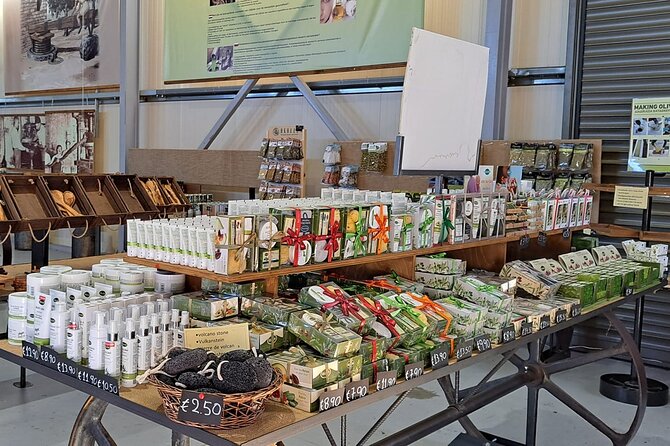
The day begins at Omalia Olive Press, where you spend about an hour learning how olive oil is produced and tasted. This is a useful first stop because olive oil is not just a souvenir or table condiment in Crete. It is part of the island’s food culture and daily cooking.
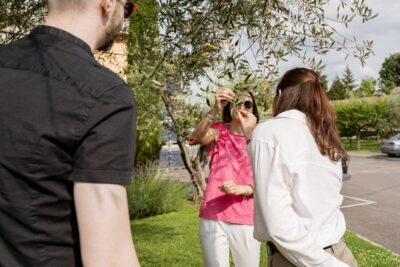
The tasting is hands-on in a simple way. You warm the oil in your hand, smell it, then take a small sip. Your guide explains the qualities to notice, including fruitiness, bitterness, and pepperiness. Those sharp or bitter notes can be surprising if you are used to bland supermarket oil.
You also learn the difference between extra virgin, virgin, and refined olive oil. That short lesson helps you read labels and make better choices later, either at home or in a Greek market.
I like this stop because it gives meaning to something you will see everywhere in Crete: olive trees. It is also a good chance to ask questions early in the day, while the group is still getting comfortable with the guide.
The limitation is that an olive press visit may appeal more to food lovers than to anyone focused only on monuments. If you already know a great deal about olive oil, this hour may feel less essential. For most people, though, it adds a strong local touch.
Windmills and the wide views of Lasithi Plateau
The next stop lasts about 30 minutes and focuses on the windmills of Lasithi Plateau. These old machines were used to grind wheat and other grains, and they help explain the working life of the plateau.
The windmills are not simply decorative photo stops. They point to the way people once used wind power for basic farm work. Your guide can place them in the wider story of the area and explain why they mattered to local communities.
You will have time to see the structures up close and take in the mountain setting. The visit is short, so think of it as an introduction rather than a full historical tour.
Lasithi Plateau is one of the strongest parts of this excursion because the route does not rush straight from one major attraction to another. You get a sense of the area’s farms, villages, and older traditions. That context makes the later stops feel connected rather than random.
Zeus Cave and the myth of Dikteon Cave
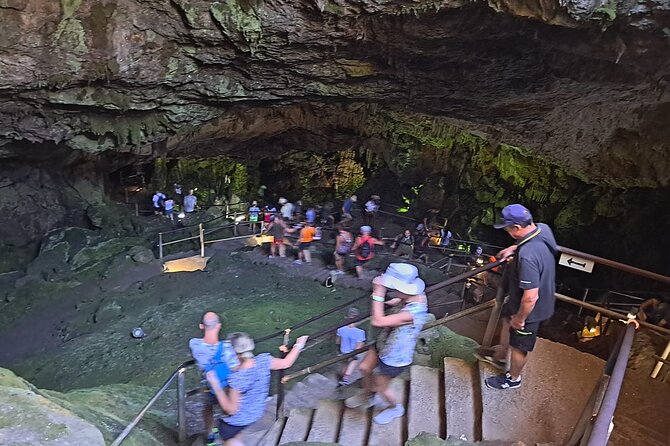
The longest stop in Lasithi is Zeus Cave, also called Dikteon Cave. The scheduled time is about two hours, and admission is not included in the tour price.
The cave is tied to the Greek myth that Zeus was born here. That connection gives the site unusual appeal. You are not visiting only a natural cavern, but a place linked to one of the best-known stories in Greek mythology.
The setting also offers a change of mood. After the open plateau and the olive press, you enter a place shaped by rock, darkness, and ancient belief. History fans, mythology enthusiasts, and people who enjoy natural sites will get the most from this part of the day.
Because two hours are allowed, the cave is not treated as a quick roadside stop. You have time to take in the site and its setting without being pushed immediately back into the vehicle. The admission charge is separate, so check the current cost when you book or before the day begins.
This is one point where the full itinerary can feel demanding. The cave, pottery workshop, lunch, villages, dam, and Knossos all compete for your attention. If you prefer to spend half a day at one ancient site, this route will not provide that kind of focus.
More Olive Mill and Factory Tours in Heraklion
- Heraklion: Knossos Zeus Cave Villages Olive Oil Factory Tour
★ 5.0 · 126 reviews - Road-trip to Lasithi, Zeus Cave, Vidiani, Krasi & Olive Mill Farm
★ 4.0 · 79 reviews - Knossos, Lasithi, Zeus Cave & Olive Mill Farm Combo Tour
★ 4.5 · 46 reviews - PRIVATE-Winery+Olive Oil Factory-Old Villages-Old Wind Mills
★ 5.0 · 26 reviews
Pottery, coffee, and village life in Psychro
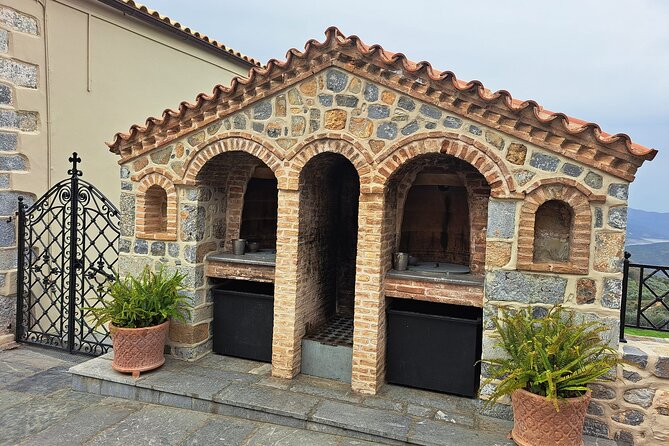
In Psychro, the tour turns to pottery. You see how local clay is selected and shaped on a wheel, using methods passed through generations. The visit lasts about 30 minutes and admission is included.
This stop works well after Zeus Cave because it brings you back to a living craft. Archaeological sites show what people made long ago. A working pottery shop shows how skills can continue in village life today.
You may have the chance to buy a piece to take home, although the experience is not mainly a shopping stop. I would treat it as a short cultural visit and a look at the patience behind handmade objects.
The group then pauses at Lasithi Mesa for about 30 minutes. Here, the focus is a traditional Greek kafeneio, or coffeehouse. You can have Greek coffee, sit with a glass of cold water, and watch a familiar part of local social life.
A kafeneio is not designed like a modern coffee chain. It is a place for conversation, backgammon, newspapers, and quiet routine. This brief stop gives you a feel for the rhythm of village life without requiring a formal performance or staged activity.
The tour can also include Greek yogurt and visits to local markets or bakeries, based on how the day is arranged. Since the advertised route allows some flexibility, tell your guide what interests you. The more clearly you explain your priorities, the easier it is to make the most of a busy schedule.
A traditional Cretan lunch at Restaurant Tzanakis Michael
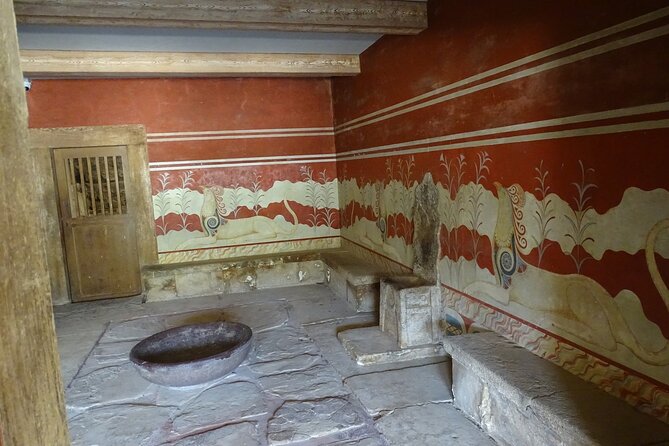
Lunch at Restaurant Tzanakis Michael is planned for about an hour and is not included in the tour price. It is described as an optional traditional meal, so budget extra if you want to eat at the tavern.
The menu may include familiar Greek dishes such as moussaka, with eggplant, minced meat, and béchamel, or stifado, a slow-cooked beef stew with onions and cinnamon. These dishes offer a more substantial taste of Cretan cooking than a quick snack between sights.
The meal is valuable because it gives the day a proper pause. You can sit down, eat local food, and talk with the guide rather than spending every minute moving from one stop to the next.
Still, clarify the lunch arrangement before setting out. The menu, price, and exact meal choices are not specified. If you have dietary needs, raise them with the tour operator in advance rather than waiting until you arrive.
Krasi and its ancient plane tree
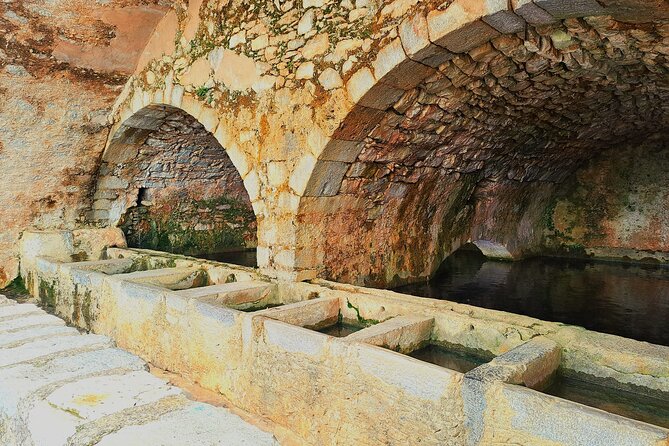
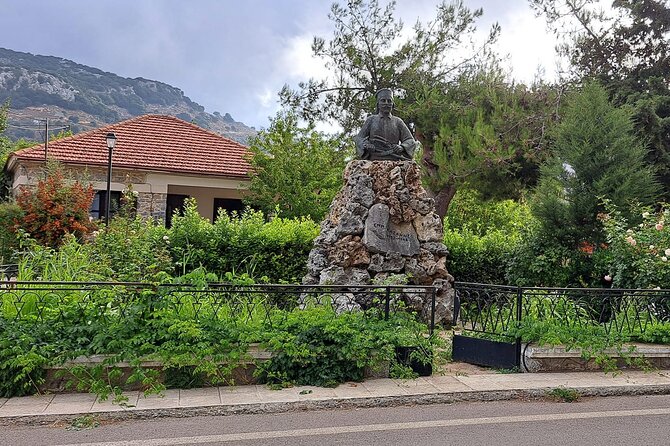
The village of Krasi gets about 20 minutes. That is enough for a short walk through its traditional architecture and a look at the famous plane tree.
The tree is estimated to be more than 2,400 years old and is described as one of the oldest and largest in Europe. Its huge trunk and broad canopy have long made it a gathering place for village life.
This is a small stop, but it has a nice sense of place. You see a village landmark that is not another palace, church, or museum. Bring your camera, but do not expect a long guided visit. Twenty minutes goes quickly.
The route also passes through olive groves. That may sound simple, yet it ties together the day’s themes: agriculture, village life, food, and the way Crete’s countryside supports its communities.
Aposelemis Dam and a short scenic pause
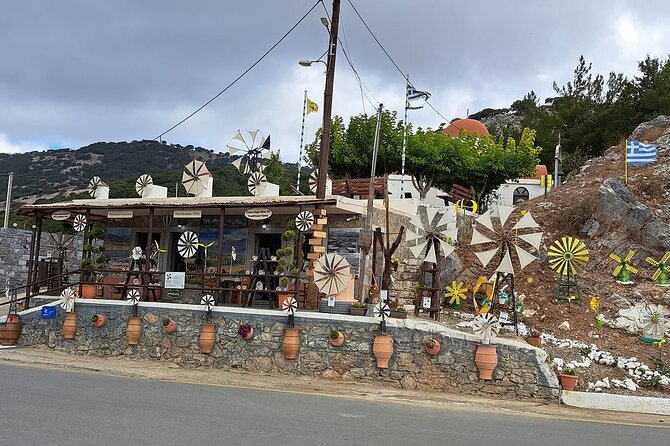
At Aposelemis Dam, you stop for about 10 minutes. The guide explains the dam’s construction, its role in local water supply, and measures intended to protect the surrounding natural habitat.
The reservoir and mountains provide a calm setting for photographs. The water reflects the sky and hills, offering a visual break before the final major sight.
Ten minutes is brief, so do not expect a long walk or a detailed environmental visit. Think of it as a viewpoint and orientation stop. It works best if you enjoy seeing how modern infrastructure fits into the island’s natural setting.
Finishing at the Knossos Archaeological Site
Knossos is the grand finale, with about 90 minutes at the site. Admission costs €20 per person and is paid separately.
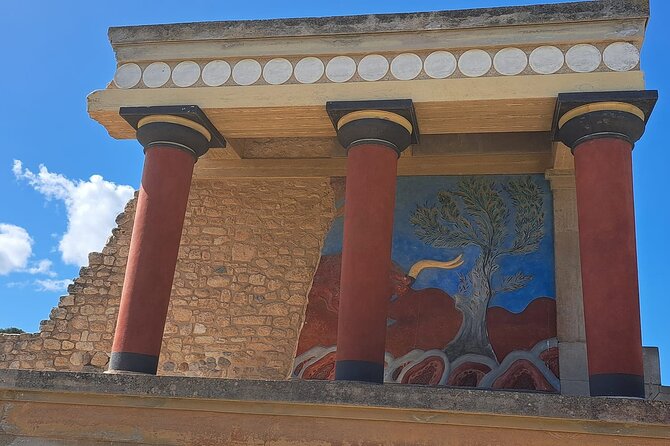
This is Crete’s essential ancient stop. Knossos served as the ceremonial and political center of the Minoan civilization, and the palace dates to around 1900 BC. It is often described as Europe’s oldest city and the largest Bronze Age archaeological site in the world.
You explore parts of the palace complex such as the Throne Room, Grand Staircase, Royal Apartments, and Central Court. The frescoes are among the most memorable features, with their bright colors and scenes connected to Minoan life.
The site is also tied to the myth of the Minotaur and the labyrinth. The ancient remains and later myths meet here, making Knossos especially appealing if you enjoy the point where archaeology and storytelling overlap.
Ninety minutes is enough for a useful overview, especially with a guide explaining what you are seeing. It is not enough for every corner of the complex or a slow archaeological study. If Knossos is your main reason for booking, consider visiting separately so you can spend longer there.
Ending at Knossos has one practical advantage: the earlier stops build your understanding of Crete before you reach its most famous monument. You have already seen farming traditions, tasted olive oil, visited villages, and heard about local customs. The palace then feels like part of a larger Cretan story rather than an isolated ruin.
Price, timing, and what you really pay
At $138.47 per person, this is not a cheap half-day outing. It is a full-day experience with accommodation pickup, transportation in a Mercedes-Benz, an English-speaking driver-guide, taxes, liability insurance, coffee, and water.
The price is easier to justify if you plan to visit several of these places anyway. Hiring separate transport to Lasithi Plateau, Zeus Cave, village stops, and Knossos would take planning, and you would lose the benefit of a guide who knows how to connect the stops.
Remember the extras:
- Knossos admission is €20 per person.
- Zeus Cave admission is not included, though no price is given.
- Lunch is optional and paid separately.
- Olive press and pottery admission are included.
- Pickup is included only from accommodation in the Heraklion area.
The route lasts about seven to eight hours. Since the listed stops add up to a full day, wear comfortable shoes and expect regular time in and out of the vehicle. The tour requires good weather and may be canceled if the minimum number of participants is not reached. In either case, you are offered another date or a full refund.
Free cancellation is available up to 24 hours before the start time. Changes or cancellations inside that window are not accepted for a refund.
Who should book this experience
I would choose this tour if you are staying in Heraklion and want one organized day that covers both famous sights and smaller local experiences. Families may like the easy pickup and the guide-led format, while couples and first-time visitors can use the route to get their bearings beyond the city.
It also suits anyone who values food and everyday culture as much as ancient stones. Olive oil, Greek coffee, pottery, yogurt, village taverns, and local customs give the day a human scale.
I would think twice if you dislike full schedules or want long, quiet visits at archaeological sites. The route covers a lot, and Knossos receives only about 90 minutes at the end. Also, the pickup area is limited, so this is not a practical choice if you are staying in Chania, Rethymno, Agios Nikolaos, Sitia, Ierapetra, or near Souda port.
Should you book the Lasithi Plateau and Knossos tour?
Book it if you want a broad, friendly introduction to central Crete and prefer having transport and a local guide handle the day. The strongest reasons are the small group, the mix of village life and major sights, and the chance to learn about olive oil, food, pottery, and Cretan customs along the way.
Skip it if your priority is a slow, detailed visit to Knossos or a relaxed day with only one or two stops. For everyone else, the route offers good value once you account for transport, the number of places covered, and the personal guidance. Just add the entrance fees and lunch to your budget, and expect a busy but rewarding day.
FAQ
How long does the tour last?
The experience lasts approximately seven to eight hours.
Where does pickup take place?
Pickup and drop-off are offered from accommodation in the Heraklion area.
Does the tour pick up in Chania or Rethymno?
No. Pickup is not offered from Rethymno, Chania, Souda port, Agios Nikolaos, Sitia, or Ierapetra.
Is transportation included?
Yes. Transportation in a Mercedes-Benz vehicle, accommodation pickup and drop-off, taxes, liability insurance, coffee, and water are included.
Is the Knossos entrance fee included?
No. Knossos admission costs €20 per person and is paid separately.
Is lunch included?
No. Lunch at the traditional tavern is optional and not included in the tour price.
What language is the tour offered in?
The tour is offered in English with a local English-speaking driver-guide.
More Knossos Palace Tours around Heraklion
- The valley of Zeus (Olive oil, wine tasting)-Knossos palace tour
★ 4.5 · 27 reviews - Knossos Palace and/or Zeus Cave + Olive Mill | Local & Private
★ 5.0 · 21 reviews - Private Tour-Knossos Palace Zeus Cave&Olive Oil Mill from Elounda
★ 5.0 · 14 reviews - Ecobike-Knossos Palace-Wine tasting-Olive oil tasting
★ 5.0 · 9 reviews
More Traditional Village Tours in Heraklion
- Knossos & Lasithi Plateau: Zeus Cave,Villages, Olive Oil Tour
★ 5.0 · 328 reviews - PRIVATE-South Crete-Matala Beach-Olive oil- Wine-Old Villages
★ 5.0 · 19 reviews - Lasithi – Zeus Cave -Olive Oil Factory – Traditional Villages
★ 5.0 · 10 reviews - Private-Knossos Palace-Zeus -Villages-Olive Oil Factory
★ 5.0 · 7 reviews
Newest grove reviews around Heraklion
- Myths, Villages, & Olive Oil: Exploring Lassithi Plateau Secrets★ 5.0 · 2 reviews
- Cretan Flavors – Cooking Lessons and Wine Olive Oil Tasting★ 5.0 · 9 reviews
- Afternoon Tour: Soap, Olive Oil & Wine Stories of Peza Village★ 5.0 · 4 reviews
- Spinalonga,Elounda,Ag.Nikolaos, Olive Factory Tour From Heraklion★ 4.0 · 2 reviews
- Small Group Tour to Knossos Palace Lasithi Plateau & Olive Mill★ 5.0 · 3 reviews
- Heraklion:Olive & Dragon Fruit Farm Tour & Cretan Farmers Brunch★ 4.0 · 2 reviews
- Private Tour, Olive Mill, Scotino Cave, Lasithi Plateau Half day.★ 4.5 · 5 reviews
- Experience of Olive Oil Tasting Crete , Visit the Knossos Palace★ 5.0 · 2 reviews
Olive Mill and Factory Tours, compared.
Knossos-Zeus Cave -Old Traditional Villages-Olive Oil Factory
Read our review →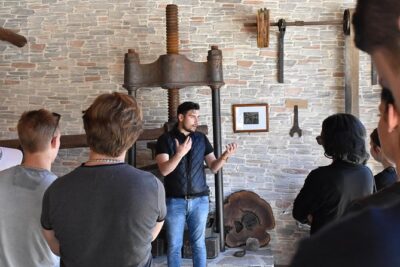
The Governor’s Olive Mill Tour with Olive Oil Tasting
Read our review →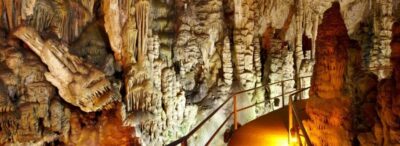
Road-trip to Lasithi, Zeus Cave & Olive Mill Farm
Read our review →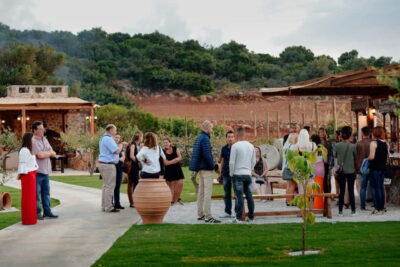
Lassithi, Zeus Cave, Olive Mill Farm & Knossos Combo Tour
Read our review →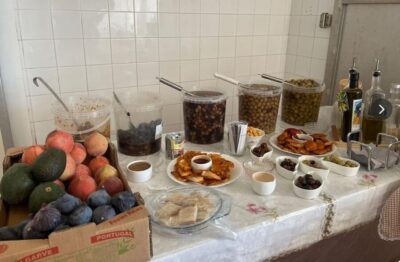
Lake Garda Oil Mill Tour with Olive Oil Tasting
Read our review →Browse the lists this tour appears in