
Review · OLIVE MILL AND FACTORY TOURS
Olive Oil Tasting & Mill Guided Visit in Perugia
The most memorable part of this Perugia experience is the setting: you taste modern Umbrian olive oil inside a working family mill with roots reaching back to the 1300s. Alessandro Trampolini explains the oils and the machinery with clear enthusiasm, making this more than a quick shop tasting.
I like the chance to compare single-cultivar oils such as Frantoio, Moraiolo, and Dolce Agogia, and I like the old presses, terracotta jars, and separators that give the tasting a real sense of place. The main thing to consider is access: parking at the mill can feel tight during harvest, so you may need to use a larger lot farther down the hill and walk back.
Key points
- Taste more than five oil styles: Compare single-origin cultivars, blends, organic oils, family reserves, and 10 spiced or flavored versions.
- Visit a mill dating to the 14th century: See an Assisi stone mill, early centrifugal separators, and old terracotta storage jars.
- Expect a generous food pairing: Bruschetta, olive pâtés, olive preserves, truffle sauces, cured meats, and local cheeses are included.
- Meet a hands-on host: Alessandro explains production methods, oil pairings, and the Trampolini family’s connection to the mill.
- Keep the group small: The visit accepts no more than 10 people and runs for about 90 minutes.
- Plan your arrival: The mill is about four minutes by car from central Perugia and within walking distance of the city center, but the entrance is through an arch.
A 14th-century mill near Perugia
Antico Frantoio Trampolini is near the historic Templar Abbey of San Bevignate, a short distance from Perugia’s center. The mill has produced olive oil since the 1300s, and the Trampolini family has cared for it since 1785.
That family connection matters. You are not visiting a display made only for tourists. The site combines production, family history, retail, and a small museum of olive oil. The older objects are not just decorative props. They show how olives were pressed, stored, and separated before modern equipment changed the work.
The entrance is easy to miss if you are driving. You enter through an arch to reach the shop and meeting point, then show your ticket for the visit and tasting. If you are coming by car, take a careful look before turning into the yard. The space may be crowded during the harvest period, particularly when preparations are under way.
The mill is described as about four minutes by car from central Perugia and within walking distance of the city center. The exact feel of that walk depends on where you are staying and how comfortable you are with Perugia’s slopes, so check your route before setting off. A larger parking area farther down the hill can be useful if the mill yard looks full.
More Olive Mill and Factory Tours in Italy
- Bardolino: Lake Garda Oil Mill Tour with Olive Oil Tasting
★ 4.9 · 205 reviews - Lecce to Galatina E-Bike: Olive Mill & Wine Tasting + Taxi back
★ 5.0 · 54 reviews - Olive Oil Tour Visit to the oil mill and olive oil tasting
★ 5.0 · 53 reviews
Alessandro’s introduction to Umbrian oil
The visit begins with a guided tour lasting about 30 minutes. Alessandro is the guide named for this experience, and his role is more than simply pointing out old equipment. He explains how olive oil is made and connects the machinery to the products you will taste afterward.
That order is helpful. You first learn what changes an olive into oil, then you have a better basis for noticing differences in aroma, flavor, and strength. If you have only used olive oil as a general cooking ingredient, this is the point where the tasting becomes more useful.
The mill’s story reaches across several periods. You can see a 13th-century Assisi stone mill, early 20th-century centrifugal separators, and terracotta jars from the 17th and 19th centuries. Together, these objects show the shift from heavy traditional pressing to early mechanical methods.
I like the way this adds a practical layer to the visit. A bottle on a shop shelf tells you very little about the labor behind it. Here, the old equipment gives you a sense of the physical work involved, while the newer artifacts show how producers began improving speed and separation.
Alessandro may also use videos to explain the full production process. That can help you connect the historic machinery with current methods, especially if a particular step is hard to understand from equipment alone. His explanations are offered in English or Italian, so check your preferred language when booking.
The group limit is 10 people. That is small enough for questions without making the visit feel like a large presentation. One reported visit had only the participants and the owner, but you should not assume every departure will be private. The small-group limit does make personal conversation more likely.
Comparing Leccino, Frantoio, and other cultivars
The tasting lasts about 45 minutes and forms the heart of the experience. You sample five or more oils, including single-origin cultivars, blends, organic selections, and spiced or flavored oils.
The named cultivars include:
- Leccino
- Frantoio
- Dolce Agogia
- Moraiolo
- Peranzana
- Nocellara
This range gives you a useful comparison. Single-cultivar oils let you notice how the olive variety affects the final product. Blends such as Generoso and Armonioso show how producers combine oils to create a chosen balance. The Family Reserve and organic selections add another point of comparison.
You are not limited to plain oils. The tasting also includes 10 spiced and flavored versions. These are useful if you enjoy experimenting in the kitchen, though they serve a different purpose from the single-origin oils. A flavored product is designed around an added ingredient, while a cultivar tasting focuses on the character of the olive itself.
I would pay close attention to the order in which Alessandro presents the oils and to the food he pairs with each one. One of the most useful features is the explanation of why a particular oil works with a certain dish. That gives you advice you can use after returning home, rather than leaving you with only a list of products you liked.
The oils are paired with bruschetta and crostini. Bread gives you a simple base for comparing texture, bitterness, fruitiness, and peppery notes. You can also try black and green olive pâtés, olive preserves, and truffle sauces.
A note about terminology: the tasting is described as including bruschetta, crostini, and spreads, so expect a series of small food pairings rather than a full restaurant meal. The food is substantial enough to make the visit feel generous, but you should not book it as a replacement for lunch or dinner.
Truffle sauces, cheese, and local cured meats
The charcuterie board adds another layer to the tasting. It includes locally sourced cured meats and cheeses, with the goal of showing how olive oil behaves alongside salty, creamy, and savory foods.
I like this part because it helps you think beyond dipping bread. A bold oil may work well with a strong food, while a lighter one may be easier to appreciate on a simple crostino. The olive pâtés and preserves also show how the olive can appear in several forms, not just as oil.
Vegetarian visitors should mention their needs in advance. The experience can accommodate a vegetarian request, but the standard food selection includes cured meats, so advance notice is the sensible way to ensure the tasting works for you.
A United States visitor specifically appreciated the extensive tasting and the ability to ask questions about the products. That is a useful clue about the style of the visit: it is not simply a staff member pouring samples while you browse. You have time to connect the food, the oil, and the production method.
The inclusion of truffle sauces is particularly appropriate for Umbria, where truffle products are a familiar part of local food culture. Still, the star of the tasting remains the olive oil. If you are mainly interested in truffles or charcuterie, this may feel too focused on oil. If you want to understand Umbrian ingredients through one central product, the balance works well.
Same groves, a different afternoon:
- Sorrento Farm and Food Experience including Olive Oil, Limoncello, Wine tasting
★ 5.0 · 2,524 reviews - Olive oil tasting in Sorrento
★ 5.0 · 434 reviews - Sorrento: Lemon, Olive Oil and Wine Tasting Tour with Lunch
★ 5.0 · 300 reviews - Alghero: Wine and Olive Oil Tasting at a Local Farm
★ 4.8 · 294 reviews
What the 90-minute schedule feels like
The full activity lasts about 1.5 hours. A typical flow is 30 minutes for the mill tour, 45 minutes for the food and oil tasting, and about 15 minutes to walk around the site and return to the starting point.
The timing is well suited to a day in Perugia. It is long enough to explain the mill and taste a good range of products, but short enough to fit between sightseeing stops. You can add it to a morning or afternoon without giving up half a day.
The final 15 minutes include walking and scenic views on the way back to Antico Frantoio Trampolini. Do not read this as a countryside hike. It is a short part of the visit, intended to bring you back to the starting point rather than provide a separate outdoor excursion.
Wheelchair access is available, which is important for many visitors. Since the site includes an old mill and an entrance through an arch, it is still sensible to confirm any particular access needs before arrival. The supplied details confirm accessibility, but they do not describe every surface or route within the historic building.
Is $53 a fair price?
At $53 per person, the price is reasonable if you value both the tasting and the guided museum visit. You are paying for a small group, a live guide, several oil categories, a food spread, and access to a historic site with old production equipment.
The value is strongest for people who would otherwise buy several bottles without knowing how the oils differ. You receive an introduction to cultivars, blends, flavored oils, and food pairings in one sitting. If you purchase a bottle afterward, the tasting can help you choose based on how you plan to use it.
The price includes the guided tasting, crostini and spreads, the charcuterie board, and access to the olive oil museum. It does not include transport, extra food or drinks, personal purchases, or bottles and other products you may want to take home.
That last point is worth planning for. You may be tempted to buy oil after learning about the varieties, but purchases are separate. The experience is still worthwhile if you buy nothing, since the tour and tasting have their own value. If you are trying to keep spending low, set a souvenir budget before entering the shop.
For a quick oil sample in a retail store, $53 would be high. For a 90-minute small-group visit that combines food, history, production methods, and guided comparisons, the cost is easier to justify.
Who will enjoy this visit most?
I would choose this for anyone interested in Italian food beyond the usual pasta and wine circuit. It is especially suitable for people who enjoy learning how a local product is made, then tasting it in several forms.
Food-focused visitors will appreciate the oils, truffle sauces, cheese, and cured meats. History fans will enjoy the old presses, jars, and separators. Couples and small groups can fit it neatly into a Perugia sightseeing day without committing to a long excursion.
It also suits curious beginners. You do not need to know the difference between Frantoio and Moraiolo before arriving. The guided comparison gives you a starting point, and the bread and toppings make the tasting less formal than a technical oil class.
I would be more cautious if you want a broad Umbrian food tour. This experience has a clear subject, and nearly everything circles back to olive oil. It may also be less convenient for visitors with a large campervan, since the mill yard can be crowded around harvest time. Use the larger parking area farther down the hill if needed.
The small-group format is a real advantage. With up to 10 people, you have a better chance to ask about production, storage, cooking, and pairings. Alessandro’s enthusiasm is part of the experience, so this is a good choice if you prefer a personal introduction from an owner and guide rather than a self-guided display.
Practical details before you go
Book a starting time that leaves room around the visit. The tour itself is 90 minutes, but you need extra time if you are walking from central Perugia or parking away from the mill.
The meeting point is Antico Frantoio Trampolini. Enter through the arch to reach the shop, and have your ticket ready for the guided visit and tasting.
The tour is available in English and Italian. A live guide leads the experience, and the group size is limited to 10 people. Wheelchair access is listed as available.
The activity allows free cancellation up to 24 hours before the start time, and you can reserve now and pay later. Those terms are useful if your Perugia plans may shift, though you should still check the exact departure time and conditions when booking.
Bring an appetite, but not the expectation of a full meal. The food includes crostini, spreads, cheese, cured meats, and truffle sauces, while additional food and drinks cost extra.
Should you book the Antico Frantoio Trampolini visit?
I would book it if you want a focused, personal look at Umbrian olive oil and have about 90 minutes in Perugia. The combination of a 14th-century mill, hands-on explanations from Alessandro, a broad tasting, and generous food pairings gives the visit more substance than a standard shop sample.
The best reason to go is the connection between the objects and the food. You see how olive oil production changed, then taste the results across cultivars, blends, and flavored versions. That makes the experience useful even after you leave Umbria.
Skip it if you are looking for a full meal, a large-scale countryside tour, or a broad survey of every Umbrian specialty. Also plan carefully if you are driving a large vehicle during harvest. For most food-minded visitors staying in or near Perugia, however, this is a smart small-group addition to the city itinerary.
FAQ
Where does the olive oil experience take place?
It takes place at Antico Frantoio Trampolini in Perugia, near the historic Templar Abbey of San Bevignate.
How long does the visit last?
The experience lasts about 1.5 hours. The planned schedule includes a 30-minute guided tour, a 45-minute food tasting, and about 15 minutes of walking back to the starting point.
How much does the experience cost?
The listed price is $53 per person.
What languages are available?
The live tour guide service is available in English and Italian.
How many people are in the group?
The group is limited to 10 participants.
What foods are included?
The tasting includes bruschetta or crostini, black and green olive pâtés, olive preserves, truffle sauces, cured meats, and cheeses.
How many olive oils can I taste?
You can taste five or more olive oils, including single-origin cultivars, blends, organic selections, and 10 spiced or flavored oils.
Is transportation included?
No. Transportation to and from the mill is not included. The location is described as about four minutes by car from central Perugia and within walking distance of the city center.
Is the mill wheelchair accessible?
Yes. The activity is listed as wheelchair accessible.
Can I cancel the booking?
You can cancel up to 24 hours in advance for a full refund. The experience also offers a reserve-now, pay-later option.
Newest grove reviews around Italy
- Buti: Olive Oil Ancient Mill Tour and Tasting Experience★ 5.0 · 2 reviews
- Cagliari: Wine and Olive oil Experience + Oil Mill Museum★ 5.0 · 2 reviews
- Bevagna: Olive Oil Mill Tour with Guided Tasting★ 5.0 · 6 reviews
- Bari: narrated extra virgin olive oil tasting with aperitif★ 4.5 · 3 reviews
- Olive Mill Tour and Tasting in the Verona Countryside★ 5.0 · 9 reviews
- Puglia Olive Oil Tasting Experience with Olive Grove Walk★ 4.5 · 10 reviews
- Visit olive groves and oil mill with oil tasting in Trevi in Umbria★ 5.0 · 5 reviews
- Ostuni: Guided e-bike tour to rock village & olive trees★ 4.5 · 10 reviews
Olive Mill and Factory Tours, compared.
Knossos-Zeus Cave -Old Traditional Villages-Olive Oil Factory
Read our review →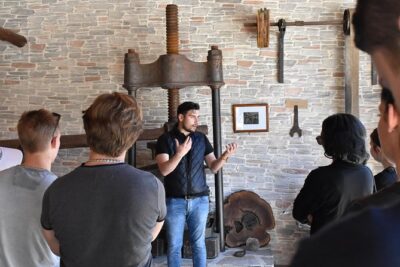
The Governor’s Olive Mill Tour with Olive Oil Tasting
Read our review →
Road-trip to Lasithi, Zeus Cave & Olive Mill Farm
Read our review →
Lassithi, Zeus Cave, Olive Mill Farm & Knossos Combo Tour
Read our review →
Lake Garda Oil Mill Tour with Olive Oil Tasting
Read our review →Browse the lists this tour appears in