
Review · OLIVE MILL AND FACTORY TOURS
Olive Mill Tour with Olive Oil Tasting in Sassari
The most interesting part of this Sassari olive mill tour is the link between old and new. You walk among centuries-old trees, then see a modern pressing facility built to protect the flavor of Sardinia’s Bosana olives.
I like the quiet stroll through the groves and the final tasting, where bread and naturally salted olives help you notice small changes in aroma, flavor, and texture. I also like the short one-hour format, which fits neatly into a day of sightseeing around northern Sardinia.
The main drawback is timing. Outside the olive harvest, the machines may be clean and idle, so you learn the production process in theory rather than watching olives become oil. The tasting also depends on stock, and two of the three oils were unavailable during one September visit.
Key points to know before you book
- Bosana olives take center stage: Learn why this Sardinian variety gives the oil its own character.
- Ancient groves meet modern machinery: The visit combines a peaceful walk with a look at a current pressing facility.
- The tasting is simple and local: Expect fresh bread, naturally salted Bosana olives, and three olive oils when all are available.
- One hour is enough for a focused visit: This suits a morning or afternoon stop rather than a full agricultural outing.
- Harvest timing matters: Outside the season, you may see the equipment but not live milling.
- You arrange your own transport: The olive mill is outside Sassari, and getting there is not included.
From Sassari to Sardinia’s Bosana olive country
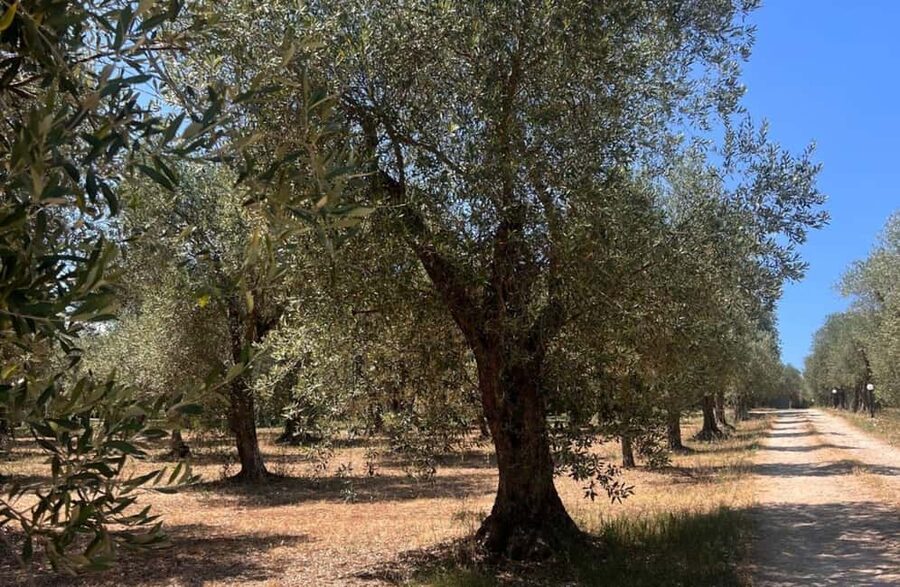
This experience takes place just outside Sassari, in northern Sardinia. That location matters because you are not sitting in a town tasting room with only a bottle and a story. The visit begins among old olive trees, where the setting helps explain why olive oil is such a basic part of local food culture.
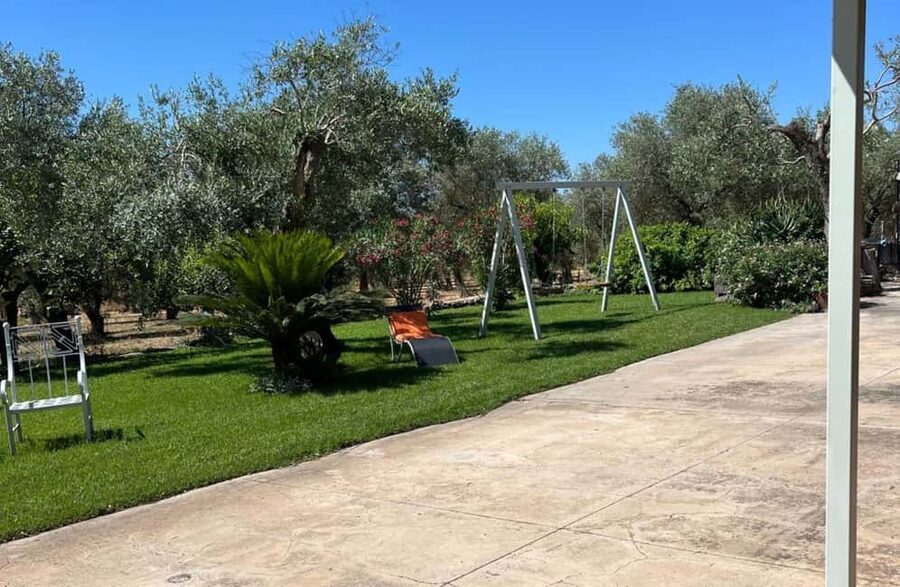
The walk through the grove is gentle but practical. You need comfortable shoes and clothes, since the route passes through an agricultural setting rather than a polished indoor attraction. The peaceful grounds are part of the experience, especially if you have spent the morning in busy city streets or on crowded roads.
Your English or Italian speaking guide introduces the Bosana olive, an important Sardinian variety. The focus is not simply on naming the tree. You learn about its cultivation and the features that give its oil a particular aroma, flavor, and feel on the palate.
The material also refers to Bosana de-foamed olives. That wording points to a production detail connected with keeping the oil clean and true to its character. Your guide explains the process in plain terms, and you can ask questions as you go. One guide received especially positive feedback for answering every question patiently and making visitors feel at ease.
More Olive Mill and Factory Tours in Italy
- Bardolino: Lake Garda Oil Mill Tour with Olive Oil Tasting
★ 4.9 · 205 reviews - Lecce to Galatina E-Bike: Olive Mill & Wine Tasting + Taxi back
★ 5.0 · 54 reviews - Olive Oil Tour Visit to the oil mill and olive oil tasting
★ 5.0 · 53 reviews
Walking through centuries-old olive groves
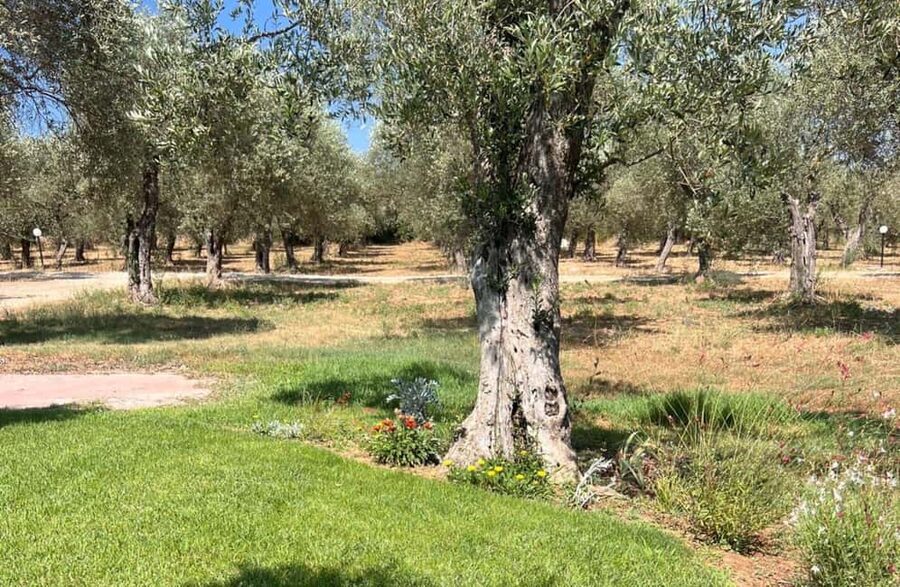
The grove is the most atmospheric part of the visit. You get a chance to look at the trees themselves before discussing the machinery that handles the fruit. That order is useful because it connects the finished bottle with its source.
Do not expect a long countryside hike. The full activity lasts about an hour, so the grove walk is a short introduction rather than a major walking excursion. Still, it gives you time to notice the age of the trees and the quiet around the mill.
I like this part because it keeps the tour grounded. Olive oil can seem abstract when you only see it in a shop. Here, you begin with the trees, then follow the path toward the pressing equipment and the tasting table.
Weather can change this portion. If rain or unsafe conditions make access difficult, the grove walk may be left out. The tour can still focus on the mill and the tasting, but you should not book it solely for outdoor time if the forecast looks poor.
Inside the modern olive pressing facility
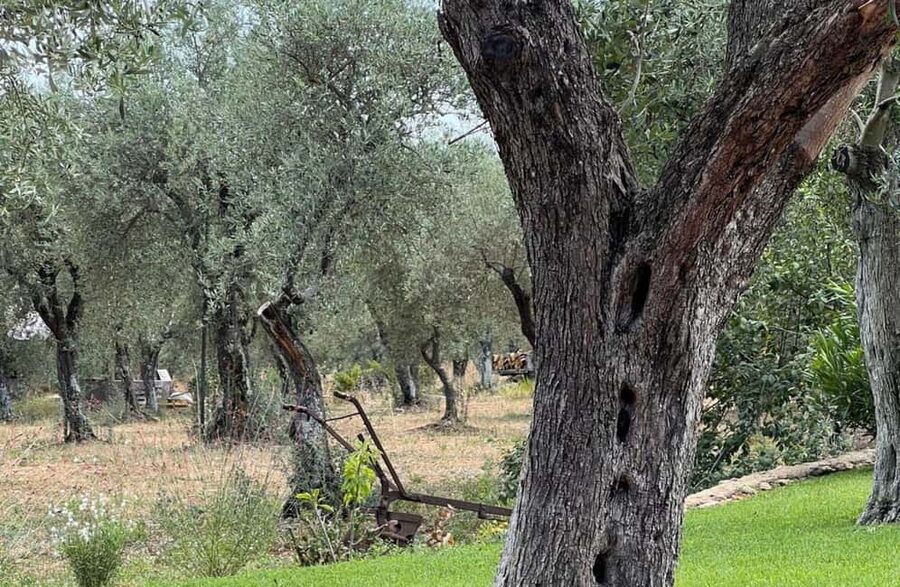
After the grove, the guide shows you the pressing facility. It is described as a traditional olive mill with modern equipment, a combination that gives the visit its best practical lesson.
You see the machines and learn how the different production steps protect the quality and authenticity of extra virgin olive oil. The equipment is designed to process the olives carefully, and the guide explains how the fruit moves through the facility.
The timing of your visit makes a real difference here. During the harvest, you may get a stronger sense of a working mill, with active production providing a visual connection between the olives and the oil. Outside harvest season, the machinery may be clean and unused. In that case, the tour becomes a demonstration of the process rather than a chance to watch it happen.
That limitation should be clear when you decide how much to pay for the experience. One September visit took place outside the harvest period. The visitor saw the equipment and received a useful explanation, but did not see actual production. If operating machinery is your main reason for coming, contact the provider before booking to ask about the current milling season.
Even when the machines are idle, this section can still help you understand what separates a carefully produced extra virgin oil from a generic cooking oil. The value lies in seeing the setting and asking questions, not just in watching buttons being pressed.
The Bosana oil tasting
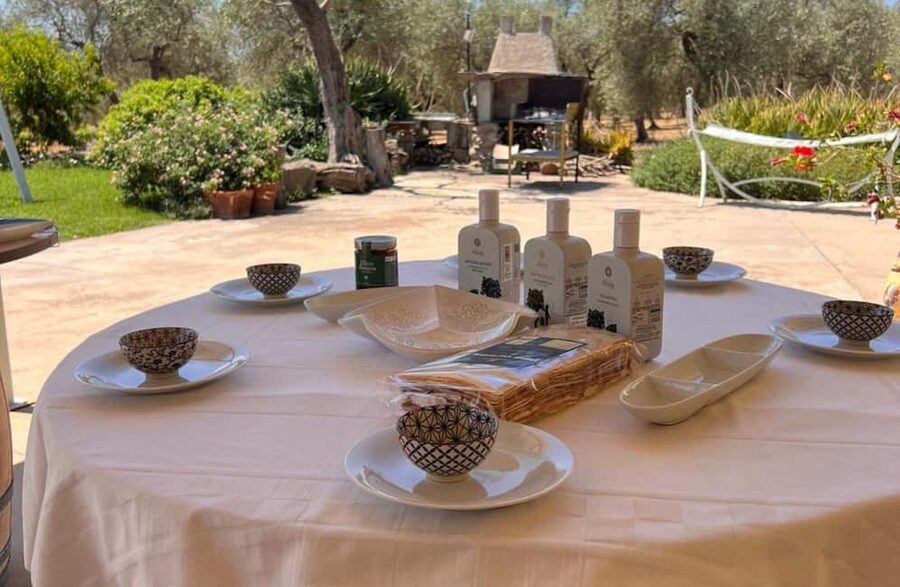
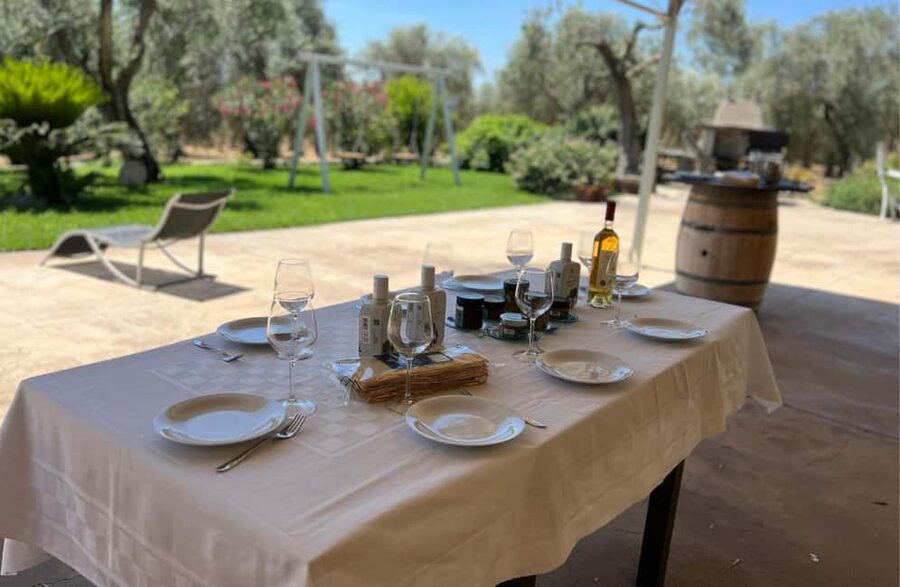
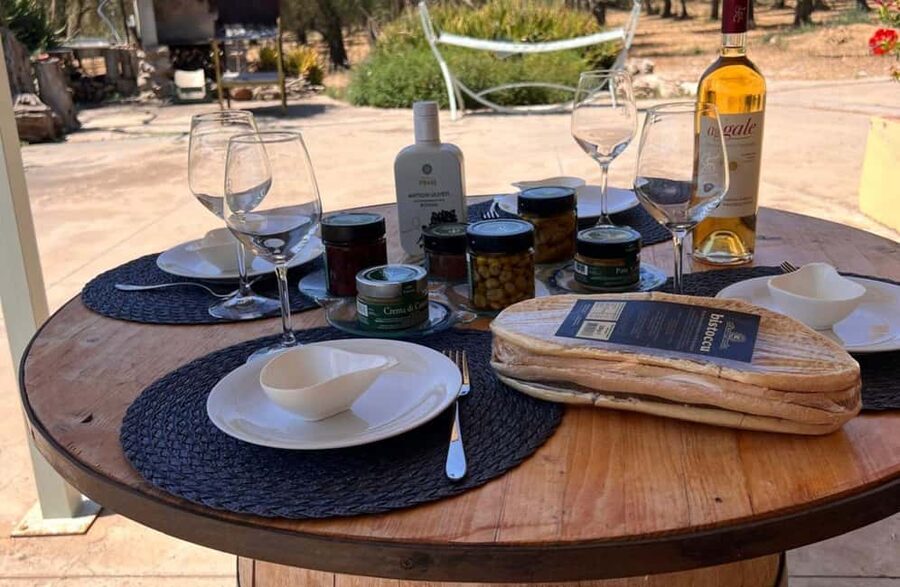
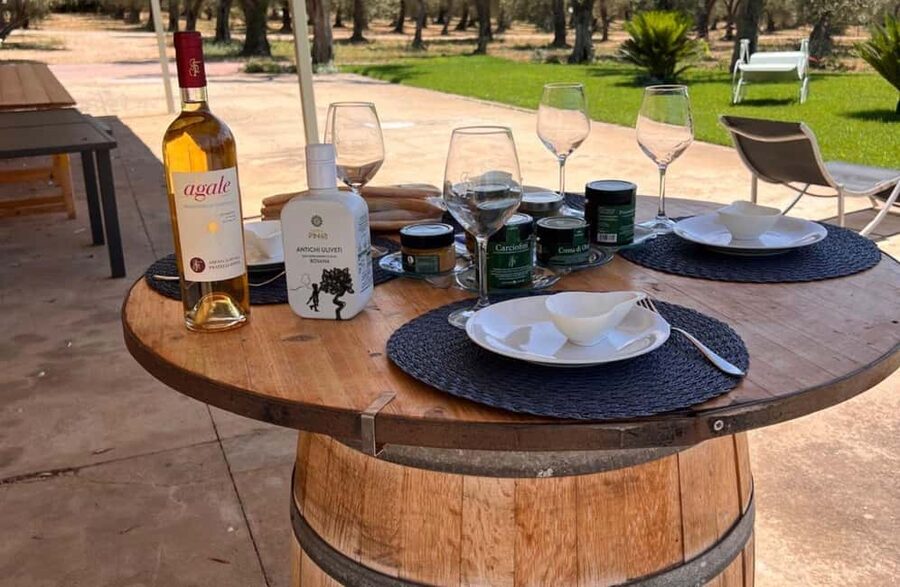
The tasting closes the visit, and it is where the information becomes personal. You receive fresh local bread, naturally salted Bosana olives, and three different olive oils when the full selection is available.
Bread is a useful tasting tool because it gives the oil a neutral base. The olives add salt and texture, while the oils let you compare the differences directly. Pay attention to the smell first, then the taste, then the texture as the oil moves across your palate.
The goal is not to identify a single correct answer. You are looking for contrasts. One oil may seem softer, another more intense, and another more peppery or grassy. The guide can help explain what you are noticing and connect those differences to the olive variety and production method.
The Bosana olives served alongside the oil make the tasting feel local rather than generic. You are not simply sampling a product from a shelf. You are trying the fruit and the oil made from it in the same setting.
Stock is the weak point. The experience is planned around three oils, but two of the three were unavailable during one visit, leaving only one oil to taste. That is a serious reduction in value when the tasting is one of the central parts of the hour.
The oil that was available was described as delicious, so the problem was not quality. It was selection. If the three-oil comparison matters to you, ask about current availability before paying, especially if you are visiting near the end of a season or outside the main production period.
Same groves, a different afternoon:
- Sorrento Farm and Food Experience including Olive Oil, Limoncello, Wine tasting
★ 5.0 · 2,524 reviews - Olive oil tasting in Sorrento
★ 5.0 · 434 reviews - Sorrento: Lemon, Olive Oil and Wine Tasting Tour with Lunch
★ 5.0 · 300 reviews - Alghero: Wine and Olive Oil Tasting at a Local Farm
★ 4.8 · 294 reviews
Is $48 fair for one hour?
At $48 per person, this is not a bargain basement tasting. You are paying for a guided visit, the grove walk, an introduction to Bosana olives, access to the pressing facility, and food with the tasting.
The price makes better sense if you value the setting and the explanation as much as the oil itself. You get context that a shop tasting usually cannot provide. You also have a chance to ask questions in English or Italian, which adds value if you are curious about farming and production.
The calculation changes if the grove walk is cancelled because of weather, the mill is inactive, or several oils are unavailable. Those issues can turn a varied farm visit into a short explanation followed by a single-oil tasting. Since the full price still applies, the experience is less convincing under those conditions.
I would treat this as a specialized food activity, not a major half-day tour. At one hour, it works well before lunch, after a visit to Sassari, or as a small stop during a drive through the area. You will need to arrange transportation to the mill, since it is not included.
Who will enjoy this visit most?
I would recommend it to anyone who wants a closer look at Sardinian food rather than another general sightseeing stop. It suits cooks, food lovers, and visitors who enjoy learning how a local product is made.
It is also a good choice for couples or small groups who prefer a calm setting. The grounds are described as quiet and peaceful, and the guides make time for questions. You do not need previous knowledge of olive oil to enjoy the tasting.
Families and mixed-age groups may also find the one-hour length manageable. The activity is wheelchair accessible, though the grove portion involves walking through an outdoor agricultural area. If mobility is a concern, ask in advance how much of the outdoor route is suitable on the day.
I would be more cautious if you want a busy working farm with active production every time. The experience is seasonal, and the equipment may be idle outside harvest. I would also hesitate if your main goal is to taste a large range of oils, since the advertised selection can be affected by stock.
Practical details that shape the visit
The activity lasts one hour, so arrive ready to make the most of a compact schedule. Wear comfortable shoes for the grove and comfortable clothes for moving between the outdoor and indoor parts of the mill.
Guiding is available in English and Italian. The guide leads the walk, explains Bosana cultivation, describes the pressing stages, and handles the tasting. The experience is not designed as a self-guided visit, so the questions you bring can make a real difference.
Transportation is not provided. Plan how you will reach the olive mill outside Sassari before booking, rather than assuming it is within an easy walk from the city center.
The activity allows cancellation up to 24 hours before the start for a full refund, and you can reserve now and pay later. Those options help if your Sardinia schedule is still shifting, but they do not remove the need to check the harvest period and oil availability.
My booking advice
I would book this olive mill tour if you want a peaceful, focused introduction to Sardinian olive oil and you can confirm that the grove walk and full tasting are operating. The combination of old trees, modern equipment, and local food gives the hour a clear sense of place.
I would skip it if you expect to watch an active production line outside harvest or if you need a large tasting flight. Before booking, ask two direct questions: Will the mill be operating on my date, and are all three oils available?
If the answer to both is yes, $48 can be fair for a well-organized food experience near Sassari. If the answer is no, the visit may still be pleasant and informative, but the value drops. Your best experience comes from treating it as a short cultural stop with a tasting, not as a full working-farm tour.
FAQ
Where is the olive mill tour located?
The olive mill is just outside Sassari in Sardinia, Italy. Transportation to the mill is not included.
How long does the tour last?
The experience lasts one hour. Check the available starting times when booking.
Which languages are available?
The live tour guide speaks English or Italian.
What is included in the tasting?
The tasting includes fresh local bread, naturally salted Bosana olives, and three different olive oils when the full selection is available.
Will I see the olive oil being made?
That depends on the season. During the harvest, you may see more active production. Outside the harvest period, the machines may be clean and idle, with the guide explaining the production stages instead.
Is the tour wheelchair accessible?
Yes, the activity is listed as wheelchair accessible. The outdoor grove walk involves walking, and weather or safety conditions may mean that portion is not included.
Newest grove reviews around Italy
- Vernazza (5 Terre): olive grove tour and oil and wine tasting★ 5.0 · 9 reviews
- Villa Castelli: Highlights Walking Tour w/ Olive Oil Tasting★ 4.8 · 12 reviews
- Umbria: E-Bike Rental and Fresh EV Olive Oil Tasting★ 5.0 · 4 reviews
- Trieste’s Essence: Wine and Olive Oil Tasting★ 5.0 · 3 reviews
- Valpolicella Wine and Olive Oil Tasting with Lunch from Verona★ 5.0 · 2 reviews
- From Venice: Olive Oil & Wine Tour in the Venetian Hills★ 5.0 · 9 reviews
- Half-Day Chianti Wine and Olive Oil Tour from Viareggio★ 4.0 · 5 reviews
- Umbria: Guided tour to Traditional Olive Oil Mill and Tasting★ 5.0 · 2 reviews
Olive Mill and Factory Tours, compared.
Knossos-Zeus Cave -Old Traditional Villages-Olive Oil Factory
Read our review →
The Governor’s Olive Mill Tour with Olive Oil Tasting
Read our review →
Road-trip to Lasithi, Zeus Cave & Olive Mill Farm
Read our review →
Lassithi, Zeus Cave, Olive Mill Farm & Knossos Combo Tour
Read our review →
Lake Garda Oil Mill Tour with Olive Oil Tasting
Read our review →Browse the lists this tour appears in